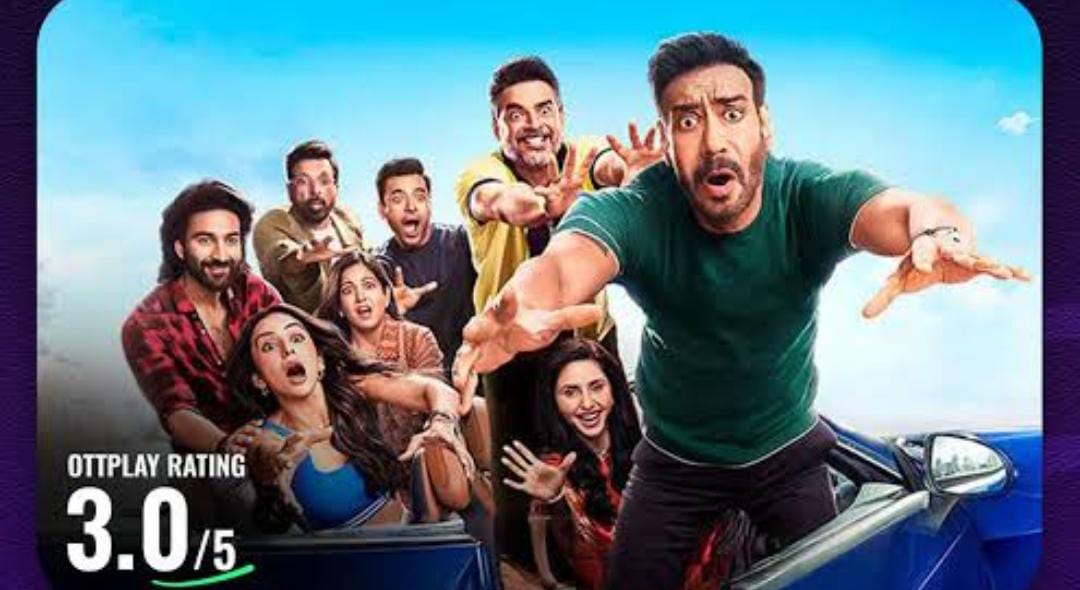
The Indian film industry has long been governed by the "Opening Weekend" metric. Historically, a film’s success was cemented within the first 72 hours of its theatrical release. However, the post-pandemic evolution of the digital landscape has introduced a fascinating phenomenon: the Second-Life Hit. The Akiv Ali-directed romantic comedy, De De Pyaar De, starring Ajay Devgn, Tabu, and Rakul Preet Singh, serves as a quintessential case study for this trend. While it wasn't a "flop" in the traditional sense, its theatrical performance was often described as "underwhelming" or "average" relative to its star power and budget. Yet, upon its transition to OTT platforms, the film didn’t just trend—it dominated.
This article explores the confluence of factors that led to its theatrical friction and its subsequent digital coronation.
1. The Theatrical Friction: Why the Big Screen Was a Hurdle
When De De Pyaar De hit theaters, it faced a unique set of challenges that restricted its "Blockbuster" potential.
The Age-Gap Taboo and Target Audience
The film’s central premise—a 50-year-old man (Ashish) falling in love with a 26-year-old woman (Ayesha)—was a bold departure from traditional Bollywood tropes. While the urban, metropolitan audience was receptive, the film struggled to find a foothold in Tier-2 and Tier-3 cities. In these regions, family-centric viewing is the primary driver of theatrical footfalls. The "complex" nature of a man introducing his young girlfriend to his ex-wife and grown children created a psychological barrier for traditional families looking for a clean, Sunday-afternoon outing.
Competition and Release Timing
Theatrical success is often a game of musical chairs. Released in a window crowded by high-octane actioners and mid-range experimental cinema, De De Pyaar De suffered from a lack of "urgency." Modern audiences often categorize films into "Must watch on the big screen" (spectacles like Singham or Brahmastra) and "Can wait for OTT" (character-driven comedies). Unfortunately, De De Pyaar De fell into the latter.
2. The OTT Resurrection: A Perfect Product for the Small Screen
The moment the film dropped on digital streaming, the narrative changed. It wasn't just watched; it was dissected, memed, and celebrated. Why did the same content perform differently?
The Privacy of Personal Viewing
Rom-coms, especially those dealing with unconventional relationships, thrive in the private space of a smartphone or a home television. The "cringe factor" or social hesitation that might prevent a family from buying four tickets to a theater disappears in the comfort of a living room. Viewers felt more comfortable engaging with the film's nuanced take on divorce and age-gap dating without the social lens of a public theater.
The Power of the "Relatable" Cast
On OTT, the chemistry between Tabu and Ajay Devgn acted as a massive pull. Tabu’s portrayal of the dignified ex-wife resonated deeply with a mature demographic that perhaps doesn't frequent theaters as often as Gen Z. The digital medium allowed the film to find its specific niche—the urban millennial and the progressive Gen X—bypassing the need for "mass" appeal that theaters demand.
3. Narrative Depth vs. Trailer Perception
One of the primary reasons for the film's digital success was that it was "better than the trailer." The marketing initially positioned it as a slapstick comedy about a mid-life crisis. However, the actual film possessed surprising emotional depth, particularly in the second half.
"The film’s strength wasn’t the jokes; it was the maturity with which it handled the conversation between the ex-wife and the new girlfriend. That’s the kind of content that earns long-term 'word-of-mouth' on social media."
In a theater, if the first 30 minutes don't land, the audience checked out. On OTT, the ability to pause, rewind, or simply "give it a chance" because it’s "free" (included in the subscription) allows the emotional weight of the story to eventually land.
4. The Economics of the "First on OTT" Strategy
The success of De De Pyaar De on digital platforms sparked a broader conversation in the industry: Should some films skip the theater entirely?
While the film did have a theatrical run, its "Rank 1" status on OTT proved that the digital window is no longer just a "bonus" revenue stream—it is a primary destination. For producers (Luv Ranjan and T-Series), the OTT licensing deal became a massive safety net.
Key Takeaways for Future Producers:
Genre Segmentation: High-concept rom-coms are now "Digital-First" properties.
The Tabu Factor: Mature performers have a massive, loyal following on streaming platforms that may not translate to "opening day" theater rushes.
Repeat Value: De De Pyaar De has high "rewatchability." Its lighthearted music and snappy dialogue make it a favorite for background viewing or repeat weekend watches, a metric where OTT shines.
5. A New Definition of Success
The journey of De De Pyaar De from a "moderate theatrical earner" to a "digital blockbuster" signifies a healthy evolution in Indian cinema. It proves that a film's quality isn't always reflected in its Friday-to-Sunday box office collection.
As we move further into 2026, the line between "Theater Films" and "OTT Films" will continue to blur, but the legacy of this film will be its role in proving that nuance wins on the small screen. It didn't fail in theaters; it simply waited for its true audience to find it in their own time, on their own terms.
"The decisions we make today will shape the world for generations to come."