On 16 September 2026, the Federal Open Market Committee raised the federal funds target by a quarter point to 3.75–4.00 percent. It is the first increase since July 2023—three years and a pile of speeches later. The statement ran barely 130 words. Inflation remains elevated. Activity is expanding at a solid pace. The Committee will deliver price stability. Implementation follows on 17 September: interest on reserves to 3.90 percent, primary credit to 4.00 percent.
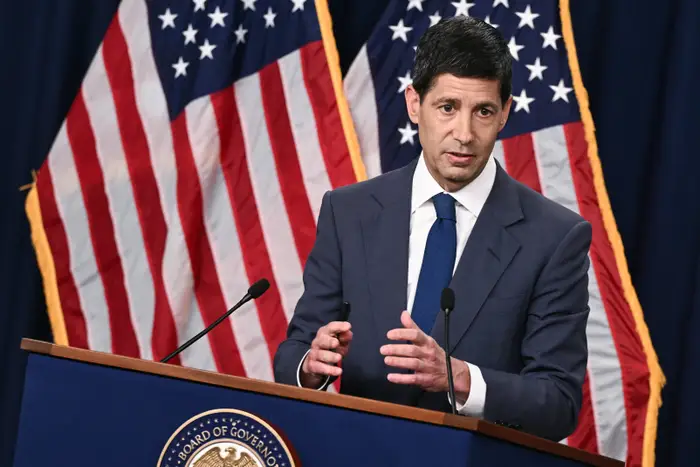
Kevin Warsh, in the chair since late May after a White House nomination that was sold as a path to cheaper money, sat with the hike. Asked what he had for the president who wanted cuts, he said he had nothing. That is the only honest line in a week of politics.
The map of dots is the second punch. The median year-end 2026 funds rate moved to 4.1 percent from 3.8 percent in June—one more quarter-point after this one. Sixteen of eighteen participants who submitted projections see at least one additional hike this year. Twelve see one more. Four see two. Two see none. The 2027 median stays at 4.1 percent. 2028 eases only to 3.9 percent. The longer-run rate ticked up to 3.2 percent. Headline PCE is now seen at 3.7 percent by year-end, core at 3.4 percent. Growth was marked to 2.3 percent. Unemployment to 4.1 percent. The Committee is not describing a one-and-done. It is describing a higher plateau while oil and geopolitics keep the inflation print sticky.
Markets had priced the 25 basis points. They had not fully priced the press conference. Stocks were green into 2 p.m. Eastern. They were not green when Warsh finished. The Dow swung hundreds of points lower into the close—reports put the session drop between roughly 400 and 750 points depending on the print, with the S&P 500 finishing about 0.45 percent weaker near 7,552 after an afternoon slide toward 1 percent. The two-year yield, the note that lives on Fed days, jumped about 7 basis points. The 10-year sat around 5.01 percent, having already tagged 5 percent earlier in the week. The dollar index firmed about 0.6 percent. October hike odds in money markets moved toward a coin flip. That is the mechanical effect: tighter overnight money, a firmer dollar, a dearer duration, and a haircut on the multiple that growth stocks had been renting.
The slower effects are the ones that travel. Mortgage quotes in America were already above 7 percent on the 30-year. Homebuilders and rate-sensitive real estate take the first bruise. Credit cards and floating business lines reprice. A stronger dollar tightens financial conditions in every country that borrows in dollars or prices oil in them. Emerging-market central banks lose room. Foreign funds that fattened Indian mid-caps on an easy-Fed story now mark those names against a 4.1 percent dot in a year.
India opens a few hours after this writing. The Sensex does not set policy in Washington, but it lives on the overflow. A higher funds rate plus a 5 percent Treasury is an invitation for FIIs to go home. The rupee pays first. Imported crude, already jumpy on Middle East strikes, gets a second tax through the dollar. The government that sold “stable macro” while running a deficit that needs constant foreign appetite will discover that festive scooter records and UPI slogans do not refinance a current-account bill. RBI can hold, hike, or pretend. None of those choices is free if the Fed is not done.
Do not confuse a unanimous vote with a finished cycle. Unanimity here means the doves ran out of cover after a hot CPI and a crude spike, not that the next meeting is automatic. Two officials still see no further 2026 move. Four want two more. Warsh’s own chair does not even file a dot. The honest market read is narrower: higher-for-longer just got a date stamp, and risk assets that were priced for a pause just paid a tuition fee.
Watch October, the next PCE print, and whether oil stays north of the level that made 5 percent on the 10-year feel normal. Until those three blink, treat Wednesday as the start of a short tightening sequence, not a patriotic speech about independence.
Disclaimer
Index levels, yields, and odds move after the close. This is news and analysis, not investment advice. Rate-sensitive assets, currencies, and Indian equities can gap on the open.
Official sources
Board of Governors of the Federal Reserve System—FOMC statement, 16 September 2026, 2:00 p.m. EDT (12–0; target 3-3/4 to 4 percent)
Federal Reserve — Implementation Note, 16 September 2026 (IORB 3.90%; primary credit 4.00%; effective 17 September 2026)
Federal Reserve—Summary of Economic Projections, 15–16 September 2026 meeting (median 2026 funds rate 4.1%; PCE and growth tables)
Chair Kevin Warsh press conference, 16 September 2026
"The decisions we make today will shape the world for generations to come."