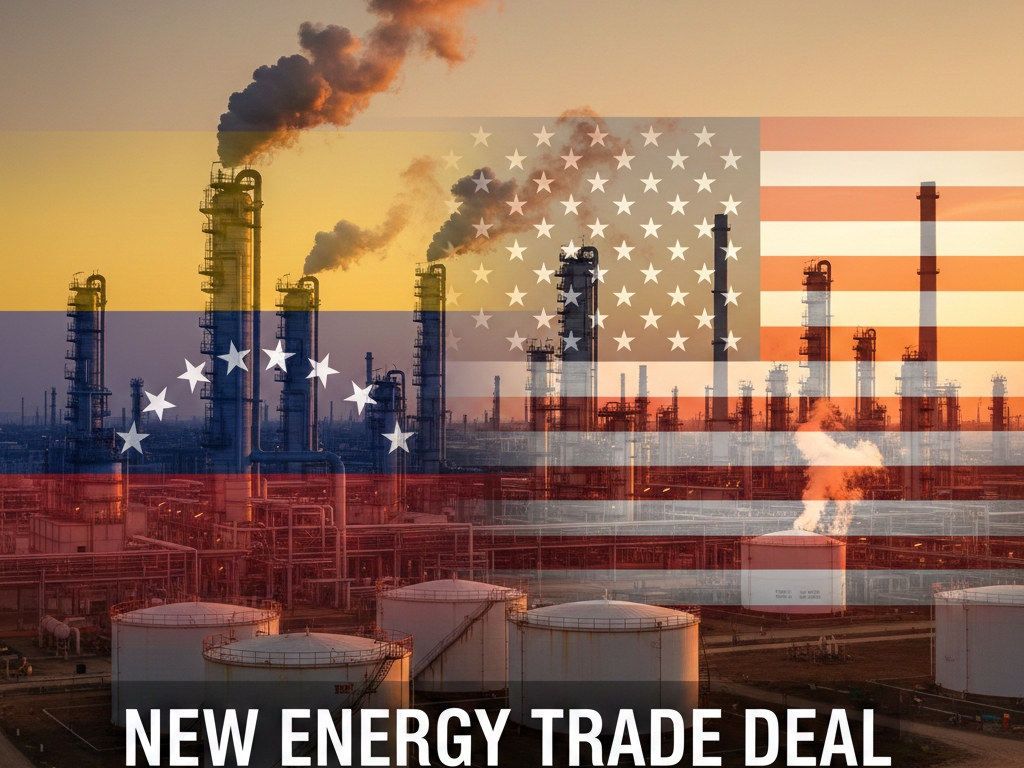
India stands to gain access to up to 50 million barrels of Venezuelan crude under a US-controlled system announced by President Donald Trump, potentially diversifying its energy mix as Washington ramps up tariffs on Russian oil buyers. The deal follows the US capture of former Venezuelan President Nicolás Maduro on January 3, 2026, and an executive order signed on January 10 shielding oil revenues. This could revive India's pre-sanctions imports of 16 million tonnes annually from Venezuela, its former fifth-largest supplier.
Deal Framework and Updates
The Trump administration will market 30-50 million barrels of stored Venezuelan crude worth $2-2.5 billion, with revenues directed into US-monitored accounts. Energy Secretary Christopher Wright confirmed on January 7 that sales would flow "indefinitely" under Washington oversight. On January 10, Trump signed an executive order declaring a national emergency to protect these funds from seizure. Indian refiners like Reliance Industries await US permits for non-US buyers, having imported 63,000 barrels per day earlier in 2025 before halting.
Venezuela holds 300 billion barrels in proven reserves—the world's largest—but output lingers below 1 million barrels per day due to sanctions and neglect. Trump seeks $100 billion in private investments to revive infrastructure, potentially adding 500,000 barrels daily with $10-20 billion initially. US Export-Import Bank may offer credit support where private capital hesitates.
Oil Industry's Mixed Reception
US oil executives gave a lukewarm response during a January 9 White House meeting. ExxonMobil CEO Darren Woods called Venezuela "uninvestable" after two prior asset seizures, demanding major legal reforms. Chevron, the sole active US firm there, eyes a 50% production boost to over 1.1 million barrels daily in two years. Trump warned non-committal firms they "won't be there at all," while executives await stability guarantees from interim President Delcy Rodríguez.
India's Strategic Gains and Challenges
Pre-2019, Reliance sourced 20% of its Jamnagar refinery needs from Venezuela's heavy Merey-16 crude, ideal for complex setups. ONGC Videsh holds stakes in San Cristobal (40%) and Carabobo-1 (11%) projects, with $500 million in frozen dividends potentially recoverable. The deal offers a "politically acceptable" alternative to Russian crude amid 500% tariff threats, enhancing leverage with Middle East suppliers. Analysts predict 100,000-200,000 barrels daily imports could resume if sanctions ease, competing with Iraqi and Canadian heavy grades.
| Company | Venezuela Exposure | Potential Impact |
| Reliance Industries | Major pre-sanction buyer (300k bpd peak); awaiting US nod | Reintroduce Merey-16; replace Russian/Iranian volumes |
| ONGC Videsh | 40% San Cristobal, 11% Carabobo-1; $500M dues | Dividend recovery, stake monetization |
| Chevron (US benchmark) | Current top private producer | 50% output rise model for India |
Stock Watch: Reliance shares up 2% on January 11 amid deal buzz; ONGC steady. Monitor PDVSA-linked assets for volatility.