In the frosty dawn of 2026, the world watches as North American alliances crack under the weight of resurgent great power rivalries. Former—and now re-elected—U.S. President Donald Trump has unleashed a blistering verbal assault on Canada, threatening to slap 100% tariffs on its goods if Prime Minister Mark Carney doesn't slam the brakes on deepening economic ties with China. Trump's dire warning? China will "eat Canada alive," devouring its businesses, social fabric, and cherished way of life. This isn't just bluster; it's a seismic shift in global dynamics, where trade pacts double as weapons and middle powers like Canada scramble to preserve sovereignty amid superpower jostling.
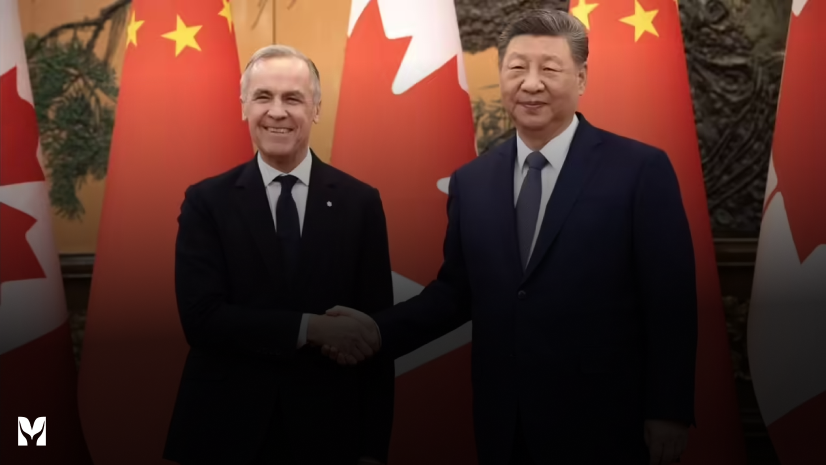
The spark? Carney's landmark visit to Beijing in mid-January 2026—the first by a Canadian leader in nearly a decade. Meeting with Chinese President Xi Jinping, Carney inked deals that slash tariffs on Canadian agricultural exports like canola, while imposing quotas on Chinese electric vehicles flooding into Canada. It's a calculated thaw: China, Canada's second-largest trading partner after the U.S., promises boosted investments, framing the pact as a nod to a "changing global economic order." Carney calls it "predictable, realistic, and respectful" diplomacy. But to Trump, it's betrayal. He accuses Ottawa of turning into a "drop-off port" for Chinese goods dodging U.S. tariffs, funneling them south of the border and undermining American workers.
This trade tango isn't isolated. Trump's ire boils over into defense, lambasting Canada for rejecting his ambitious "Golden Dome" missile defense system over Greenland. Pitched as a shield for both nations against northern threats, the project ties into Trump's long-standing fixation on Arctic control—including his infamous 2019 bid to buy Greenland. Canada, wary of ceding sovereignty or escalating tensions, said no. Yet, as Carney ramps up Beijing bonds, Trump sees hypocrisy: Why cozy up to a rival while snubbing an ally's security umbrella?
Speaking at the World Economic Forum in Davos, Carney pulled no punches. He diagnosed the globe's woes not as a gentle "transition" but a brutal "rupture"—crises in finance, health, energy, and geopolitics exposing the perils of hyper-globalization. Great powers, he argued, are weaponizing economic ties through tariffs, financial strong-arming, and supply-chain chokeholds. The rules-based international order? Fading fast into a jungle of rivalry. For middle powers like Canada—lacking the military muscle or economic heft of the U.S. or China—bilateral deals risk weakness and subordination. Carney's antidote: Collective action among peers to safeguard influence and autonomy.
Canada isn't folding, though. Carney reaffirmed ironclad commitments to Arctic sovereignty, pouring investments into radar systems, submarines, fighter jets, and ground forces. NATO's Article 5— the mutual defense pledge—remains sacrosanct, with Ottawa bolstering northern defenses alongside allies. It's a defiant stance: Canada won't sacrifice its frozen frontiers or values to appease giants. Instead, it champions an "inclusive national identity," rooted in equality and opportunity, as a beacon against authoritarianism and exclusion.
But the stakes are sky-high. U.S.-Canada friction could cascade into economic chaos—think disrupted supply chains, soaring prices, and strained NORAD partnerships. If Trump follows through on tariffs, Canadian exporters face ruin, while Beijing might exploit the rift to wedge deeper into North America. Analysts warn of a broader realignment: As the U.S. doubles down on "America First," Canada diversifies, eyeing Europe, Asia, and even India for trade buffers.
This drama underscores core truths of our era. Economic integration, once a peace dividend, is now a battleground. Sovereignty hangs by a thread when middle powers negotiate solo with behemoths. And in this rupture, Canada's path—blending pragmatism with principle—might just offer a roadmap for others dodging the crossfire.
As tensions simmer, one thing's clear: The North American bromance is on ice, and the global chessboard just got a lot spicier. Will Carney's gamble pay off, or will Trump's threats force a humiliating U-turn? Only time—and tariffs—will tell.
"The decisions we make today will shape the world for generations to come."