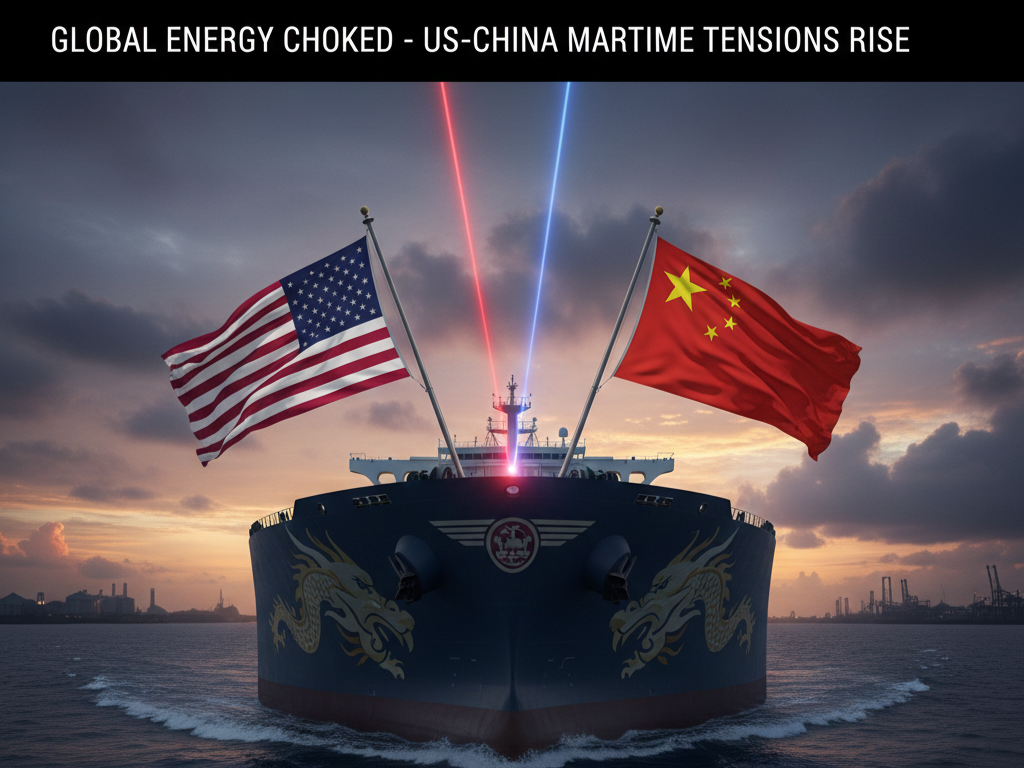
The United States' takeover of Venezuela's oil exports has intercepted crude shipments meant to service billions in debt to China, igniting a potential superpower confrontation. Roughly a tenth of Venezuela's $150 billion foreign debt comprises Chinese loans repaid through oil cargoes, now halted since the US seized control earlier this month. Trump administration directives funnel oil sale proceeds into a Qatar-based account under Washington oversight, empowering the US to dictate creditor payments and timelines.
Supertankers Turn Back
PDVSA documents indicate three supertankers, including Xingye and Thousand Sunny, ferried oil between Venezuela and China over five years under a 2019 interim agreement. These vessels recently reversed course toward Asia after Venezuela failed to restart direct exports to its key customer. Natixis chief economist Christopher Hodge, formerly of the US Treasury, described US financial dominance as "unprecedented," muddying creditor priority chains.
Last year, China absorbed 642,000 barrels per day—75% of Venezuela's total 847,000 bpd exports—per PDVSA data.
Debt Restructuring at Risk
China debt estimates differ: Societe Generale pegs it at $10 billion, JPMorgan at $13-15 billion, mostly via China Development Bank's oil-secured loans. US-China friction could derail Venezuela's post-2017 default restructuring and undermine Beijing's support for other emerging markets' deals. Sovereign debt authority Lee Buchheit highlighted how US moves demote legacy creditors, casting doubt on Trump's authority to set payment order.
Geopolitical Ramifications
On January 7, China's foreign ministry decried the oil diversion, insisting on safeguarding its Venezuelan stakes. White House spokeswoman Taylor Rogers framed Trump's oil pact as aiding Americans and Venezuelans; a US official permits China purchases but nixes prior "unfair, undercut" pricing. Stalemate over writedowns might stall recovery, with Buchheit cautioning China could boycott future Common Framework workouts elsewhere unless treated equitably.
Outlook
Venezuela's crude now flows indirectly through traders like Vitol and Trafigura to US, India, and China refiners amid naval blockades and sanctions. This saga underscores escalating energy geopolitics, with Venezuela trapped between superpowers.
"The decisions we make today will shape the world for generations to come."