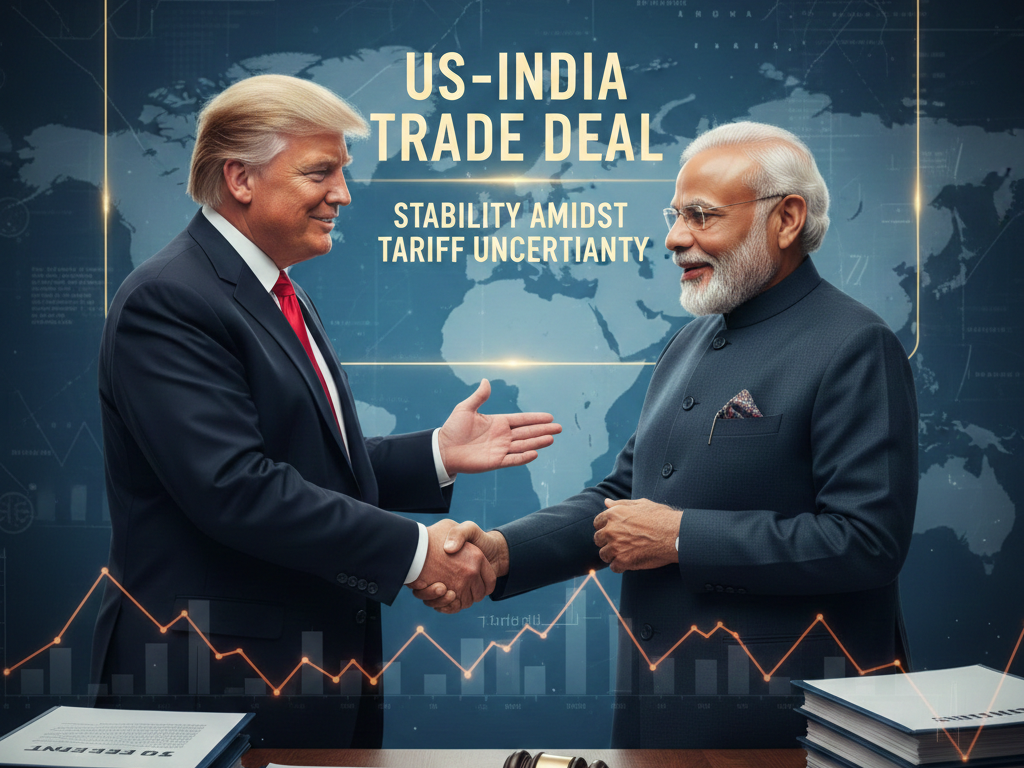
In the swirling vortex of global geopolitics, where oil flows like the lifeblood of economies and tariffs wielded as diplomatic daggers, the US-India trade saga is heating up with a tantalizing twist. As the dust settles from the Ukraine conflict's economic shockwaves, Washington is flashing signals of tariff relief to New Delhi – but only if India keeps turning the screws on its once-booming Russian oil binge. Meanwhile, the European Union is playing the suave suitor, courting India with a blockbuster free trade deal sans the punitive drama. This isn't just trade talk; it's a spicy cocktail of energy intrigue, strategic maneuvering, and billion-dollar bets that could reshape alliances in a multipolar world.
Let's rewind to the post-2022 Ukraine invasion era. Russia, hammered by Western sanctions, dangled discounted crude like candy to willing buyers. India, the world's third-largest oil importer, couldn't resist the bargain basement prices. Pre-war, Russian oil barely nibbled at 2-3% of India's refining mix. But as Moscow's Urals crude flooded markets at fire-sale rates, that share skyrocketed to the high teens, peaking at around 2 million barrels per day (bpd) in mid-2023. Indian refineries lapped it up, saving billions while thumbing a pragmatic nose at Western pleas to isolate Putin economically.
Enter Uncle Sam, not one to watch from the sidelines. In two calculated strikes, the US slapped 25% punitive tariffs on India: one volley for broader trade imbalances, the other zeroed in on those cozy Russian oil deals. The message was crystal clear – curb the Kremlin crude or pay the price. Fast-forward to early 2026, and US Treasury Secretary Scott Bessent is crowing victory. "Indian refinery purchases of Russian crude have collapsed," he declared in recent remarks, crediting the tariffs for a "clear success" in US trade policy. Data backs the bravado: Imports have tumbled nearly 40% from their zenith, hovering at 1.1-1.3 million bpd per Kepler's latest tallies. That's still a hefty chunk – India remains a top global buyer of Russian oil – but the downward trajectory has Washington purring.
Yet, this isn't a one-sided arm-twist. India has pushed back fiercely, branding the US pressure as "unfair and unjustified." Officials in Delhi insist their energy playbook is all about affordability and national interest, not geopolitical favoritism toward Russia. As a developing giant guzzling oil from West Asia, the US itself, and West Africa, why single out discounted deals that keep fuel prices low for a billion-plus population? It's a fair point in a world where energy security trumps alliances – at least until tariffs bite into exports.
Bessent's olive branch? A "path" to easing or axing those 25% tariffs if the Russian oil retreat continues. But strings attached: Compliance means relief; backsliding could invite more heat, with US legislators eyeing bipartisan bills to penalize discounted Russian oil buyers worldwide. This carrot-and-stick dance underscores broader Ukraine-linked tensions, where global energy flows are weaponized in the name of sanctions enforcement.
Across the Atlantic, the EU is opting for seduction over sanctions. No tariffs here – just sweet promises of a mega free trade agreement (FTA) that could slash duties on European cars and wines while unlocking markets for Indian electronics, textiles, and chemicals. European Commission President Ursula von der Leyen's high-profile visit to India in late January 2026 highlights the stakes: This "mother of all deals," relaunched in 2022, is on the cusp of fruition, potentially sealing by early 2026. It's a conciliatory contrast to US muscle-flexing, aiming to deepen strategic ties without the oil import drama.
Market realities add layers to this geopolitical thriller. Halting Russian crude entirely? Easier said than done without heavy-handed government intervention. Logistics, pricing, and global supply chains keep the taps trickling, even as India diversifies. Experts note that while US pressure has nudged volumes down, true cessation demands alternatives that match Russia's rock-bottom rates – a tall order in volatile oil markets.
At its core, this US-India tango reflects the intricate web of trade diplomacy amid ongoing conflicts. Washington's tariffs have undeniably curbed India's Russian oil appetite, proving economic levers can bend even neutral giants. But India's defiant stance on energy sovereignty sends a message: National priorities won't bow to external edicts. As the EU woos with open arms, Delhi holds leverage in this multipolar chess game.
Here is a clear, data-driven table summarizing India's Russian crude oil imports over key periods, based on the latest available tracking from sources like Kpler, Vortexa, Reuters, and related reports (as of mid-January 2026). The figures reflect average daily volumes in million barrels per day (mbpd), with notable fluctuations due to US tariffs, sanctions, diversification efforts, and market dynamics.
India's Russian Crude Oil Imports: Historical and Recent Trends
| Period | Average Daily Imports (mbpd) | Key Notes / Context | Source/Reference |
|---|---|---|---|
| Pre-Ukraine War (before Feb 2022) | 0.04–0.06 (2–3% share) | Minimal reliance; mostly diversified from West Asia, etc. | US Treasury / General reports |
| Post-Invasion Peak (mid-2023 to mid-2025) | ~1.8–2.0 (up to high teens %) | Surge due to discounted Urals crude; peak around 2.0–2.2 mbpd in mid-2025 | Kpler, Vortexa, Reuters |
| June 2025 | ~2.08 | 11-month high at the time; highest since July 2024 | Kpler |
| July 2025 | ~1.4 | Sharp m-o-m drop (>20%) due to early logistical/sanction pressures | Vortexa |
| November 2025 | ~1.8–1.9 | Six-month high; ~35–39% share of India's total imports; seasonal/price factors | Vortexa, Kpler, Reuters |
| December 2025 | ~1.2 | Significant decline (lowest in ~2–3 years); ~37 million barrels total; OPEC gains share | Reuters, Bloomberg, Kpler |
| January 2026 (early/ongoing) | ~1.0–1.2 (expected avg.) | Further trim amid sanctions/tariffs; some refiners (e.g., Reliance) near-zero; diversification to Middle East/US/Guyana | Reuters, Kpler, Business Standard |
| Overall 2025 Average | ~1.6–1.8 (fluctuating) | Remained high through much of year despite pressures; sharp late-2025 drop | Aggregated from Kpler/Vortexa/Reuters |
Additional Insights:
- Decline Trend: From peaks of ~2 mbpd in 2025, imports fell nearly 40% by late 2025/early 2026, aligning with US Treasury Secretary Scott Bessent's January 2026 remarks that purchases "collapsed" due to 25% punitive tariffs (part of broader 50% duties imposed in August 2025). He described it as a policy "success" with a potential "path" to tariff relief.
- Current Status (Jan 2026): Volumes are at multi-year lows (~1–1.2 mbpd expected), but Russia remains a top supplier. India is actively diversifying (e.g., higher US/Middle East/Guyana crude), though full cessation is unlikely without major intervention.
- Challenges: Market data shows temporary dips (e.g., stranded cargoes, refinery shifts), but affordability drives continued interest in discounted Russian oil unless alternatives match pricing/logistics.
The big question: Will India bite the US bait for tariff rollback, or pivot harder toward EU embraces? With global energy security hanging in the balance, expect more plot twists. One thing's certain – in the high-stakes arena of international trade, oil, and alliances, the drama is far from over. Stay tuned as these power plays unfold, potentially redrawing the maps of global commerce and camaraderie.
"The decisions we make today will shape the world for generations to come."