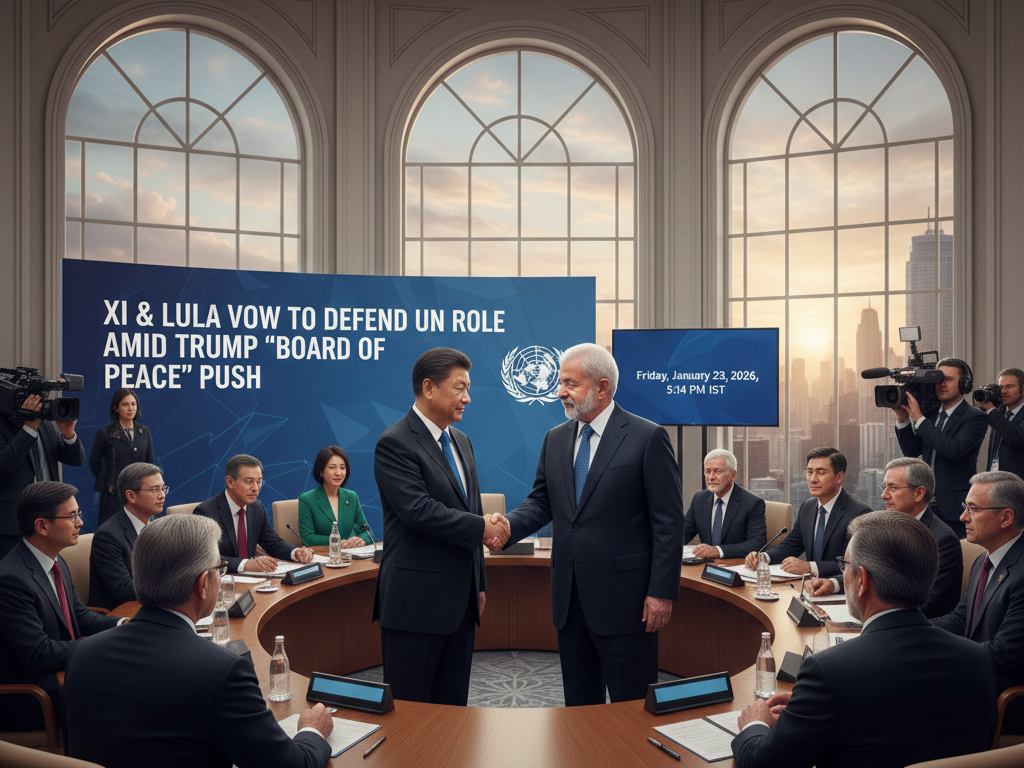
Chinese President Xi Jinping and Brazilian President Luiz Inácio Lula da Silva held a significant phone call on Friday, January 23, 2026, pledging to jointly defend the United Nations' central role in global governance. This commitment emerged just one day after US President Donald Trump ratified his controversial "Board of Peace" initiative during a high-profile signing ceremony in Davos, Switzerland. Xi described the international situation as "tumultuous," positioning China and Brazil as "constructive forces" for world peace, stability, and improved global governance.
The leaders emphasized standing "firmly on the right side of history" to champion Global South interests and uphold international fairness. Xi reaffirmed China's dedication as a "good friend and good partner" to Latin American and Caribbean countries, while Lula highlighted both nations as pillars of multilateralism and free trade.
Skepticism Over Trump's Board of Peace
Both countries received invitations to join the Board of Peace, initially proposed for Gaza reconstruction but now expanded to broader global mandates. Neither has confirmed participation, reflecting deep reservations. Brazil's special adviser Celso Amorim sharply criticized the initiative as "a revocation of the UN," arguing that no single country can impose reforms on the world body.
China's Foreign Ministry spokesperson Guo Jiakun echoed this, stating Beijing's firm support for the UN-centered international system regardless of global changes. At Davos, Trump touted the board as one of history's "most consequential bodies," granting it expansive powers and requiring $1 billion contributions for permanent membership.
Deepening China-Brazil Strategic Partnership
The call advanced bilateral ties elevated in 2024 to a "China-Brazil community with a shared future for a more just world and sustainable planet".
Xi highlighted alignment between China's Belt and Road Initiative (BRI) and Brazil's development priorities in agriculture, infrastructure, and energy transition. Lula expressed eagerness to deepen cooperation across all fields, including BRICS collaboration.
Progress includes BRI-related science and technology initiatives unveiled at the 2024 G20 to support Global South development. Xi noted China's high-quality development would offer more opportunities for Brazil as the 15th Five-Year Plan begins.
Broader Geopolitical Context
This dialogue occurs amid Latin American concerns following US actions against Venezuela, including charges against President Nicolas Maduro, sparking fears of interventions. The UN has condemned such moves as violations of international law. China and Brazil's stance signals Global South solidarity against perceived unilateralism, with no Board of Peace commitments as of January 23, 2026.
"The decisions we make today will shape the world for generations to come."