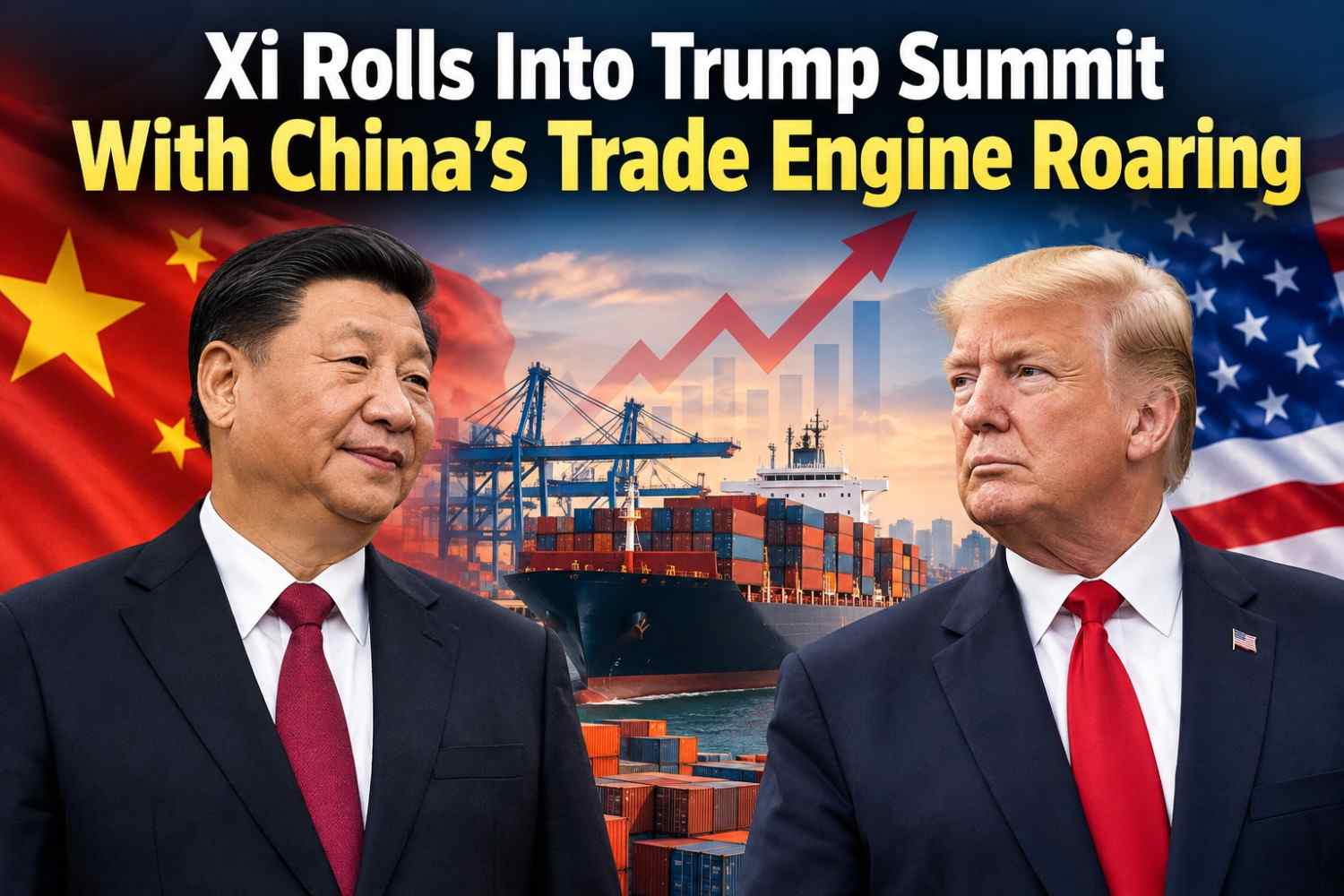
Chinese President Xi Jinping is heading to Washington for a high-stakes meeting with U.S. President Donald Trump at a time when China’s export sector continues to show strong momentum.
The September 24 summit is expected to focus heavily on trade, with both sides looking for ways to maintain stability after the trade truce agreed last year. The agreement helped prevent a deeper escalation in tariffs between the world’s two largest economies.
China’s latest trade figures underline the strength of its external economy. Chinese exports jumped 25% year-on-year in August, while imports increased 28.2%. The country’s trade surplus reached about $119.1 billion in August, taking the first-eight-month surplus to more than $805 billion.
The country is also benefiting from strong international demand for technology-related products. Exports of high-tech goods increased 42.9% in value during the first eight months of the year, while semiconductor export values more than doubled. Electric vehicles, solar cells and lithium-ion batteries have also contributed to export growth.
China’s overall trade surplus is now on track to exceed $1 trillion for a second consecutive year, according to Reuters. More than half of roughly 6,500 product categories sold by China to the United States have recorded year-on-year growth so far in 2026.
However, China’s economy still faces domestic challenges. Weak consumer demand and the prolonged property-sector downturn remain concerns, making overseas demand particularly important for manufacturers and exporters.
For Washington, the summit provides an opportunity to discuss tariffs, market access and trade imbalances. Agriculture, energy, rare-earth materials and technology are expected to remain important bargaining areas. Preparatory discussions have also included possible cooperation on artificial-intelligence safeguards and trade in non-sensitive products.
The leaders may also discuss Taiwan and China’s relationship with Iran, adding geopolitical issues to an already complex economic agenda.
The outcome of the summit could influence the next phase of U.S.-China trade relations and determine whether the current trade truce continues beyond its November 10 expiration date.
For global markets, the meeting will be closely watched for any indication of new tariffs, trade concessions or a longer-term agreement between Washington and Beijing.
"The decisions we make today will shape the world for generations to come."