The Union Budget 2026, while aiming for simplification and broader taxpayer adoption, has once again brought the new tax regime under scrutiny. Despite successive tweaks, a consensus among tax experts and economists suggests that the regime, particularly its structure around the ₹12 lakh income bracket, still harbors significant kinks that deter many from embracing it. The primary contention revolves around the sharp increase in tax liability beyond this threshold and the perceived lack of sufficient cost-of-living relief, making the old regime with its array of deductions a more attractive proposition for a substantial segment of the salaried class.
The Evolution of the New Tax Regime: A Brief Overview
Introduced in Budget 2020, the new tax regime (NTR) was designed to offer taxpayers a simpler alternative to the traditional, deduction-heavy old tax regime (OTR). The core idea was to provide lower tax rates across various income slabs in exchange for foregoing common exemptions and deductions such as HRA, LTA, Section 80C investments, and interest on home loans. The government's intent was to reduce compliance burdens, encourage savings outside of tax-driven instruments, and make the tax structure more transparent.
Subsequent budgets have seen modifications, most notably in Budget 2023, where the tax rebate limit in the NTR was increased to ₹7 lakh, making individuals with taxable income up to this amount effectively tax-free. Furthermore, the number of income slabs was reduced, and the standard deduction of ₹50,000 was extended to the NTR for salaried individuals. These changes were hailed as significant steps towards making the NTR more appealing. However, even with these adjustments, a critical examination reveals that fundamental issues persist, particularly for the burgeoning middle-income group.
The ₹12 Lakh Conundrum: A Steep Tax Cliff
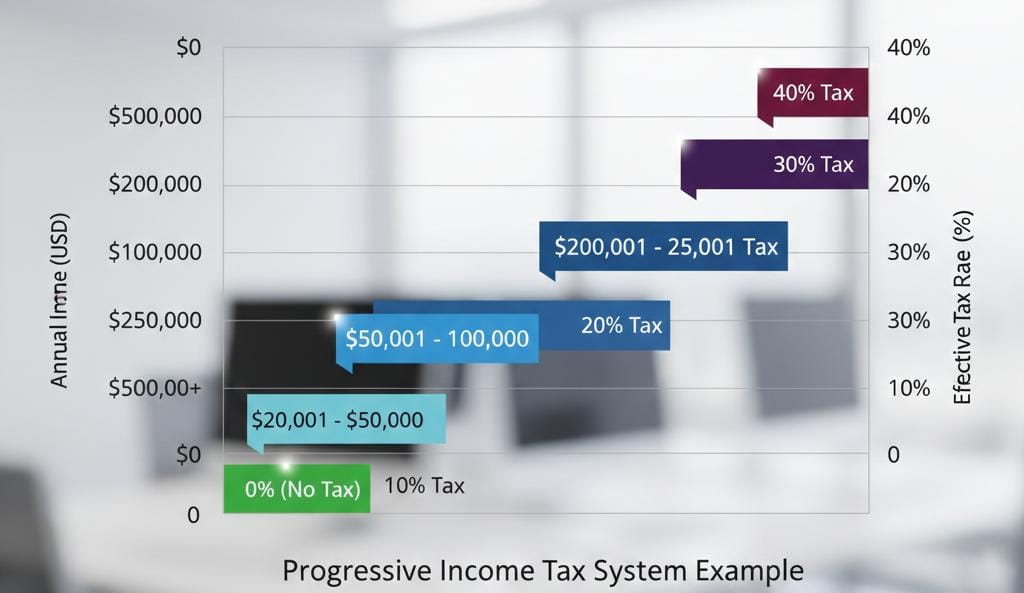
The most frequently cited concern by tax experts is the "tax cliff" that appears around the ₹12 lakh annual income mark. Under the current structure of the NTR (as of Budget 2026), the tax rates are typically structured as follows:
- Up to ₹3 lakh: Nil
- ₹3 lakh to ₹6 lakh: 5%
- ₹6 lakh to ₹9 lakh: 10%
- ₹9 lakh to ₹12 lakh: 15%
- ₹12 lakh to ₹15 lakh: 20%
- Above ₹15 lakh: 30%
- While the initial slabs offer considerable relief, the jump from 15% to 20% at the ₹12 lakh threshold, and then to 30% at ₹15 lakh, is perceived as excessively sharp.
"For an individual earning, say, ₹12 lakh, the tax liability significantly increases once their income crosses that mark, even by a small margin," explains Ms. Priya Sharma, a Senior Tax Consultant at KPMG. "This creates a disincentive for those on the cusp of this bracket, as the incremental tax outflow can feel disproportionately high compared to the additional income earned. Many still find that with judicious use of deductions like Section 80C, housing loan interest, and NPS contributions, they can achieve a lower effective tax rate in the old regime, even at similar income levels."
Mr. Alok Singh, an economist specializing in public finance, echoes this sentiment. "The abruptness of the tax rate increase between ₹12 lakh and ₹15 lakh lacks a smooth progression that one would ideally expect in a progressive tax system. It punishes incremental earnings within this crucial middle-income bracket, which is often the segment grappling with rising cost-of-living pressures in urban areas."
Cost-of-Living Relief: The Missing Link
One of the foundational arguments against the NTR's widespread adoption has been its complete disregard for common cost-of-living expenses. While the OTR allows deductions for housing rent, children's education, health insurance premiums, and home loan interest – all significant components of household budgets – the NTR offers none of these.
"The government's premise was to simplify, but in doing so, it overlooked the realities of household expenditures," says Dr. Meera Sanyal, an independent economic policy analyst. "In major Indian cities, housing rent alone can consume a substantial portion of a salaried individual's income. Forgoing HRA deduction, coupled with no relief for health insurance or children's tuition fees, makes the NTR significantly less attractive, especially for families."
Experts propose that integrating some form of cost-of-living relief, even if not a direct deduction, could bridge this gap. One suggestion is to introduce a higher standard deduction for individuals residing in metropolitan areas or those with dependents.
"A targeted cost-of-living allowance, perhaps differentiated by geographic location or family size, could make the NTR genuinely competitive," suggests Mr. Rajesh Kumar, a former IRS officer. "This wouldn't reintroduce the complexity of individual deductions but would acknowledge the differential financial pressures faced by taxpayers across various demographics."
The Dilemma of Savings and Investment
Another unintended consequence of the NTR's design is its potential impact on domestic savings and long-term investments. By removing the tax incentives for instruments like PPF, ELSS, and life insurance premiums under Section 80C, the regime inadvertently removes a significant nudge for individuals to save for retirement or future goals.
"While the government aims to decouple savings from tax planning, for a large segment of the population, tax benefits are a powerful motivator for disciplined savings," notes Ms. Sharma. "Without that incentive, there's a risk that discretionary income might be diverted towards consumption rather than long-term financial planning, which has broader implications for capital formation and economic stability."
Some experts propose the introduction of a universal savings deduction in the NTR, not tied to specific instruments but perhaps a fixed percentage of income, up to a certain limit. This would provide a broad incentive for savings without reintroducing the intricate rules of the OTR.
Recommendations for Budget 2027 and Beyond
Looking ahead to Budget 2027, experts offer several concrete recommendations to make the new tax regime truly effective and widely adopted:
Smoother Tax Slab Progression: The government should consider recalibrating the tax slabs to reduce the sharpness of the jump, particularly between ₹12 lakh and ₹15 lakh. Introducing an additional slab or adjusting the rates to provide a more gradual increase would alleviate the "tax cliff" effect. For instance, a 17.5% slab between ₹12 lakh and ₹14 lakh, followed by 20%, and then 25% up to ₹20 lakh, could offer a smoother progression.
- Targeted Cost-of-Living Allowance: Instead of reintroducing specific deductions, a universal cost-of-living allowance or a higher standard deduction for specific categories (e.g., those with dependents, metro residents) could be considered. This would provide some relief without compromising the simplicity of the regime.
- Basic Savings Incentive: A small, universal deduction for savings, perhaps a fixed percentage of income up to a moderate limit (e.g., ₹50,000 or ₹1 lakh), could be introduced to encourage financial planning without making it overly complex.
- Enhanced Financial Literacy Campaigns: Alongside structural changes, the government needs to invest in robust financial literacy campaigns to educate taxpayers on how to optimally choose between the NTR and OTR based on their individual financial circumstances. Many taxpayers still lack a clear understanding of the implications of both regimes.
- Revisit Home Loan Interest: The exclusion of home loan interest deduction from the NTR remains a significant deterrent, especially for young professionals who are often simultaneously paying EMIs and navigating career growth. A limited deduction for home loan interest, perhaps capped, could make the NTR more appealing to this crucial demographic.
The new tax regime is a commendable effort towards simplifying India's tax landscape. However, its journey towards becoming the default choice for taxpayers is far from complete. The sharp tax jump after ₹12 lakh, coupled with the absence of meaningful cost-of-living relief and a lack of incentive for crucial savings, continues to push many towards the old regime. By addressing these critical fixes, particularly by smoothing the tax progression and introducing targeted cost-of-living considerations, Budget 2027 can transform the NTR into a truly equitable, attractive, and universally adopted system, aligning with the government's vision of a simplified and efficient tax administration. The goal should be to ensure that simplification does not come at the cost of fairness or economic prudence for the average Indian taxpayer.
"The decisions we make today will shape the world for generations to come."