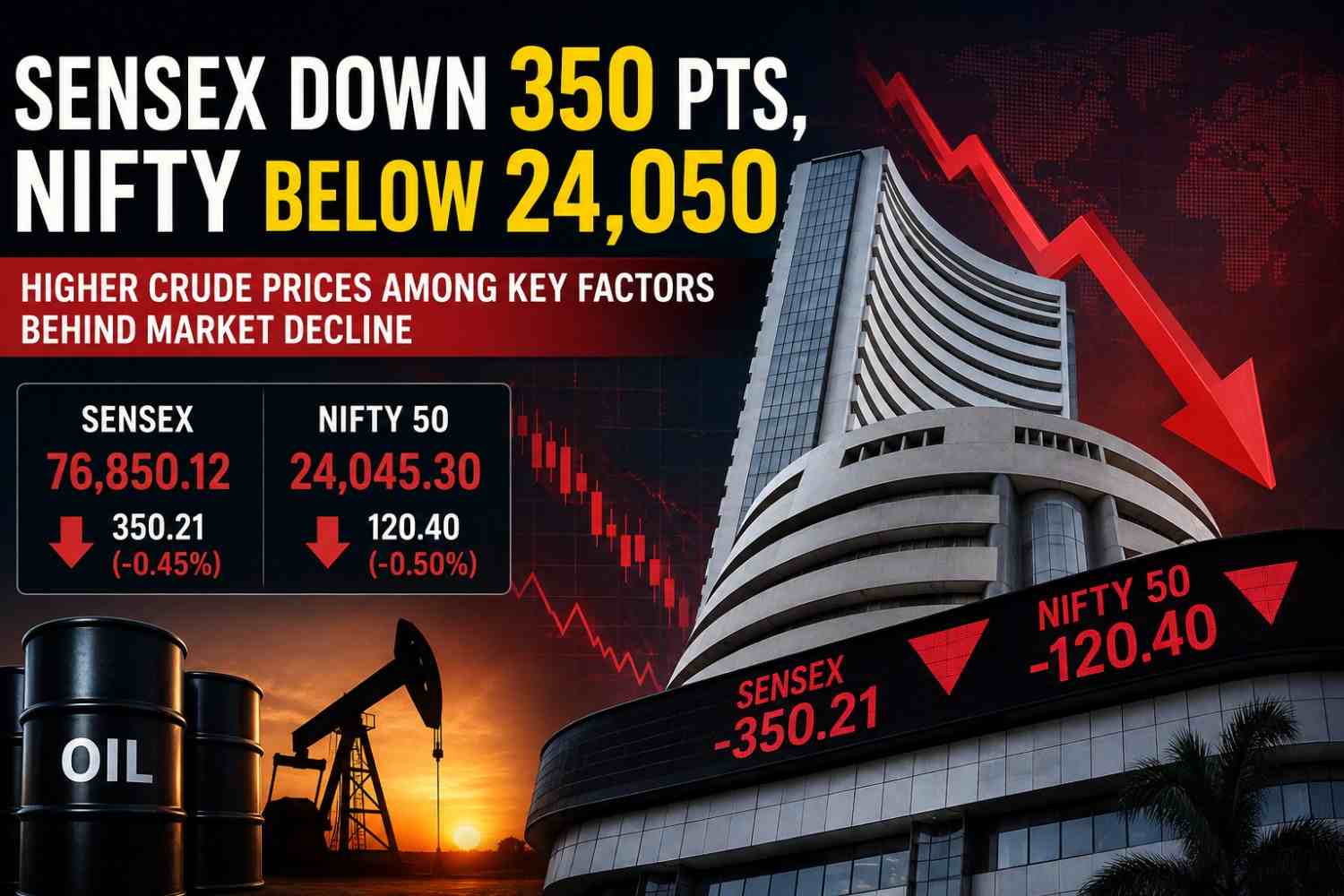
Indian equity markets remained under pressure on Wednesday, August 19, 2026, with the benchmark indices extending their recent losing streak. The BSE Sensex fell around 350 points, while the Nifty 50 slipped below the 24,050 level during late-morning trade. The decline was driven by a combination of rising crude oil prices, higher global bond yields and continued geopolitical uncertainty.
The weakness comes after a prolonged period of selling pressure. The Nifty 50 was on track for its seventh consecutive session of losses, highlighting the cautious mood prevailing among investors. Reuters reported that the Nifty was down 0.35% at 24,070.65, while the Sensex declined 0.32% to 76,991.33 in morning trade.
Crude Oil Prices Remain a Major Concern
One of the biggest factors weighing on Indian equities is the sharp increase in global crude oil prices. Brent crude has moved above the $90-per-barrel mark, with prices approaching $92 amid uncertainty surrounding the Middle East and stalled peace negotiations.
Higher crude prices are particularly important for India because the country imports a large portion of its oil requirements. Sustained increases in crude can raise the import bill and put pressure on the Indian rupee. It can also increase transportation and input costs for companies, potentially affecting profit margins.
Oil-sensitive sectors such as aviation, paints, chemicals, logistics and consumer businesses can face additional cost pressures when crude remains elevated. Oil marketing companies are also closely watched because their profitability can be affected by fluctuations in crude prices.
Middle East Tensions Add to Market Anxiety
Geopolitical developments in the Middle East continue to influence global financial markets. Uncertainty surrounding negotiations involving the United States and Iran has contributed to higher oil prices and increased concerns about the global inflation outlook.
For Indian investors, the combination of expensive crude and geopolitical uncertainty creates additional risks. A prolonged period of elevated oil prices could increase inflationary pressures and complicate expectations around interest rates.
Higher Global Bond Yields
Another factor affecting sentiment is the rise in global bond yields. Higher yields, particularly in developed markets, can make fixed-income investments relatively more attractive and reduce the appeal of emerging-market equities.
This has added pressure to Indian stocks at a time when foreign investors have already been cautious. Financial stocks were among the sectors facing selling pressure during Wednesday's session, while broader market indices also weakened.
Sectoral Performance
The market decline was relatively broad-based. According to Reuters, 13 of 16 major sectors were trading lower during the session. Financial stocks declined around 0.5%, while the IT index managed to rebound around 0.8% after recent weakness. Mid-cap and small-cap indices were also down roughly 0.5%.
The weakness indicates that selling pressure is not limited to a single sector and that investors are responding to broader macroeconomic and global risks.
Technical Levels for Nifty
The Nifty's movement around the 24,000–24,050 zone is likely to remain important for traders in the near term. Ahead of Wednesday's session, technical analysts had identified 24,050–24,000 as an important support area if the index remained below 24,192. On the upside, the 24,200–24,300 range was identified as an important resistance zone.
A sustained break below the 24,000 level could increase selling pressure, while a recovery above 24,200–24,300 could provide some relief to the market.
Strong Corporate Earnings Offer Some Support
Despite the weak market environment, India's corporate earnings outlook remains relatively positive. Nifty 50 companies recorded average profit growth of around 18% in the June 2026 quarter, the strongest growth in 10 quarters, according to a Reuters report.
However, analysts have also highlighted margin pressures from higher commodity, freight and wage costs. Oil marketing companies have been particularly affected by crude-price volatility, while some sectors such as autos, consumer goods and logistics could also face pressure from higher input costs.
What Investors Should Watch Next
Market participants are likely to closely track crude oil prices, developments in the Middle East, global bond yields, the movement of the rupee and foreign institutional investor flows.
If crude prices remain elevated and geopolitical tensions continue, volatility could persist in Indian equities. On the other hand, any meaningful decline in oil prices or improvement in global risk sentiment could provide relief to domestic markets.
"The decisions we make today will shape the world for generations to come."