India’s insurance industry has entered a transformative growth phase, backed by robust macroeconomic fundamentals, rising consumer demand, and forward-looking regulatory reforms. A recent analysis by global reinsurance giant Swiss Re projects that India’s insurance premiums will grow at a real annual rate of 6.9% between 2026 and 2030, making it the world’s fastest-growing major insurance market in the mid-term. This outlook signals a new era for Indian insurers and policyholders alike. �
Swiss Re +1
A Global Standout in Insurance Growth
According to Swiss Re’s “India’s Economic and Insurance Market Outlook 2026–2030: Resilient and Rising Amid Global Shifts,” the Indian insurance sector stands out among major global markets. The projected 6.9% annual growth in insurance premiums significantly outpaces major economies such as China (approx. 4%) and the United States (about 2%) over the same period. �
Swiss Re +1
This forecast positions India as the fastest-growing major insurance market globally over the next five years, a remarkable achievement given the competitive dynamics in global insurance. The acceleration also represents a sharp rebound from slower growth (around 3.1%) seen in 2025 as the industry adjusted to new regulations. �
Swiss Re +1
Key Drivers of Growth
1. Strong Macroeconomic Fundamentals
India’s broader economic outlook underpins the insurance sector’s expansion. With expectations of remaining one of the world’s fastest-growing major economies, India’s average real GDP growth is estimated at around 6.5% over the next five years, driven by strong private consumption, investment, and demographic advantages. �
Swiss Re
This sustained economic growth increases disposable incomes and financial awareness, encouraging households and businesses to invest more in protection and risk management through insurance products.
2. Rising Consumer Demand
Insurance penetration in India remains relatively low compared with developed markets, signalling vast untapped potential. As awareness grows—especially among middle- and lower-income households—insurance adoption is expected to rise across both life and non-life segments.
Fiscal stimulus measures, including simplification of certain Goods and Services Tax (GST) rates and personal income tax concessions, are also expected to boost consumer spending capacity, further enhancing demand for insurance. �
Business Standard
3. Regulatory Reforms and Policy Support
Significant regulatory reforms by the Insurance Regulatory and Development Authority of India (IRDAI) and government initiatives are reshaping the sector. Key policy measures that are aiding growth include:
Higher Foreign Direct Investment (FDI) limits in the insurance sector, allowing up to 100% foreign ownership. �
Business Standard
Modernisation of distribution channels and digitalisation of services. �
Business Standard
GST reforms to ease compliance and broaden the appeal of insurance products. �
Business Standard
These reforms have broadened access to capital, increased competition, and made the insurance ecosystem more transparent and efficient, laying a strong foundation for sustained growth.
Life and Non-Life Insurance Segments: Growth Outlook
The Swiss Re report also breaks down the insurance growth outlook by key segments, highlighting varied dynamics:
Life Insurance
Life insurance continues to be a core driver for the industry. India is already one of the largest life insurance markets among emerging economies. Swiss Re projects life insurance premiums to grow at around 6.8% annually over 2026–2030, driven by wider distribution networks, growing demand for retirement and savings-oriented products, and credit-linked insurance expansion. �
Business Standard
Non-Life Insurance
The non-life segment—including health and motor insurance—also shows strong growth potential. While this segment faces short-term challenges such as regulatory adjustments and rising medical inflation, prospects remain positive in the medium term:
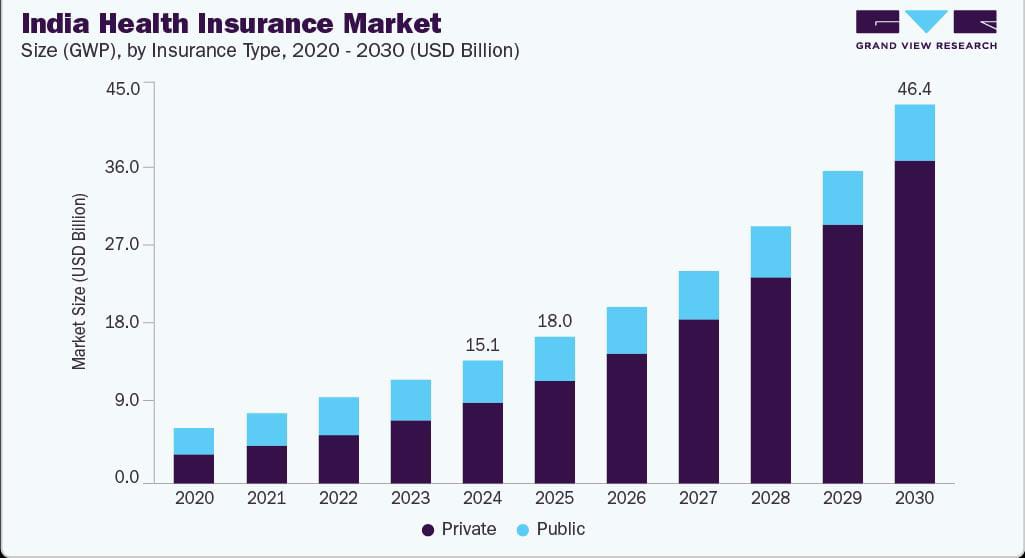
Health insurance premiums are expected to grow by an average of 7.2% annually. �
Business Standard
- Motor insurance, buoyed by rising vehicle ownership and usage, is projected to grow at about 7.5% annually. �
Business Standard
- These trends reflect rising consumer prioritisation of health and asset protection, alongside broader economic participation.
Opportunities and Industry Implications
For Insurers
- Product Innovation: Insurers can leverage digital transformation to offer specialised products tailored to evolving consumer needs.
- Enhanced Distribution: Expanding agency networks, bancassurance partnerships, and digital direct channels will be essential to reach untapped markets.
- Risk Management: With increased exposure to natural catastrophe risks due to rapid urbanisation and asset accumulation, insurers must adopt more sophisticated risk modelling and pricing strategies. �
The Economic Times
For Regulators and Policymakers
- Continued policy support through simplified taxation, ease of doing business, and consumer protection will be vital to maintain momentum.
- Encouraging competition and new market entrants can expand coverage and improve affordability.
For Consumers
- The growth trajectory heralds greater choice, wider coverage, and competitive pricing in insurance products.
- Consumers must, however, prioritise policy literacy to make informed decisions, particularly as products become more diversified and complex.
Looking Ahead: A Bright Mid-Term Outlook
The Swiss Re report’s projection of 6.9% annual growth in insurance premiums through 2030 paints a compelling picture of India as a global insurance growth leader. Supported by strong economic fundamentals, regulatory reforms, rising demand, and improved risk awareness, India’s insurance sector is poised for a sustained period of expansion. �
Swiss Re
As this growth unfolds, stakeholders across the industry—from insurers and regulators to consumers and investors—will play a crucial role in shaping a resilient, inclusive, and dynamic insurance landscape for India’s evolving economy.
"The decisions we make today will shape the world for generations to come."