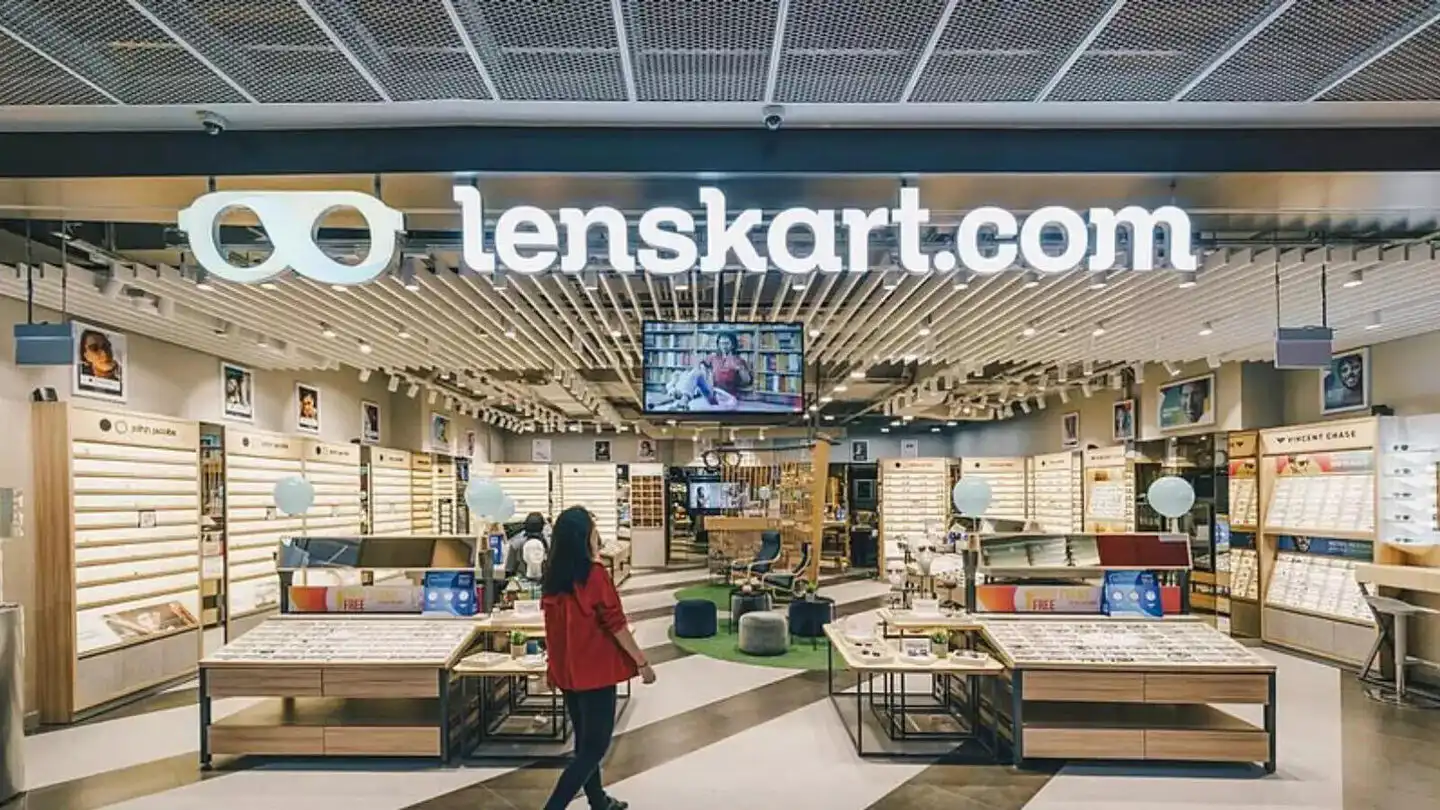
Lenskart Solutions posted numbers on 4 November 2026 that look like a textbook growth story. Consolidated revenue rose 35.7 percent to ₹2,845 crore. Net profit more than doubled to ₹232 crore. Operating profit climbed over 50 percent with margins expanding to roughly 21.9 percent. India same-store sales growth hit 20.8 percent. The company added 165 stores in the quarter, taking the global network past 3,600 outlets, with 143 of those additions in India, many in smaller cities. International revenue also grew strongly. Cash remains healthy, and H1 profits already approach last year’s full-year earnings.
This is genuine operational execution. Higher volumes, premiumisation, better product margins, and disciplined expansion are delivering results. Lenskart is capturing demand that formal retail and digital channels create when they make stylish, affordable eyewear accessible.
But the celebration stops at the company gate. The same quarter that produced these numbers also highlights how broken India’s approach to basic vision care remains. Tens of millions of Indians still live with uncorrected refractive errors. Government primary health centres and district hospitals routinely lack functional eye-testing equipment, trained optometrists, or consistent spectacle supply. School vision screening programmes remain patchy and underfunded. When a private retailer can conduct 80 lakh eye tests in a quarter while the public system cannot guarantee a basic refraction for a child in a rural block, the failure is not of the market—it is of the state.
Policy continues to treat eye care as an afterthought. Import duties, classification disputes, and customs demands still land on companies trying to scale manufacturing and distribution. Regulatory clarity on optical retail, advertising claims, and cross-border sourcing remains inconsistent. The same government that claims credit for formalisation and digital public infrastructure has left the last-mile delivery of something as fundamental as clear sight largely to private capital and consumer willingness to pay.
Lenskart’s expansion into Tier-2 and Tier-3 towns is not just commercial success; it is a quiet indictment. When private capital has to build the network that public health policy should have enabled decades ago, the system is revealing its priorities. Vision impairment reduces learning outcomes, workplace productivity, and quality of life. Every delayed diagnosis or unaffordable pair of spectacles carries a social cost that no quarterly profit number can offset.
The company is doing what a well-run business should do: grow revenue faster than costs, expand reach, and improve margins. The government is doing what it has specialised in—announcing schemes, under-delivering on basic services, and allowing private players to fill the vacuum while extracting compliance costs and tax revenue. Until primary eye care is treated as essential infrastructure rather than a lifestyle category, even the strongest retail results will sit uneasily beside the reality of millions who still cannot see clearly.
Lenskart has delivered. The system around it has not.
Disclaimer
This article is for informational purposes only and does not constitute investment advice. Past performance is not indicative of future results. Readers should conduct their own research or consult a qualified financial advisor before making any investment decisions.
"The decisions we make today will shape the world for generations to come."