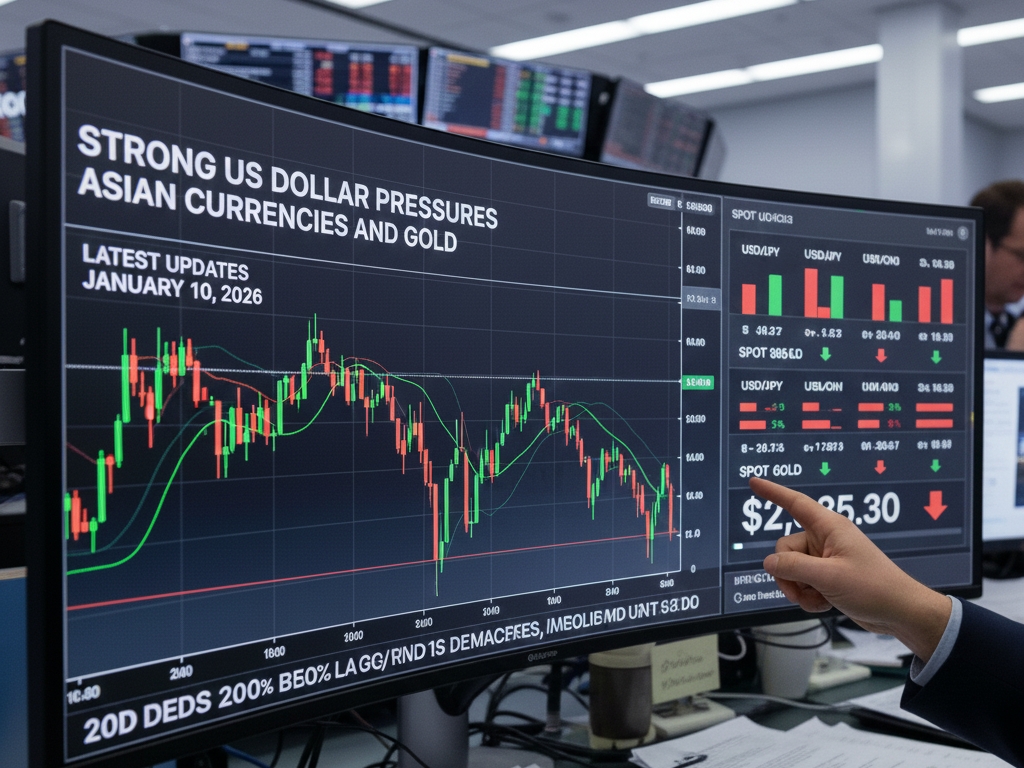
The US Dollar Index (DXY) climbed to 99.14 on January 9, 2026, marking its highest level since early December amid mixed US economic signals. Gold prices dipped to around $4,427 per ounce as of January 8, reflecting pressure from the stronger dollar and commodity rebalancing. Asian currencies broadly weakened, with USD/KRW rising to 1,459.14 and USD/JPY nearing 158.
Labor Market Triggers Volatility
December 2025 nonfarm payrolls added only 50,000 jobs, missing Dow Jones estimates of 73,000 and following downward revisions to prior months. Unemployment eased to 4.4%, but annual payroll growth averaged just 49,000 per month in 2025. This data fueled dollar strength as markets reassessed Federal Reserve rate cut expectations.
China's Yuan Bucks the Trend
China's December CPI rose 0.8% year-over-year, the highest since February 2023, helping the yuan strengthen to USD/CNY 6.9739 on January 9. The People's Bank of China set a firmer midpoint rate, prioritizing stability. Producer prices fell 1.9% YoY but narrowed from prior declines.
Regional Currency Pressures Mount
The South Korean won hit USD/KRW 1,459 amid seven straight sessions of weakness, prompting Bank of Korea Governor Rhee Chang-yong to call levels in the high-1,400s "misaligned" with fundamentals. Japan's yen weakened past 157.8 per USD despite solid household spending data. Asian central banks, including those in Korea and India, signaled interventions to curb excessive volatility.
Gold Outlook Remains Bullish
Despite short-term dips, HSBC forecasts gold could hit $5,000 per ounce in early 2026 amid geopolitical risks and debt concerns, with an average of $4,587. UBS echoes strong demand drivers post-2025's 68% rally. Central bank buying continues to support long-term upside.