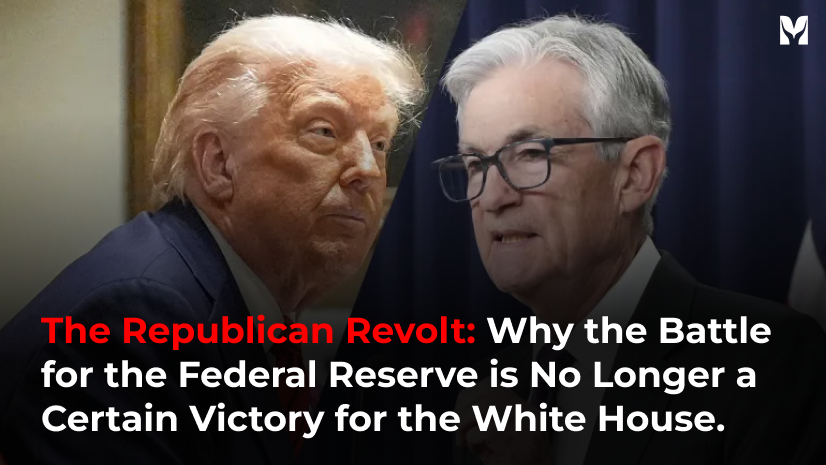
The corridors of power in Washington are currently echoing with a familiar tension, but with a startling new twist. As President Donald Trump moves to reshape the American economy in his second term, his most significant hurdle isn't coming from across the aisle. Instead, a burgeoning "Fed Mutiny" within the Republican party is threatening to derail his plans to replace Federal Reserve Chair Jerome Powell.
For months, the administration has signaled a desire for a more "aligned" leader at the helm of the central bank—someone more amenable to the aggressive interest rate cuts the President views as essential for growth. However, what was expected to be a swift transition has turned into a high-stakes political standoff that could paralyze U.S. monetary policy.
The Line in the Sand
The resistance is being led by a small but influential group of GOP senators who view the independence of the Federal Reserve as a non-negotiable pillar of global market stability.
Senator Thom Tillis (R-NC), a key member of the Senate Banking Committee, has emerged as the face of this internal opposition. Following a controversial Department of Justice (DOJ) probe into Powell’s past congressional testimony regarding Fed headquarters renovations, Tillis issued a blunt ultimatum: he will oppose any nominee to replace Powell until the legal investigation is resolved.
"If there were any remaining doubt whether advisers within the Trump Administration are actively pushing to end the independence of the Federal Reserve, there should now be none," Tillis stated.
Joining him is Senator Lisa Murkowski (R-AK), who labeled the investigation an "attempt at coercion." With a slim majority in the Senate, even two or three Republican defections are enough to turn a "sure-thing" confirmation into a potentially humiliating defeat for the White House.
The "Shadow" Shortlist
Despite the friction, the administration has not blinked. Treasury Secretary Scott Bessent has reportedly narrowed the search for a successor to five primary candidates, each representing a different vision for the "Trump Fed":
| Candidate | Current/Former Role | Market Perception |
|---|---|---|
| Kevin Hassett | Director, NEC | The Loyalist: Deeply aligned with Trump’s fiscal goals and tariff strategy. |
| Kevin Warsh | Former Fed Governor | The Critic: Known for calling for "regime change" in policy conduct. |
| Christopher Waller | Current Fed Governor | The Institutionalist: Respected by markets; seen as a "safe" compromise. |
| Michelle Bowman | Fed Vice Chair | The Conservative: A hawk on regulation who has previously dissented. |
| Rick Rieder | BlackRock Executive | The Outsider: Would bring a direct Wall Street perspective to the chair. |
Why This Matters for Your Wallet
This isn't just a political soap opera; the "Powell Stand-off" has real-world consequences. The Federal Reserve's primary job is to manage inflation and employment. When the market senses that the Fed is becoming a "political football," it reacts:
- Market Volatility: Uncertainty about who will lead the Fed often leads to fluctuations in the bond and stock markets.
- The Independence Premium: Investors trust a Fed that acts on data. If that trust erodes, the cost of borrowing for the U.S. government (and by extension, for mortgages and car loans) could rise.
- Inflationary Fears: Critics argue that forcing the Fed to cut rates prematurely—as Trump has demanded—could reignite inflation, undoing years of progress.
The Road Ahead
Jerome Powell’s term as Chair expires in May 2026. While he can remain on the Board of Governors until 2028, the battle for the Chairmanship is the immediate flashpoint.
The President now faces a choice: double down on a loyalist nominee and risk a public defeat in the Senate, or pivot to a "compromise candidate" who might appease the GOP holdouts. As the deadline approaches, the tension in the West Wing is palpable. In this game of economic chess, the most dangerous move might just be the one coming from his own side of the board.