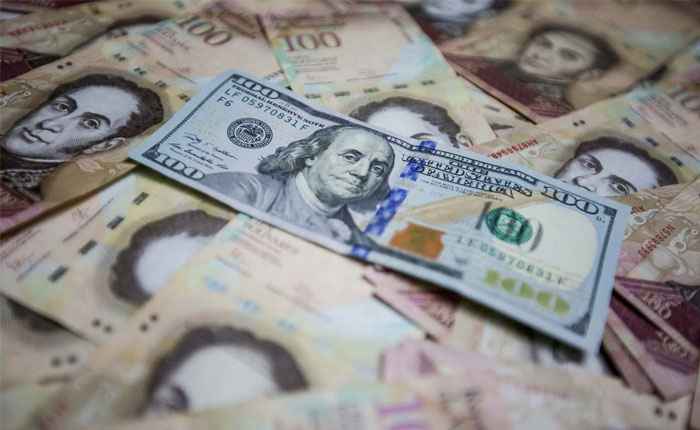
The U.S. dollar began the year on a firm footing as global financial markets redirected their focus away from geopolitical developments in Venezuela and toward a busy schedule of critical U.S. economic data. Despite heightened political and military tensions in Latin America, currency traders appeared more influenced by expectations surrounding the U.S. economy and the future course of Federal Reserve monetary policy.
Dollar Strength Reflects Confidence in the US Economy
In early trading sessions, the U.S. dollar advanced against several major currencies, including the euro and the Japanese yen. The move pushed the dollar to multi-week highs, signaling renewed confidence among investors in the relative strength of the U.S. economy compared with other developed markets.
Market participants cited resilient economic growth, elevated interest rates, and stable consumer demand as key factors supporting the greenback. With yields on U.S. assets remaining attractive, global investors continued to favor the dollar amid uncertainty elsewhere.
Geopolitical Developments Take a Secondary Role
Although developments in Venezuela captured international headlines, their impact on currency markets remained limited. Traders largely treated the situation as a geopolitical risk that does not yet pose a direct threat to global trade flows or financial stability.
Analysts noted that while geopolitical tensions can trigger short-term volatility, markets are currently more sensitive to economic fundamentals. Unless such events significantly disrupt energy supplies or international commerce, their influence on foreign exchange markets tends to fade quickly.
US Economic Data in Sharp Focus
Investor attention is now firmly fixed on a series of upcoming U.S. economic indicators, including manufacturing activity, services sector performance, and labor market data. These reports are widely viewed as crucial in shaping expectations for Federal Reserve policy in the months ahead.
Stronger-than-expected figures could reinforce the view that the U.S. economy remains robust, potentially delaying interest rate cuts and further supporting the dollar. Conversely, weaker data may revive expectations of a more accommodative stance from the central bank.
Federal Reserve Policy Outlook Remains Central
Markets are currently pricing in a cautious approach to interest rate cuts in 2026, reflecting the Federal Reserve’s continued focus on inflation and economic stability. Investors are also closely watching developments related to the future leadership of the central bank, as any shift in policy direction could have long-term implications for the dollar.
The combination of policy uncertainty and data dependency has made economic releases even more influential in guiding currency movements.
Impact on Global Currencies
The dollar’s strength has placed pressure on several other currencies, particularly those linked to lower yields or weaker growth prospects. Emerging market currencies and commodity-linked units have shown mixed performance, while traditional safe-haven currencies such as the yen have struggled against the stronger U.S. dollar.
This divergence highlights the dollar’s continued dominance in global financial markets during periods of economic reassessment.
Market Outlook
Looking ahead, analysts believe the dollar’s trajectory will largely depend on how upcoming U.S. economic data aligns with market expectations. Sustained economic resilience could extend the dollar’s gains, while any signs of slowdown may trigger renewed volatility across currency markets.