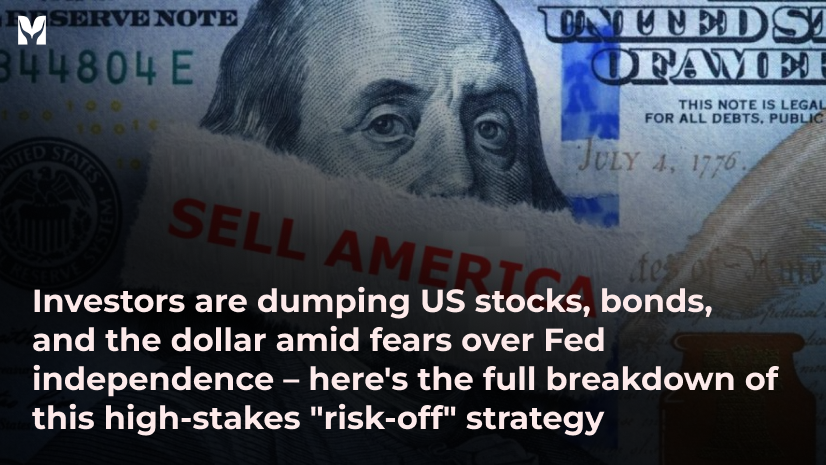
The “Sell America” trade is a Wall Street term that describes a broad, simultaneous sell-off of core US assets when global investors lose confidence in the US economy, its institutions, or political leadership. It involves dumping three key pillars at once:
- US stocks (e.g., S&P 500, Dow futures)
- US government bonds (Treasuries, pushing yields higher as prices fall)
- The US dollar (DXY index weakens)
This creates a classic "risk-off" environment, where capital flees perceived US risks toward safer or alternative havens like gold, silver, commodities, Bitcoin, or foreign markets. The phrase gained massive traction in 2025 during Trump's tariff announcements and has resurfaced strongly in January 2026 amid escalating pressure on Federal Reserve Chair Jerome Powell.
Why It Happens: Loss of Faith in US "Exceptionalism"
The US has long been seen as the world's safest and most dynamic economy, backed by an independent Fed that sets monetary policy free from political interference. When that trust erodes — due to trade wars, fiscal deficits, or threats to institutional independence — investors apply a higher risk premium to US assets.
Key triggers in recent history:
- April 2025: Trump's sweeping global tariffs sparked the original "Sell America" wave — stocks neared bear market territory, the dollar plunged (worst year since 2017), and bond yields spiked.
- January 2026: The DOJ's criminal probe into Powell (seen as Trump-orchestrated coercion over policy disagreements) revived the trade. On January 12, US stock futures, Treasuries, and the dollar dropped, while gold and silver surged to record highs. Analysts called it "unambiguously risk off," with fears that political meddling could undermine inflation control and market stability.
Real-World Impact & Safe-Haven Shift
When the "Sell America" trade kicks in:
- US yields rise (higher borrowing costs for government, mortgages, etc.)
- Dollar falls (hurts importers, but boosts exporters)
- Safe havens rally — gold often surges as a hedge against currency debasement or institutional erosion.
Experts like Krishna Guha (Evercore ISI) warn of renewed waves if tensions escalate, with global investors shifting to non-US assets. However, the US's deep liquidity, AI-driven growth, and dollar reserve status often limit how far the sell-off goes — creating buy-the-dip opportunities for some.
| Trigger | Date | Key Effects | Outcome |
|---|---|---|---|
| Tariff Shock | April 2025 | Stocks near bear market, dollar worst fall since 2017 | Markets recovered after policy pause |
| Fed Independence Threat | Jan 2026 | Dollar down, bonds/yields up, gold/silver to ATH | Muted so far; watch for escalation |
| General Definition | Ongoing | Simultaneous sell-off of stocks + bonds + dollar | Signals higher US risk premium |
The "Sell America" trade isn't a formal strategy — it's a market reaction to perceived cracks in US stability. With Trump back in office and Fed drama heating up, it's a term to watch closely. If confidence holds, it could fade fast; if not, expect more volatility and gold's continued shine. What's your take — buy the dip or diversify away?
Disclaimer: This article is for educational and informational purposes only and does not constitute financial, investment, or legal advice. The views expressed are based on market analysis at the time of writing and are subject to change without notice. We do not recommend or advise for any specific investment, trade, or financial strategy. Investment in the securities market involves inherent risks; please consult with a certified financial advisor or conduct your own independent research before making any financial decisions.