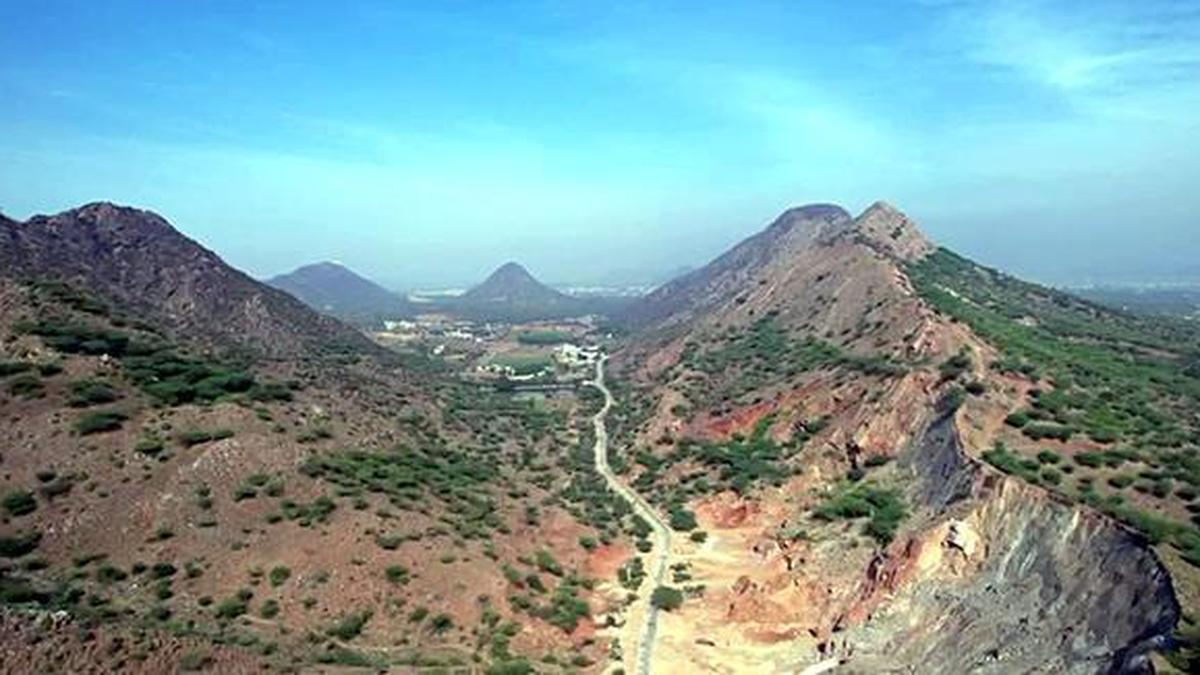
The Aravalli Hills, one of the oldest mountain ranges in the world, have once again become the centre of national attention as environmental concerns surrounding the region intensify. Stretching across Rajasthan, Haryana, Delhi and Gujarat, the Aravallis play a crucial role in maintaining ecological balance, groundwater recharge and climate stability in northern India.
In recent weeks, the issue has resurfaced after the Supreme Court of India took a serious note of environmental degradation and illegal mining activities in the Aravalli region, directing authorities to take urgent corrective measures. The court’s intervention reflects growing anxiety over the long-term consequences of unchecked exploitation of this fragile ecosystem.
Why the Aravallis Matter
The Aravalli range acts as a natural barrier against desertification from the Thar Desert, helps regulate air quality in the National Capital Region (NCR), and supports diverse flora and fauna. Environmental experts warn that damage to these hills could worsen air pollution, intensify water scarcity and accelerate climate vulnerability in north-western India.
Despite their importance, large portions of the Aravallis have faced continuous pressure from illegal mining, construction activities and land encroachment, particularly in parts of Haryana and Rajasthan.
Supreme Court’s Intervention
The Supreme Court has now sought to address the issue by proposing the formation of an expert committee to examine the extent of damage and recommend concrete steps for conservation. The court has also reiterated that illegal mining must be halted “at all costs”, sending a strong message to state governments and local authorities.
One of the key concerns raised before the court relates to the definition of the Aravalli Hills, as varying interpretations have allegedly allowed certain areas to escape environmental protection norms. Environmentalists argue that narrowing the definition could leave significant portions of the range exposed to commercial exploitation.
Policy Debate and Environmental Concerns
While the government has maintained that a majority of the Aravalli region remains protected under existing laws, activists and experts fear that loopholes in policy implementation could weaken safeguards on the ground. The debate has reignited calls for a uniform and legally binding definition of the Aravallis, along with stricter enforcement of environmental regulations.
In parallel, state governments have announced initiatives aimed at ecological restoration, including the removal of invasive plant species and improved monitoring of forest land. However, conservation groups stress that restoration efforts cannot succeed without stopping environmental damage at its source.
What Lies Ahead
The fate of the Aravalli Hills now depends largely on how swiftly and effectively court directives are implemented. The proposed expert panel is expected to play a critical role in shaping future conservation strategies and resolving long-standing legal ambiguities.
As climate change and environmental degradation become increasingly visible threats, the Aravalli issue serves as a reminder that economic development cannot come at the cost of irreversible ecological loss. Protecting the Aravallis is not just about preserving a mountain range—it is about safeguarding the environmental security of millions of people.
"The decisions we make today will shape the world for generations to come."