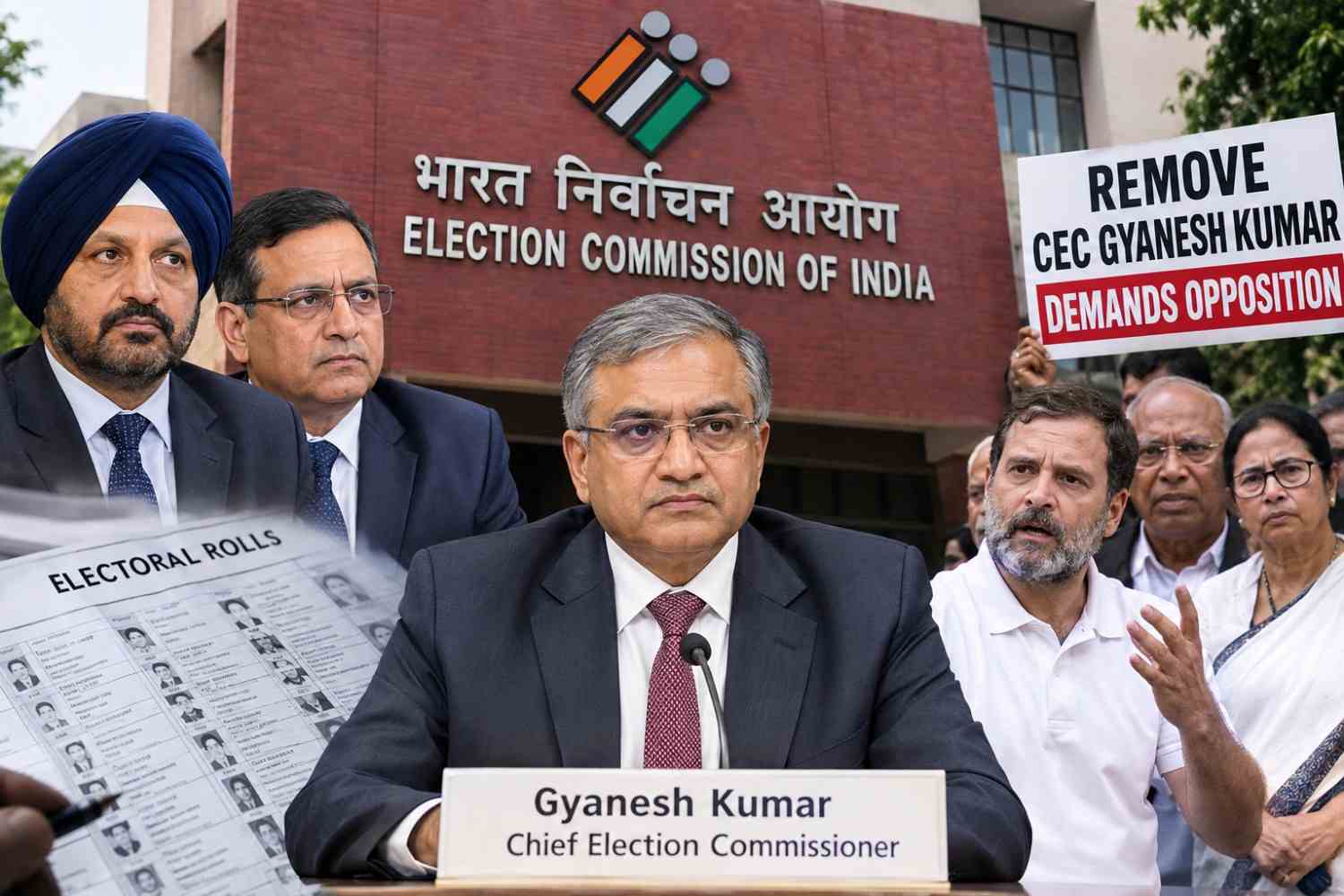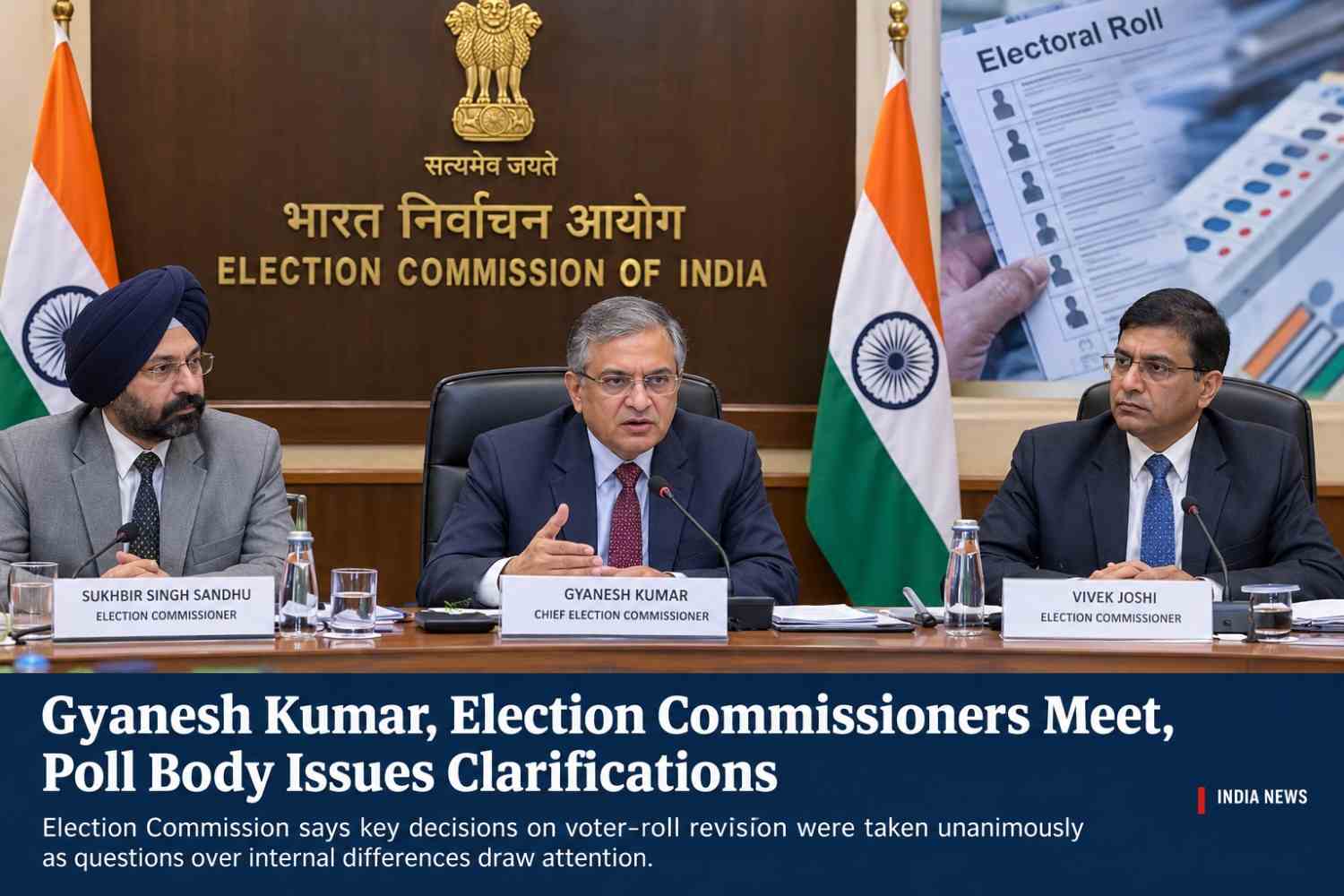
New Delhi: Chief Election Commissioner (CEC) Gyanesh Kumar and Election Commissioners Sukhbir Singh Sandhu and Vivek Joshi held a full Commission meeting at Nirvachan Sadan in New Delhi on September 26, amid reports of differences within the Election Commission of India (ECI).
The meeting came days after reports suggested that Sandhu and Joshi had raised objections to several decisions and orders connected with the Special Intensive Revision (SIR) of electoral rolls. The Election Commission subsequently issued clarifications addressing questions surrounding its internal functioning and the decision-making process.
EC says major decisions were unanimous
Following the meeting, the poll panel reiterated that important decisions relating to the SIR were taken with the approval of the full Commission. The clarification came after reports that the two Election Commissioners had recorded objections on several occasions concerning electoral-roll procedures, including issues related to voter registration and database management.
The Indian Express had reported that Sandhu and Joshi raised formal objections at least 14 times over a 10-month period. Among the issues reported were changes involving Form 6 for new voters and concerns over access to electoral-roll databases.
SIR remains at the centre of the controversy
The Special Intensive Revision has become one of the most closely watched electoral exercises in India. The process involves reviewing electoral rolls and verifying voter details.
The Election Commission's latest clarification seeks to distinguish between individual opinions expressed by Commissioners and decisions formally taken by the Commission. According to the EC, differences of opinion do not by themselves mean that the final decisions were not collectively approved.
Clarification on Cabinet Secretary communication
The Commission also addressed questions surrounding a communication sent to the Cabinet Secretary by the two Election Commissioners. The poll body described the communication as an administrative matter rather than evidence of a breakdown in the Commission's functioning.
The September 26 meeting and subsequent clarification come as scrutiny of the ECI's handling of electoral-roll revisions continues, with political parties and legal observers raising questions about transparency and decision-making.
For now, the Election Commission has publicly maintained that its major decisions, including those concerning the SIR, were taken through the Commission's formal decision-making process and with unanimous approval.
"The decisions we make today will shape the world for generations to come."