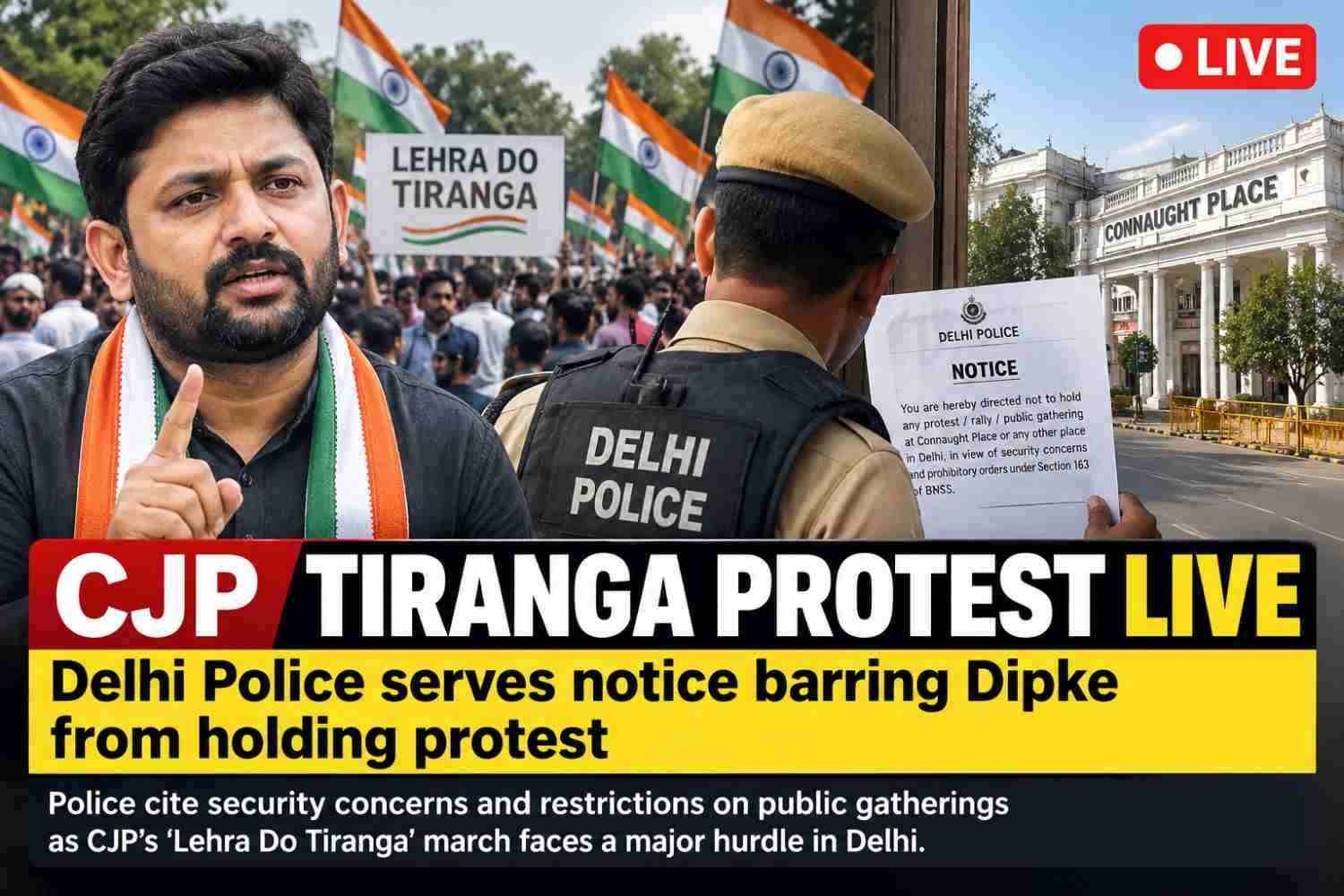
New Delhi, October 16, 2026: The Delhi Police has served a notice to Cockroach Janta Party (CJP) founder Abhijeet Dipke, prohibiting him from holding the party’s proposed ‘Lehra Do Tiranga’ march at Connaught Place. The action comes hours before the planned gathering, scheduled for Friday evening at Central Park in the national capital.
Delhi Police Cites Security Concerns
According to reports, more than 20 police personnel visited the residence where Dipke was staying and served him the notice. The police cited prohibitory orders under Section 163 of the Bharatiya Nagarik Suraksha Sanhita (BNSS) and the absence of the required permission from the New Delhi Municipal Council
Authorities warned that proceeding with the march despite the restrictions could invite legal action. Police also raised concerns about traffic disruption, public safety and the potential impact on commercial activities around Connaught Place.
Why Is CJP Planning the Tiranga March?
The CJP announced the ‘Lehra Do Tiranga’ gathering to express opposition to the detention of two party leaders, Saurav Das and Ashutosh Ranka, who were sent to five days of judicial custody following a demonstration at Jantar Mantar.
The party has also been demanding the resignation of Chief Election Commissioner Gyanesh Kumar amid controversy surrounding the revision of electoral rolls. Critics have alleged that the process unfairly affects certain voters, while the Election Commission has denied political bias in the exercise.
Central Park Closed, Security Tightened
Authorities have increased security across central Delhi ahead of the proposed gathering. Reports indicate that more than 6,000 Delhi Police personnel and 220 companies of Central Armed Police Forces have been deployed to prevent any law-and-order problems.
The NDMC has also announced that Central Park in Connaught Place will remain closed to the public on October 16 and 17. Traffic restrictions and diversions have been introduced in several areas surrounding the planned protest venue.
Dipke Defends the Right to Peaceful Protest
Dipke has defended the proposed gathering, questioning the restrictions on the planned event and maintaining that citizens should be able to express their concerns peacefully.
Police, meanwhile, have clarified that waving the national flag is not itself illegal. Their objection concerns holding an unauthorised procession and assembling a crowd in an area where prohibitory restrictions are in force. Authorities have reportedly offered to facilitate a smaller group carrying the national flag at an alternative location.
What Happens Next?
The immediate question is whether the CJP will proceed with its planned gathering despite the police notice. With security tightened and Central Park closed, the situation in Connaught Place remains a key focus.
The developments have also renewed discussion about balancing the right to peaceful assembly with public safety, traffic management and the interests of local businesses.
"The decisions we make today will shape the world for generations to come."