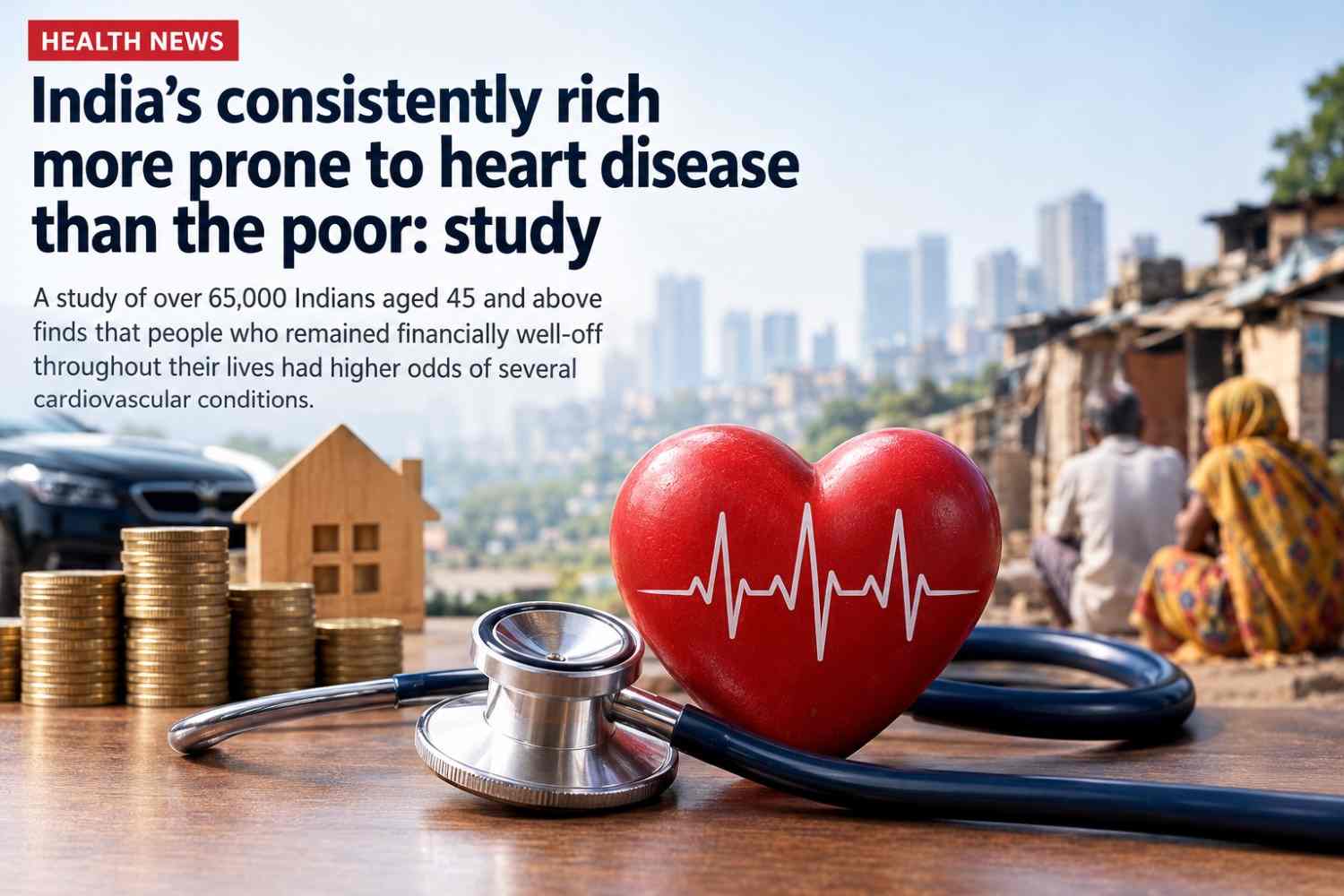
A new study has revealed a surprising pattern in India’s heart health landscape: people who remained financially well-off throughout their lives were more likely to report several cardiovascular conditions than those who consistently experienced economic disadvantage.
The research, published in the American Journal of Preventive Medicine in October 2026, analysed data from 65,364 Indians aged 45 and above. The findings were based on information collected through the Longitudinal Ageing Study in India (LASI) during 2017–2018. The research examined how financial circumstances during childhood and adulthood were associated with cardiovascular health later in life.
What Did the Study Find?
Researchers compared people who remained in a consistently high socioeconomic position with those who remained in a consistently low socioeconomic position throughout their lives.
The results showed that people who were consistently well-off had higher adjusted odds of several cardiovascular conditions.
According to the study, the consistently affluent group had:
1. 80% higher odds of congestive heart failure.
2. 70% higher odds of a heart attack.
3. 43% higher odds of abnormal heart rhythm.
4. 37% higher odds of heart disease overall.
5. 23% higher odds of cardiovascular disease across the combined measure used by researchers.
These figures represent adjusted odds ratios, not absolute increases in the number of cases. The findings also show an association rather than proving that wealth itself causes heart disease.
Why Could Wealth Be Linked to Higher Heart Disease Risk?
Although financial stability can improve access to healthcare, education and nutritious food, socioeconomic position can also be associated with differences in lifestyle and daily routines.
Factors such as physical inactivity, unhealthy diets, excess body weight, diabetes and high blood pressure can contribute to cardiovascular problems. Differences in working patterns, stress and other health-related behaviours may also influence long-term outcomes.
However, the study does not establish that any single lifestyle factor explains the higher odds observed among consistently affluent participants. Further research would be needed to identify the mechanisms behind the association.
People Who Experienced Upward Mobility Also Faced Higher Odds
The research also found that people who moved from a lower socioeconomic position during childhood to a higher position in adulthood had higher odds of several cardiovascular outcomes than those who remained economically disadvantaged.
This suggests that a person's financial circumstances across different stages of life may provide useful information when researchers assess cardiovascular health.
The findings highlight the importance of examining long-term socioeconomic experiences rather than looking only at a person's current income or household wealth.
Does This Mean Poor Indians Have a Lower Risk of Heart Disease?
Not necessarily.
The study's comparison does not mean that economically disadvantaged people are protected against cardiovascular disease. Poorer communities can face serious health risks, including limited access to preventive healthcare, difficulties obtaining long-term treatment and delays in receiving medical attention.
Earlier research has also shown that cardiovascular risk factors have become increasingly widespread across India's socioeconomic groups. National survey analyses found that unhealthy weight, diabetes and hypertension increased among less wealthy and less educated populations between 2015–2016 and 2019–2021.
Therefore, the latest findings should not be interpreted as evidence that poverty is beneficial to heart health.
What Does This Mean for Heart Health in India?
The research underlines the need for cardiovascular prevention strategies that consider people's health risks throughout their lives, regardless of their financial background.
Regular blood pressure checks, diabetes screening, a balanced diet, physical activity, avoiding tobacco and appropriate medical care remain important ways to help reduce cardiovascular risk.
For policymakers, the findings also raise questions about how childhood circumstances, adult economic conditions and lifestyle patterns interact to influence long-term health.
"The decisions we make today will shape the world for generations to come."