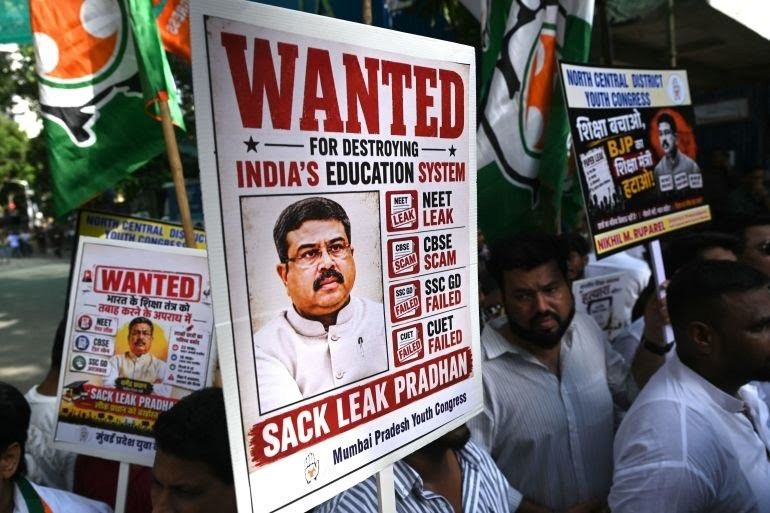
The system finally cracked. After weeks of relentless pressure from a generation it had treated as disposable, Union Education Minister Dharmendra Pradhan tendered his resignation on 25 July 2026. In a carefully worded letter posted on X, he claimed he was stepping aside so that “anti-national forces” would not exploit the anger of students camping at Jantar Mantar. The language itself reveals the true face of power: when the young demand accountability for destroyed futures, the first instinct of the ruling establishment is to brand them a threat to the nation.
This was no ordinary resignation. It was the first significant retreat by Narendra Modi’s government in the face of a youth-led movement that began as online satire and became a national reckoning. The Cockroach Janta Party, founded by Abhijeet Dipke, turned a slur once used against unemployed and frustrated young Indians into a badge of defiance. What started as mockery of a system that produces paper leaks with alarming regularity grew into sit-ins, marches, hunger strikes, and clashes with police that left scores injured.
At the centre of the storm stood the National Eligibility cum Entrance Test. In May 2026, more than 22 lakh aspirants sat for the medical entrance examination. Within days, evidence of a large-scale paper leak forced its cancellation. A re-test was ordered. Between the original exam and the re-test, at least twelve students took their own lives. Families across Rajasthan, Uttar Pradesh, Madhya Pradesh, Tamil Nadu and elsewhere buried children who had prepared for years only to watch the rules change under their feet. This was not an isolated failure. The same National Testing Agency had already faced serious questions over the 2024 NEET episode. Under Pradhan’s watch, the pattern continued.
The government responded with the usual mixture of delay, deflection and force. Investigations were handed to the CBI. Computer-based testing was promised for the future. Fast-track courts were announced. Yet the minister remained in place. When students marched toward Parliament, police met them with batons, tear gas and, according to multiple accounts, more aggressive measures. Internet restrictions appeared around protest sites. Metro stations were closed. The message was clear: the state would rather manage the optics of dissent than confront the rot in its examination machinery.
Pradhan’s resignation letter tried to reframe the episode as an act of selfless concern for students who might otherwise become “entangled in legal complexities.” He spoke of respecting the aspirations of youth while simultaneously warning against forces that might exploit them. This is the classic manoeuvre of a system that refuses to accept moral responsibility. For years, paper leaks have been treated as unfortunate incidents rather than symptoms of deep institutional capture. Coaching cartels, corrupt officials, and an examination apparatus that prioritises control over integrity have been allowed to thrive. Students pay the price in anxiety, debt, repeated attempts, and, too often, in death.
The Cockroach movement succeeded where opposition parties had largely failed because it spoke in the language of those most affected. It refused the usual political theatre. Its demand was simple and non-negotiable: the minister responsible for the education system must go. Sonam Wangchuk’s 26-day hunger strike added moral weight. The prolonged occupation of Jantar Mantar turned abstract outrage into a visible, daily challenge to authority. When the government finally sought talks and then delayed its response, the pressure became impossible to ignore.
Yet one resignation does not cleanse the system. The same structural failures that produced successive paper leaks remain intact. The National Testing Agency’s track record, the absence of robust independent oversight, and the political culture that treats student despair as a law-and-order problem rather than a national emergency have not disappeared with Pradhan’s departure. The government that called peaceful protesters a potential vehicle for anti-national forces has shown, once again, how it views the generation whose futures it claims to safeguard.
This episode lays bare a deeper truth. A nation that repeatedly fails its students at the most competitive gateways to professional life is a nation slowly breaking its own future. The anger that filled the streets of Delhi did not emerge overnight. It accumulated through cancelled exams, unanswered questions, police lathis, and the quiet funerals of young people who could no longer carry the weight of broken promises. The cockroaches did not invent the crisis. They simply refused to remain invisible while the system continued to grind them underfoot.
Pradhan is gone. The machinery that produced the leaks, the suicides, and the contempt for student voices remains. Until that machinery is confronted with the same determination the students showed at Jantar Mantar, the resignation will stand as a temporary concession rather than genuine accountability. The youth have forced the first crack. The question now is whether the system will repair itself or simply paper over the damage until the next leak, the next cancellation, and the next body count.
"The decisions we make today will shape the world for generations to come."