The system that pretends to nurture India’s demographic dividend is once again revealing its true face. After weeks of street pressure forced Education Minister Dharmendra Pradhan out of office, the same government that issued quiet assurances of “no punitive action” has allowed state agencies in Assam, West Bengal and Bihar to detain and charge hundreds of young protesters. The Cockroach Janta Party, the satirical youth formation that turned a judicial insult into a national reckoning, has now drawn a clear line: release every detained student or the streets will fill again.
Abhijeet Dipke, the 30-year-old founder who transformed a single mocking post into a movement with tens of millions of followers, never claimed to be a professional politician. He simply refused to accept that an entire generation should be dismissed as pests. The spark was Chief Justice Surya Kant’s courtroom comparison of unemployed youth to cockroaches and parasites. Dipke’s response — “What if all the cockroaches came together?” — captured a raw, long-simmering rage over paper leaks, cancelled exams, suicides, and a job market that treats degrees as worthless paper.
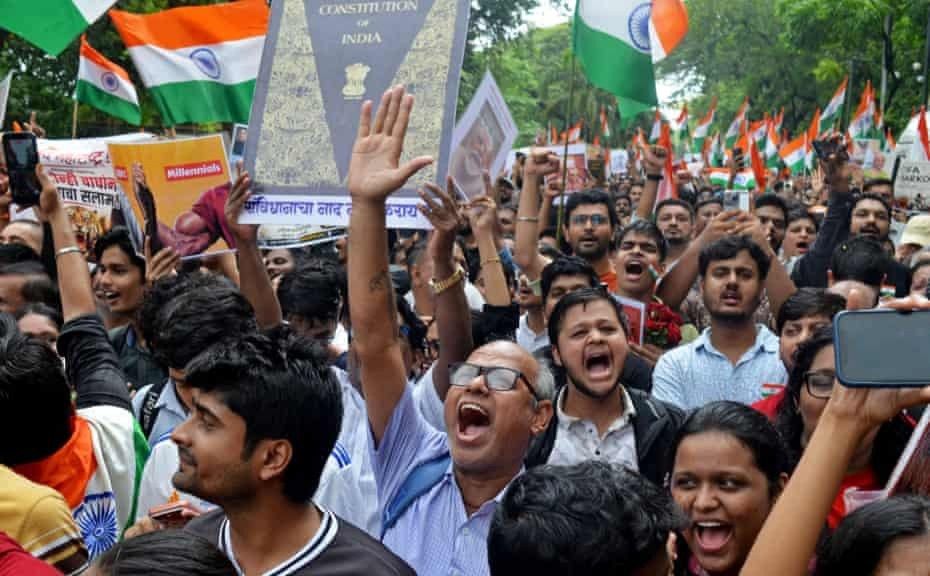
That rage spilled onto the streets. Tens of thousands gathered at Jantar Mantar. On 20 July they tried to march toward Parliament. Police answered with tear gas and batons. Injuries mounted. Arrests followed. Yet the movement held. Talks were held. Pradhan resigned. The government promised that peaceful participants would not face criminal cases. The sit-ins were wound down in an atmosphere of cautious victory.
Within days the reports began arriving. Students detained in Assam. Arrests and harassment in West Bengal and Bihar. Hundreds of cases registered, some under non-bailable provisions. Surveillance in Delhi. A police official in Siwan suspended after an assault rifle was used to disperse a crowd. Bihar eventually announced the release of those held in that state and claimed no further action would be taken. Elsewhere the machinery kept grinding.
CJP spokesperson Ashutosh Ranka stated the position without ambiguity: if the Centre does not honour the understanding and secure the release of every detained or arrested protester, the agitation will resume. Another spokesperson, Saurav Das, confirmed that a legal defence fund is already active and lawyers are working across the affected states. The party has given the government a short window. The message is simple. An assurance given to end a national protest cannot be treated as disposable once the cameras leave Jantar Mantar.
This is not an isolated administrative failure. It is the operating logic of a political order that has grown comfortable treating student dissent as a security problem rather than a governance failure. Year after year, competitive examinations — the single most important ladder for millions of lower-middle-class and rural youth — have been compromised by leaks, irregularities and last-minute cancellations. Each scandal produces statements of concern. Each scandal is followed by the same pattern: temporary outrage, limited inquiry, and eventual quiet. The suicides continue. The unemployment numbers among graduates remain brutal. The system protects itself.
Opposition leaders have called the detentions one of the gravest assaults on democratic space in recent memory. Parliament was disrupted. The Chief Justice himself noted that the right to peaceful protest is constitutional and that allegations of excess force require independent examination. Yet the real power remains with those who control the police and the cases. A movement that began by reclaiming an insult has now forced the government to confront a harder truth: India’s young people are no longer willing to be managed as a disposable surplus.
The Cockroach Janta Party has no interest in becoming another conventional party. Its strength lies in its refusal to accept the old bargain — silence in exchange for empty promises. Pradhan’s resignation was a concrete result. The demand for the release of every detained protester is the next necessary one. If the Centre and the state governments continue to treat that demand as optional, they will discover that the cockroaches have learned how to survive far more than tear gas and temporary detention.
The nation is watching whether the system that broke trust with an entire generation can still keep a simple promise. So far the evidence is not encouraging.
"The decisions we make today will shape the world for generations to come."