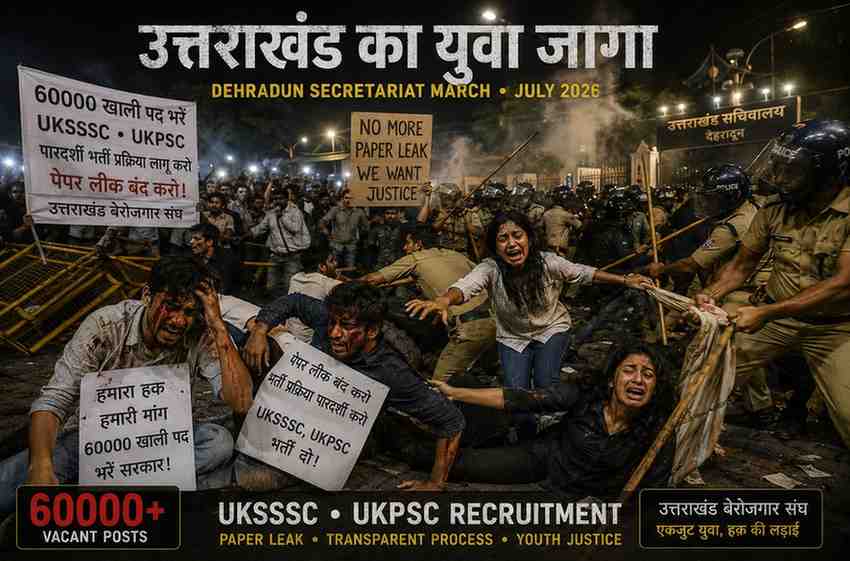
On 21 July 2026, hundreds of unemployed youth gathered near the Uttarakhand Secretariat in Dehradun under the banner of the Uttarakhand Berojgar Sangh. Their core demand is straightforward and long-pending: fill approximately 60,000 vacant posts under the UKSSSC and UKPSC. Many of these vacancies have remained unfilled for years, leaving a generation of educated young people in limbo.
The protesters also want thorough investigations into past paper leaks, specifically referencing irregularities from 2022, and a transparent, time-bound recruitment calendar. They argue that repeated delays and questions over exam integrity have eroded trust in the state’s hiring process. Police deployed personnel and erected barricades to manage the gathering, which remained largely peaceful but firm.
Leaders of the Berojgar Sangh issued a three-day ultimatum. If the government fails to show concrete movement on clearing the backlog and ensuring fair processes, they have warned of a wider statewide agitation. The demonstration highlights a deeper frustration that mirrors national conversations around examination integrity and youth unemployment.
In a parallel development in the state, environmental protests against the proposed felling of thousands of trees for the Rishikesh highway widening project forced the government to temporarily halt the work. Chief Minister Pushkar Singh Dhami ordered a review after locals and activists raised concerns about the impact on forests and wildlife corridors in the Shivalik region. Symbolic actions, including a woman shaving her head, drew attention to the ecological stakes.
The youth recruitment protest, however, carries more immediate political weight. With jobs scarce and trust in recruitment processes low, the three-day window now becomes a test of whether the state administration responds with timelines and transparency or allows another cycle of street pressure to build. For the young people standing outside the Secretariat, the message is clear: the backlog is no longer just an administrative statistic — it is a personal crisis that can no longer be postponed.
"The decisions we make today will shape the world for generations to come."