The familiar protest ground at Jantar Mantar turned into a battleground on 20 July 2026. What began as a sustained sit-in by the Cockroach Janta Party against repeated examination irregularities and paper leaks exploded into chaos when thousands of mostly young protesters tried to march towards Parliament on the opening day of the monsoon session.
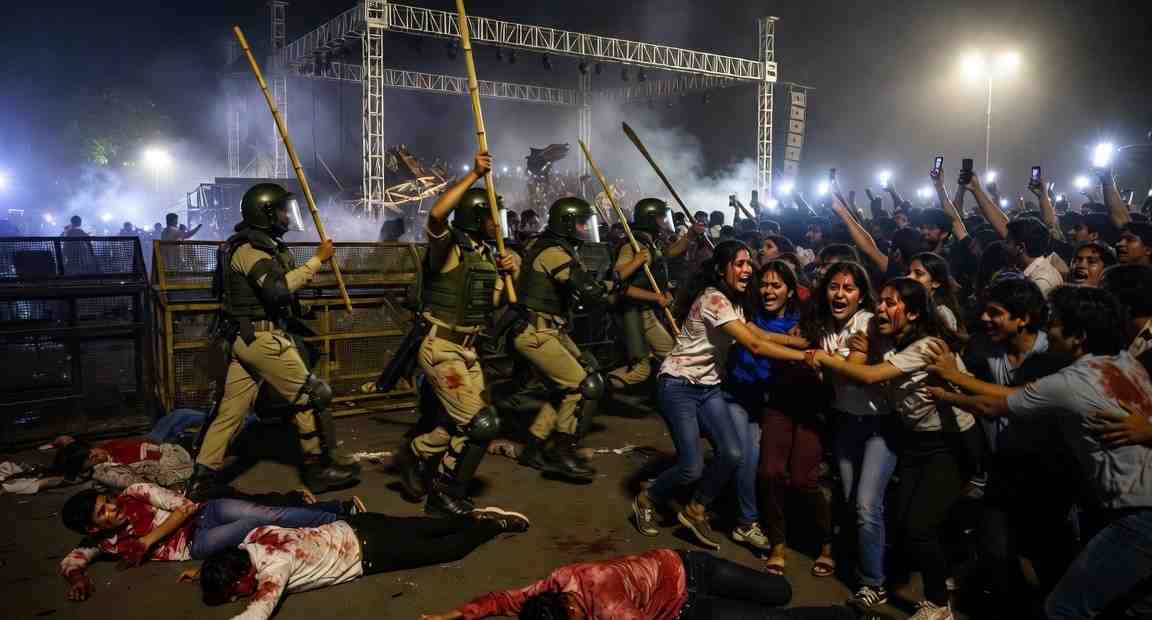
Delhi Police had already imposed prohibitory orders under Section 163 of the Bharatiya Nyaya Sanhita. Heavy barricades, Rapid Action Force units, tear-gas vehicles and armoured carriers ringed the area. When sections of the crowd pushed forward and broke through layers of barriers, security forces responded with tear gas and a baton charge. Within hours the narrative split sharply into two competing accounts of the same streets.
Protesters and CJP leaders describe a one-sided assault. They say police swung lathis with force that cracked skulls, dragged young men and women across the road, and in some cases used sticks fitted with nails or spikes. Ashutosh Ranka, a CJP spokesperson, stated that youths had their heads opened and that Sonam Wangchuk’s wife Geetanjali was pulled by the hair while being dragged from a truck. Around 100 protesters were treated at Ram Manohar Lohia Hospital. Several suffered head injuries; at least four were reported admitted to the ICU, one in critical condition. Limb fractures were also claimed. Videos circulating on social media appear to show police personnel striking people on the ground and plainclothes individuals mixing with the crowd before force was used. Electricity at the site was cut, tents and the main stage were dismantled, and many protesters were taken away, some to Chhatrasal Stadium.
Police present a different picture. They state that protesters turned violent, pelted stones, damaged vehicles and public property, and refused repeated lawful directions to disperse. More than 118 security personnel, including several senior IPS officers up to the rank of Special Commissioner and Joint Commissioner, sustained injuries. Four FIRs have been registered covering rioting, unlawful assembly, assault on public servants, criminal conspiracy and flying a drone without permission in a restricted zone. Over 70 people were detained. Police sources say injuries among protesters occurred largely during stampedes and falls. Officials have begun analysing more than 250 pieces of video evidence from CCTV, mobiles, drones and body cameras to identify those involved in violence. Delhi Police has also issued public appeals against circulating unverified claims, specifically denying certain social-media reports of assaults on minors.
By the night of 20 July the stage had been removed and the site cleared. Yet by the early hours of 21 July protesters had returned under phone torchlight, rebuilt structures and resumed their presence. The core demand remains unchanged: the resignation of Union Education Minister Dharmendra Pradhan over the handling of competitive examinations, particularly the NEET paper-leak controversy that triggered cancellations, re-tests, widespread anxiety and reported student suicides. Additional calls include compensation for affected families and systemic reforms to restore faith in the examination process. Sonam Wangchuk, who had been on hunger strike, remained hospitalised; his wife moved the Delhi High Court seeking his transfer to a hospital of her choice.
The episode exposes a deeper tension. India’s youth face a competitive education system that has repeatedly failed basic tests of integrity. Paper leaks, delayed results and opaque processes have created a generation that feels cheated before it even enters the workforce. When that anger finds expression at the designated protest site in the national capital, the state’s response becomes a test of how democracy handles dissent. Force may restore order on a given afternoon, yet it risks converting legitimate grievance into lasting alienation. Equally, stone-pelting and attacks on security personnel cannot be excused as mere passion; they undermine the moral force of any movement.
Until that happens, Jantar Mantar remains both a symbol of youth frustration and a warning. When the next generation believes the system is rigged against them and the response they meet is a baton, the cost is paid not only in hospital beds but in the long-term legitimacy of institutions. The students who returned overnight under torchlight have made one thing clear: the protest is not over.
"The decisions we make today will shape the world for generations to come."