Is this what democracy looks like in 2026 India?
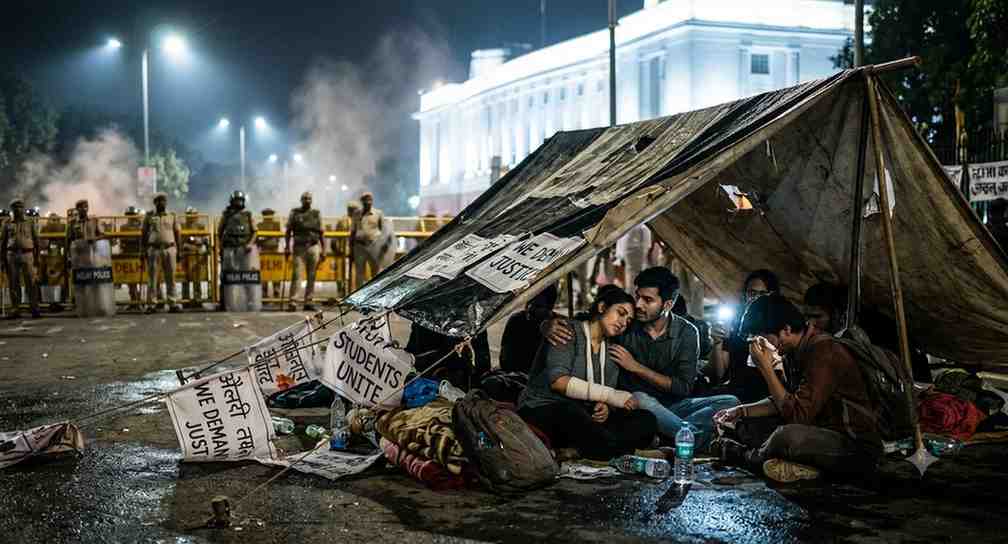
Students demanding basic accountability for repeated examination paper leaks are met with tear gas, lathis, site demolitions and detentions. More than a hundred protesters needed medical treatment after the 20 July confrontation. Some remain in serious condition. Police claim their own personnel were also injured. The stage was torn down, food stalls removed, electricity cut. And still the highest offices of the BJP-led government have offered almost nothing of substance.
No clear public explanation. No independent high-powered inquiry with teeth. No resignation of the Education Minister despite months of outrage over leaks that have destroyed careers and driven some students to despair. Limited talks with lower-level ministers are presented as engagement while the core demand is ignored. The Prime Minister remains conspicuously silent on the specific crisis unfolding a short distance from Parliament.
This is not governance. This is containment.
A government that allows the examination system to rot for years, then responds to the resulting anger with physical force and bureaucratic stonewalling, is telling an entire generation that their futures are disposable. The message is clear: protest if you must, but the system will not bend. Batons are easier than reforms. Silence is cheaper than accountability.
Opposition parties have visited hospitals and launched helplines. Citizens from across the country are sending food through Swiggy, Zomato and Zepto. Volunteers rebuild what the police dismantle. The support is real and organic. The response from the ruling establishment is not.
When young people are forced to camp in the rain, scrape together meals from anonymous delivery orders, and face the constant threat of another crackdown simply to demand that exams be fair, the question is no longer about one minister or one paper leak. It is about whether the institutions of power still recognise the right of citizens to demand answers without being treated as a law-and-order problem.
Democracy does not die in a single dramatic moment. It erodes when the powerful decide that listening is optional and force is sufficient. At Jantar Mantar, that erosion is visible in real time. The students are still there. The government, for all practical purposes, is not.
The students at Jantar Mantar are still waiting. The Education Minister is not resigning. And the reason is not complicated.
Dharmendra Pradhan remains in office because the BJP has decided that no minister will be sacrificed to public pressure. Party leaders have closed ranks. Home Minister Amit Shah has publicly backed him. Resignation is treated as a dangerous precedent — one that could encourage every future protest to demand a scalp. Better to absorb the anger, deploy police, and wait for the tents to thin out.
This is the cold calculation. Admitting failure on repeated paper leaks would mean accepting that the examination system under this government has collapsed for large numbers of young Indians. It would mean accepting responsibility for the chaos, the cancelled exams, the ruined preparation cycles, and the despair that followed. The government prefers to frame the crisis as a law-and-order issue or a technical glitch rather than a political failure at the top of the Education Ministry.
So the students get tear gas and lathis. The site is dismantled. Food stalls are removed. More than a hundred protesters need hospital treatment. Police claim their own injuries. And the minister stays. Limited meetings with other ministers are offered as “engagement” while the central demand is simply ignored. The Prime Minister remains silent on the specific crisis unfolding a short distance from Parliament.
This is not indecision. It is a choice. The party has chosen political self-preservation over accountability. It has chosen to send a clear signal: no amount of student protest will force a resignation. Force is easier than reform. Silence is cheaper than ownership.
Citizens continue to send food through delivery apps. Volunteers rebuild what the police tear down. Opposition leaders visit hospitals and issue statements. None of it has moved the Centre. The message to the country’s youth is brutal in its clarity — your careers can be destroyed by systemic failure, but the minister responsible will keep his chair.
When a government decides that protecting one man is more important than restoring trust in the examination system that decides the futures of millions, the question is no longer about one resignation. It is about whether power still answers to the people it claims to serve. At Jantar Mantar, the answer so far has been delivered with batons and indifference.
"The decisions we make today will shape the world for generations to come."