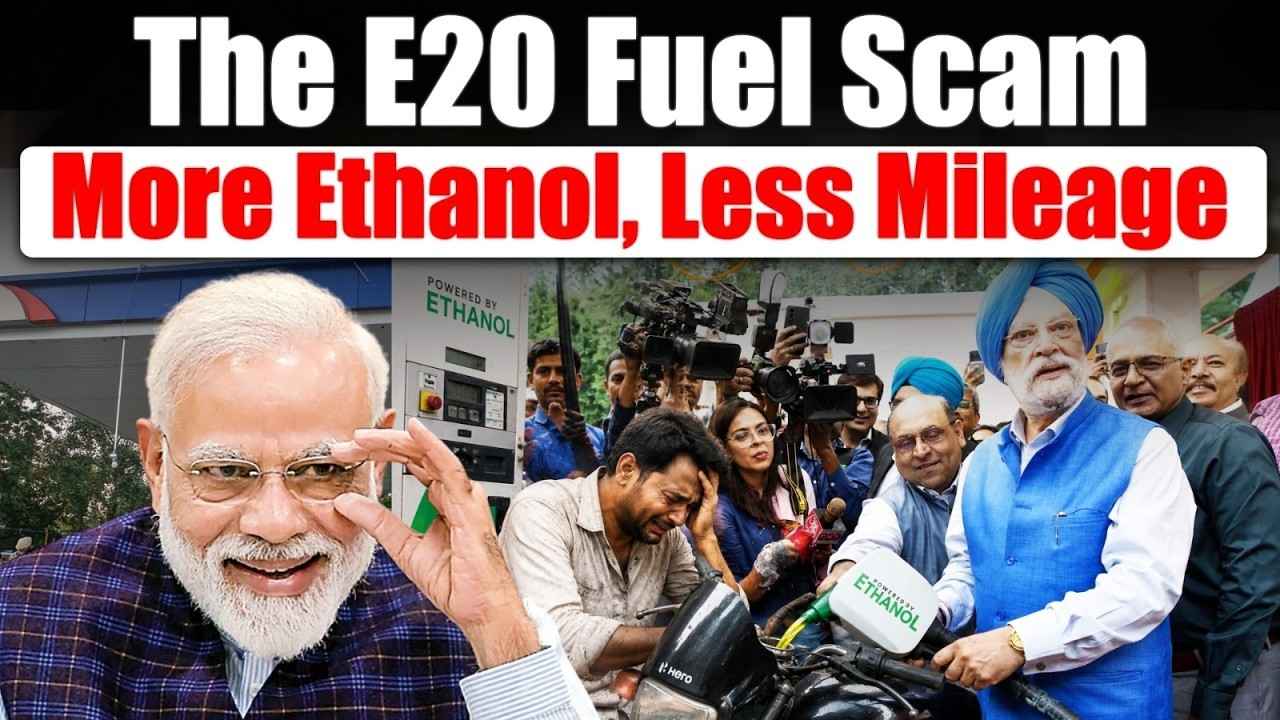
The Modi government’s E20 mandate promised motorists petrol containing precisely 20 percent ethanol. Karnataka’s Department of Legal Metrology, acting under the Food, Civil Supplies, and Consumer Affairs Ministry, collected 63 petrol samples from seven districts—Bengaluru Urban, Bengaluru Rural, Kolar, Chikkaballapura, Tumakuru, Ramanagara, and Dakshina Kannada—and subjected a key set of 14 samples to testing at the NABL-accredited and ISO-certified Shriram Research Institute in Bengaluru.
The laboratory results, released on 6 November 2026, showed ethanol content far above the prescribed limit in 11 of those 14 samples. The highest reading came from an Indian Oil Corporation Limited (IOCL) outlet: 31.2 percent. A Hindustan Petroleum Corporation Limited (HPCL) MS-Power sample registered 30.5 percent. Another HPCL sample measured 27 percent. Bharat Petroleum Corporation Limited (BPCL) Speed petrol recorded 26.5 percent. Nayara Energy samples showed 26.1 percent and 20.6 percent. A Shell sample hit 25.5 percent. Additional readings included BPCL at 24.2 percent and 22.6 percent, HPCL at 22.4 percent, and IOCL at 20.8 percent. Only three samples stayed at or below the 20 percent mark: BPCL at 19.9 percent, Mangalore Refinery and Petrochemicals Limited at 19.2 percent, and one Shell sample at 13.5 percent.
When the same samples were first sent to the oil companies’ own laboratories, the reports failed to disclose the ethanol percentage even though ethanol content is a mandatory testing parameter. Only after independent laboratory analysis did the excess become public.
The economic impact is measurable. India consumes roughly 6,200 crore liters of petrol annually. A 10 percent drop in mileage caused by higher ethanol content, calculated at an average retail price of ₹100–110 per litre, translates into an estimated annual loss of ₹62,000 crore for consumers. Additional damage to fuel filters, pumps, injectors, hoses, and seals in vehicles never designed for sustained exposure above E20 is projected to cost another ₹39,000 crore in repairs each year. Together, the burden approaches ₹1.01 lakh crore.
Nearly 99 percent of India’s more than 35 crore vehicles were not engineered for ethanol blends exceeding 20 percent. Even vehicles manufactured after the April 2023 E20 certification window were approved only up to that level. Most fuel dispensers currently in use were designed for a maximum of 15 percent ethanol. Yet the excess blending continued without any mandatory display of the actual percentage at the pump. Consumers had no information and no alternative.
The oil marketing companies IOCL, HPCL, and BPCL have rejected the findings, questioning the sampling protocol and pointing to their own joint monitoring exercises with the Centre for High Technology that showed average ethanol content of 19.3 percent across 56 Karnataka samples. Those internal exercises, however, do not erase the independent laboratory certificates or the fact that company labs initially withheld the ethanol data.
The E20 program was sold as energy security and farmer support. In practice, the absence of rigorous, transparent, real-time monitoring has allowed the stated 20 percent blend to drift well beyond the limit. The higher ethanol content reduces energy density, lowers mileage, accelerates component wear, and transfers the financial cost directly onto ordinary vehicle owners who continue to pay the full retail price of petrol.
Karnataka has demanded penalties against the companies, a compensation fund for affected motorists, mandatory public display of the actual ethanol percentage at every pump, and the option of lower-blend fuel. Until those demands are met with enforceable action rather than denials, the data from the accredited laboratory stands as evidence that the fuel being sold under the E20 label is not what the government claimed it would be.
Official sources of data: Karnataka Department of Food, Civil Supplies, Consumer Affairs, and Legal Metrology press release and Shriram Research Institute (NABL-accredited, ISO-certified) laboratory reports dated 6 November 2026; statements by Minister Rizwan Arshad; contemporaneous coverage by The Hindu, Indian Express, Business Standard, CNBC-TV18, Times of India, and Moneycontrol. Oil marketing companies have issued a joint statement disputing the methodology while affirming compliance with BIS IS 17021 specifications in their internal tests.
Disclaimer: This article is based on laboratory results and official statements available as of 7 November 2026. Fuel composition, testing methods, and regulatory responses may evolve. Readers should verify current specifications at retail outlets and consult vehicle manufacturers regarding ethanol tolerance.