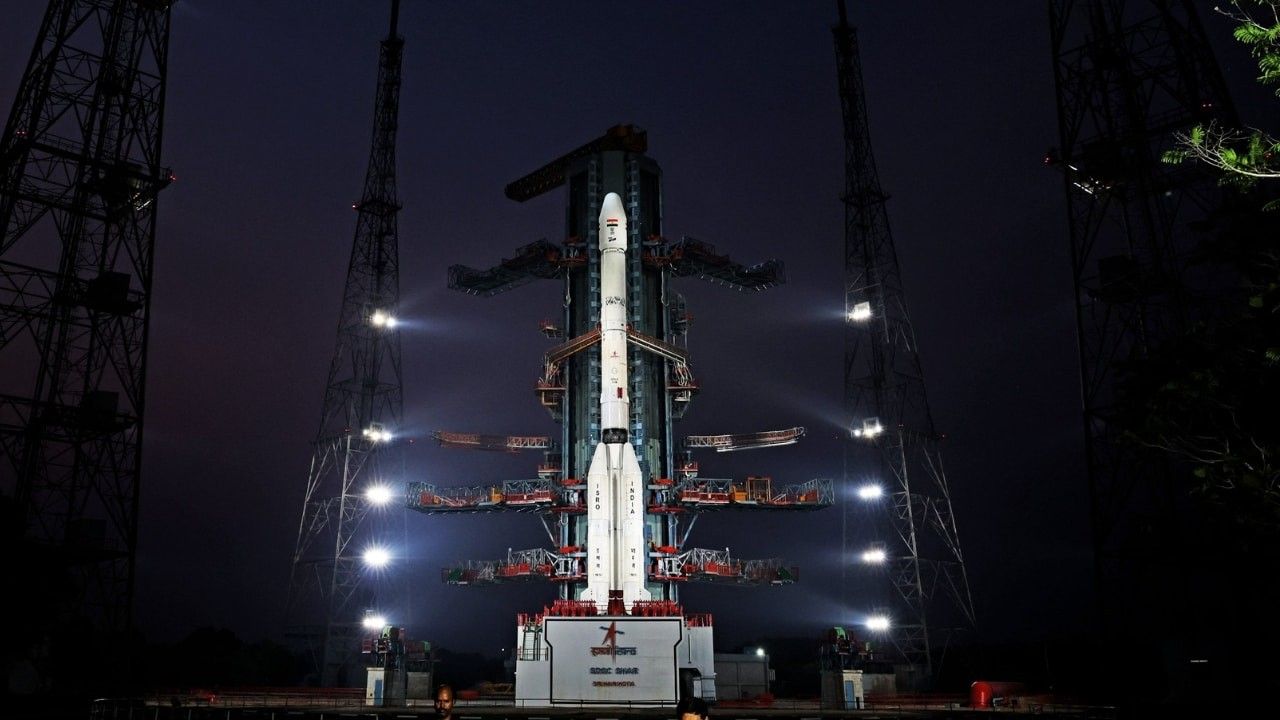
India has achieved another major milestone in space technology as the Indian Space Research Organisation (ISRO) successfully launched its GSLV-F18 rocket carrying the next-generation navigation satellite NVS-03.
The rocket lifted off from the Satish Dhawan Space Centre in Sriharikota, Andhra Pradesh, at 11:51 PM on October 30, 2026. The satellite was successfully placed into its intended Geosynchronous Transfer Orbit after approximately 18 minutes and 40 seconds of flight.
This mission marks the 20th flight of India's Geosynchronous Satellite Launch Vehicle (GSLV) and represents an important step towards strengthening the country's independent satellite navigation capabilities.
What Makes the NVS-03 Satellite Special?
The NVS-03 satellite weighs approximately 2,250 kg and comes with several advanced features designed to improve India's regional navigation system.
One of its most important technologies is an indigenously developed atomic clock. Atomic clocks are essential for satellite navigation because they help calculate accurate positioning and timing information.
The satellite also introduces the L1 frequency signal alongside the existing L5 and S-band signals. This is expected to improve compatibility with modern navigation devices, including smartphones and other civilian applications.
How Will NavIC Benefit India?
NavIC, also known as Navigation with Indian Constellation, is India's independent satellite navigation system. It works similarly to the US-operated GPS system and provides positioning, navigation and timing services.
The system is designed to cover India's mainland and an area extending approximately 1,500 kilometres beyond its borders.
Its applications include:
1.Road and vehicle navigation.
2.Maritime and aviation services.
3.Disaster management and emergency response.
4.Defence and strategic operations.
5.Accurate time synchronisation for critical infrastructure.
The addition of NVS-03 is expected to improve the availability and reliability of India's indigenous navigation services.
What Happens Next?
Following the successful launch, ISRO will conduct further orbital manoeuvres and in-orbit checks before the satellite becomes fully operational.
The mission is part of India's broader plan to strengthen its NavIC satellite constellation and reduce dependence on foreign navigation systems.
Prime Minister Narendra Modi also congratulated ISRO scientists and engineers, describing the mission as an important step towards strengthening India's self-reliance in critical technologies.
"The decisions we make today will shape the world for generations to come."