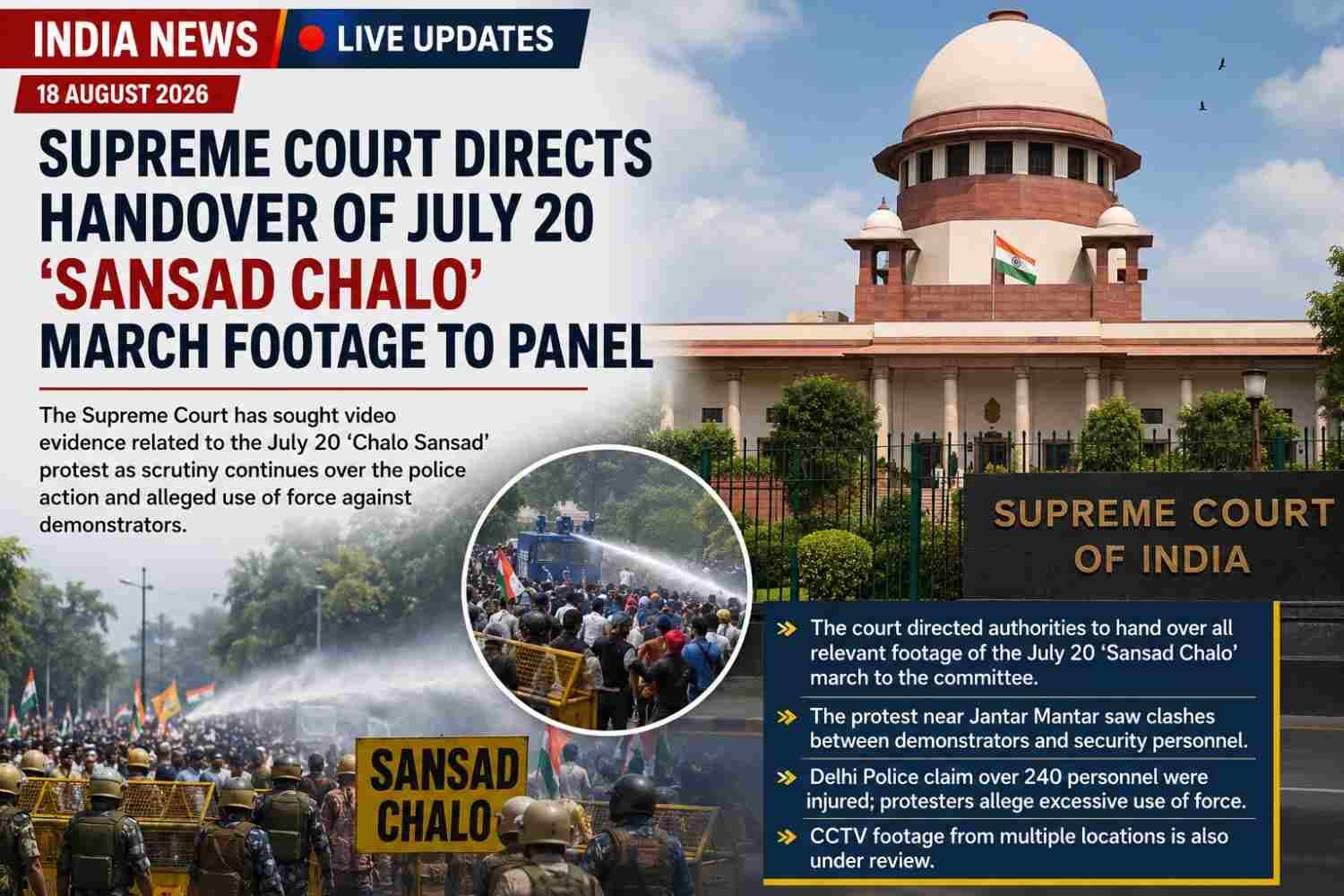
The Supreme Court on Tuesday continued hearing petitions concerning the July 20 ‘Chalo Sansad’ protest in New Delhi and directed that relevant video footage from the demonstration be handed over to the panel examining the events.
The march, held near Jantar Mantar during Parliament’s Monsoon Session, witnessed clashes between protesters and security personnel. The police have defended their response, stating that force was used after protesters breached barricades and failed to comply with repeated warnings.
In an affidavit filed before the Supreme Court, Delhi Police said the protest was allegedly joined by anti-social elements and people with criminal records. Police claimed that more than 240 personnel were injured during the violence and said they were willing to cooperate with any court-appointed committee investigating the use of force.
The Supreme Court had earlier directed authorities to preserve important evidence connected with the protest. CCTV footage from multiple locations has also been examined as part of the broader scrutiny of how the situation unfolded. Earlier reports indicated that protesters reached close to the Parliament perimeter before being dispersed by security personnel.
The latest direction to make the footage available to the panel is significant because visual evidence could help establish the sequence of events, including the movement of protesters, barricade breaches and the police response.
The court has also previously clarified that students facing cases for minor offences should not automatically be treated as having serious “criminal antecedents”. It said the term should be understood in the context of grave and heinous offences, while states remain free to close or withdraw protest-related FIRs in accordance with law.
The proceedings remain closely watched as the Supreme Court examines competing claims surrounding the July 20 protest and seeks an evidence-based assessment of the police action.
"The decisions we make today will shape the world for generations to come."