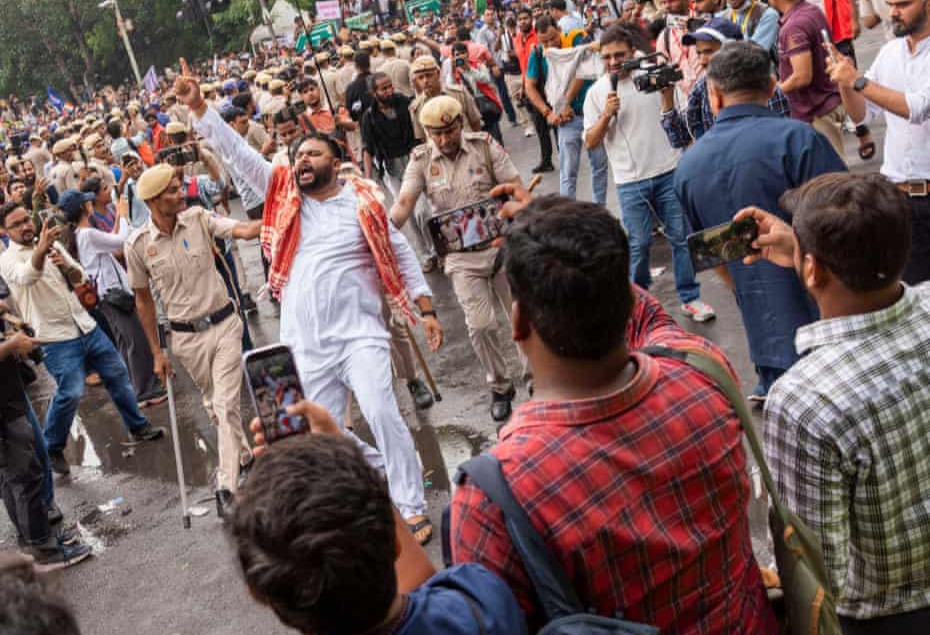
Supporters of the Cockroach Janta Party (CJP) remained camped at New Delhi’s Jantar Mantar on Tuesday, refusing to disperse a day after police used tear gas, batons and force to stop thousands from marching toward Parliament. Founder Abhijeet Dipke and other organisers have made clear the protest will continue until their core demand is met: the resignation of Union Education Minister Dharmendra Pradhan over repeated examination paper leaks and systemic failures that have disrupted the futures of millions of students.
The confrontation on Monday, the opening day of Parliament’s monsoon session, marked one of the sharpest escalations since the movement moved from social media to the streets. Delhi Police said the march was unauthorised and that prohibitory orders were in force. Officers dismantled the protesters’ stage and makeshift tents. Official figures put the toll at around 60 injured protesters, 118 injured security personnel and about 70 detentions. Videos of baton charges and clashes circulated widely, intensifying public attention.
Despite the crackdown, hundreds returned to the designated protest site under heavy police presence. “We are going to continue our protest,” Dipke said. Organisers have indicated they will not attempt another large march toward Parliament in the immediate term, citing concerns over further injuries to young protesters, but the sit-in itself shows no sign of ending.
From online satire to sustained street presence
The Cockroach Janta Party began in mid-May 2026 as satirical pushback after Chief Justice Surya Kant’s remarks, widely interpreted as comparing unemployed or critical youth to “cockroaches” and “parasites.” Dipke, a 30-year-old Boston University public-policy graduate then based in the United States, turned the insult into a rallying cry. The movement’s Instagram following rapidly climbed past 20 million, briefly outstripping the ruling Bharatiya Janata Party’s account.
What started as memes and online frustration crystallised around concrete grievances: the cancellation and re-conduct of the NEET-UG medical entrance exam after a paper leak, other examination irregularities, and broader youth unemployment. Protesters have framed the cockroach as a symbol of resilience — hard to crush, capable of surviving harsh conditions.
Sonam Wangchuk, the Ladakh-based climate activist and educator, joined the sit-in and began an indefinite hunger strike. He was later shifted to hospital. In a handwritten note after the Monday clashes, Wangchuk said the police action against “peacefully protesting youth” had strengthened his resolve to continue fasting. Delhi High Court has since allowed his transfer to a private facility for further treatment.
Government response and next steps
For weeks the government largely avoided direct engagement. On Monday, for the first time, representatives of the movement held talks with senior BJP leader and Union minister J.P. Nadda. No public commitment on Pradhan’s resignation emerged. CJP organisers have said they will announce their next major action soon while maintaining the Jantar Mantar presence.
The movement has drawn students, first-time protesters, some farmers’ groups and sections of the opposition. Supporters stress constitutional methods and peaceful dissent. Authorities have emphasised law-and-order requirements around Parliament and the need to prevent disruption.
As of Wednesday morning, the protest site remained active. The “cockroaches,” as participants call themselves, continue to insist they will not leave until accountability is delivered on the education system failures that triggered the uprising. Whether the momentum sustains or government engagement produces concrete outcomes will determine the next phase of one of the most unexpected youth mobilisations India has seen in recent years.
"The decisions we make today will shape the world for generations to come."