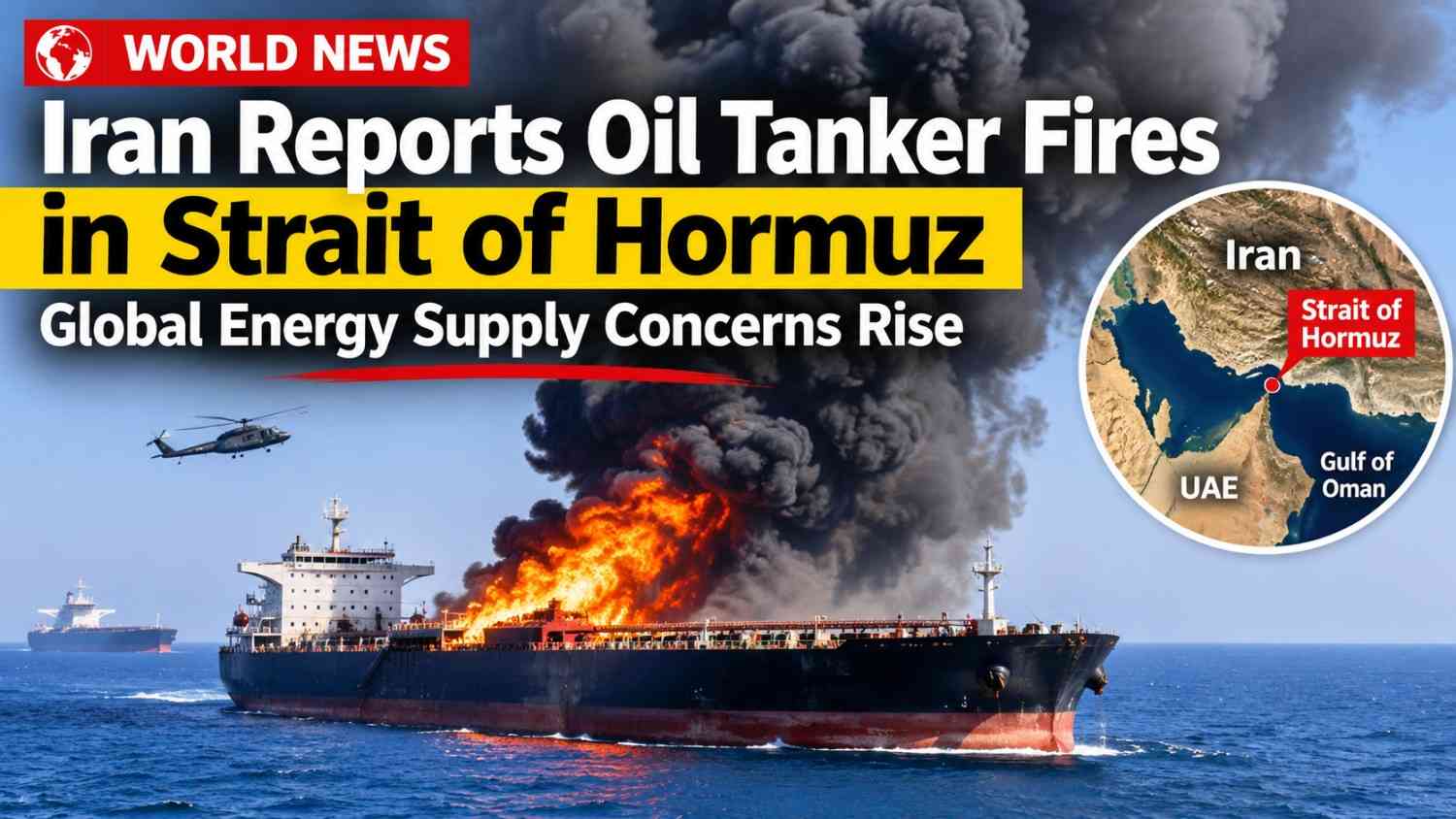
Tensions in the Middle East have increased after Iran reported that three oil tankers caught fire following explosions caused by naval mines in the strategically important Strait of Hormuz. The incidents were reported on November 24, 2026, by Iran's Islamic Revolutionary Guard Corps (IRGC) Navy, raising fresh concerns about the safety of international shipping routes and global energy supplies.
According to Iranian state media, the three tankers suffered severe explosions and fires after striking naval mines while travelling through waters near the Strait of Hormuz. Iran claimed that the vessels were operating under extensive US military air cover and escort, but the protection failed to prevent the incidents. However, the claims have not been independently verified, and details about the ships, their owners and possible casualties remain unclear.
The Strait of Hormuz is one of the world's most important maritime routes for energy transportation. It connects the Persian Gulf with the Gulf of Oman and the Arabian Sea, making it a critical passage for oil and natural gas exports from major Middle Eastern producers. Around one-fifth of global oil consumption normally passes through this narrow waterway, making any disruption particularly important for international energy markets.
The latest incidents have added to an already tense situation between Iran and the United States. Iran has repeatedly warned commercial vessels against using routes it considers unauthorised, while Washington has increased military and economic pressure on Tehran. The growing confrontation has raised concerns among shipping companies, energy traders and international governments.
The situation could also have an impact on crude oil prices. Any prolonged disruption to tanker movements through the Strait of Hormuz could affect the availability of oil in international markets, increase transportation costs and create uncertainty for countries that depend heavily on imported energy.
For countries such as India, which relies significantly on imported crude oil to meet its energy requirements, developments in the region remain particularly important. Higher international oil prices could increase import expenses and put additional pressure on fuel costs, inflation and the country's overall economic outlook.
Interestingly, oil prices have faced competing pressures despite the latest security concerns. Rising global supplies and expectations of stronger exports have limited some of the upward pressure on prices. However, analysts continue to warn that further attacks on commercial vessels could quickly change market sentiment.
International attention is now focused on the Strait of Hormuz as governments and shipping companies monitor the security situation. The coming days will be important in determining whether the reported incidents remain isolated events or develop into a wider disruption to international maritime trade.
The situation highlights how instability in one of the world's most important shipping corridors can have consequences far beyond the Middle East, affecting global energy markets, international trade and economies around the world.