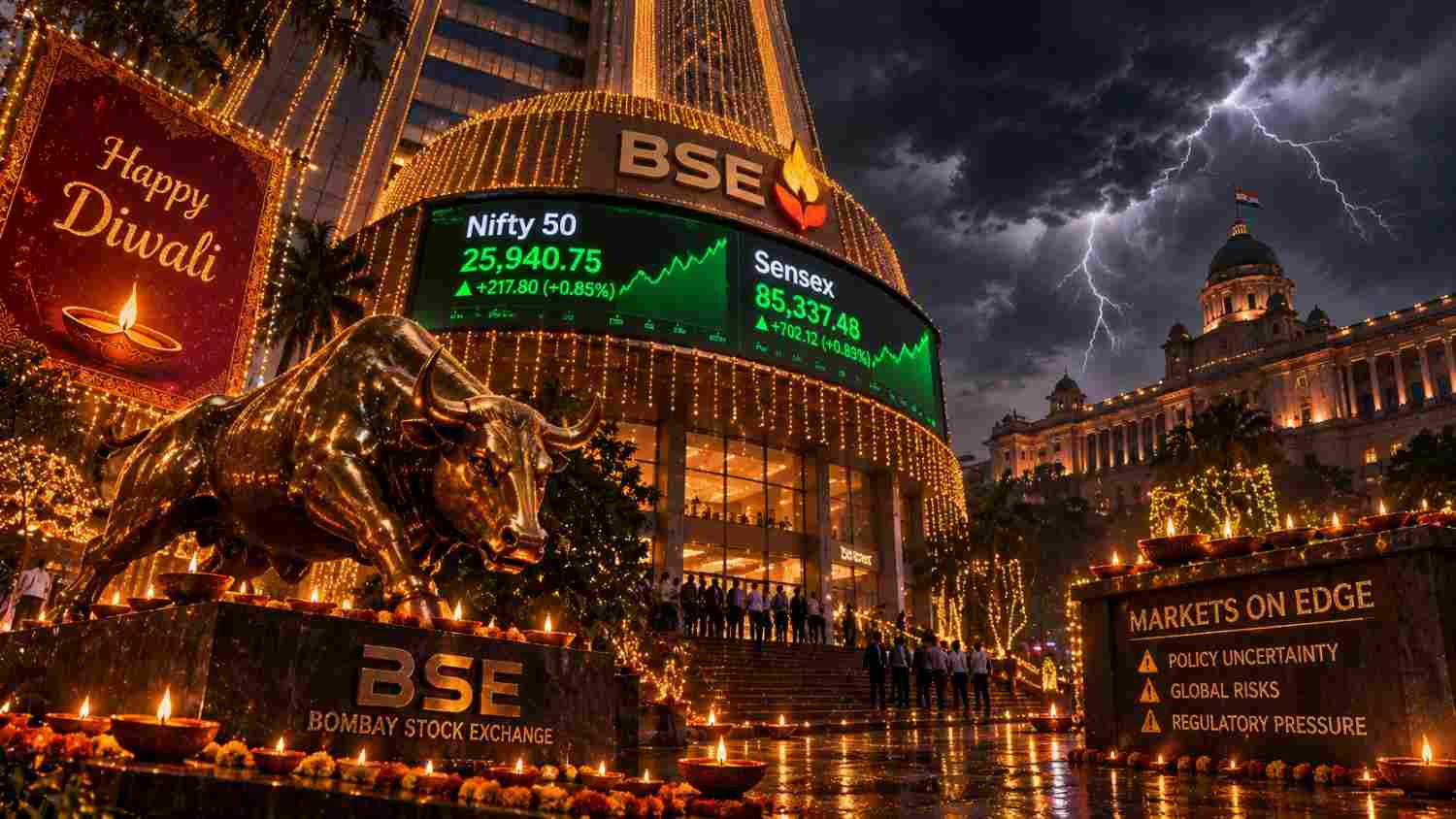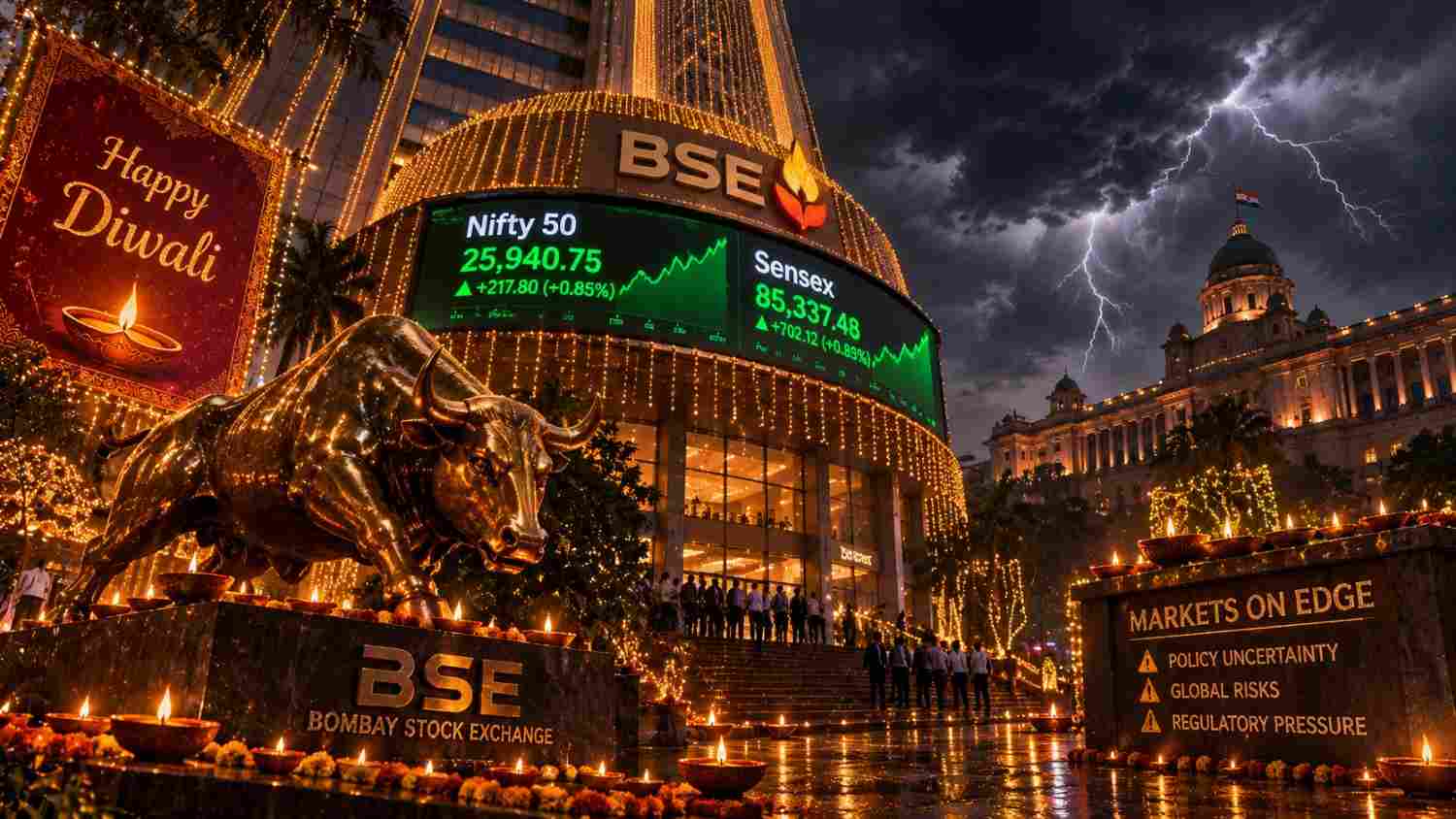
Indian equity markets began Samvat 2083 on a subdued note during the special Muhurat Trading session on Sunday, 8 November 2026. The Nifty 50 closed at 24,986.40, down 43.95 points or 0.18 percent, slipping below the psychological 25,000 mark. The Sensex ended at 80,999.40, lower by 28.62 points or 0.04 percent. Both indices opened higher but failed to hold gains, snapping a strong multi-session winning streak and delivering the first negative Muhurat close in several years.
The session lasted roughly 70 minutes, from 2:20 pm to 3:30 pm. Early buying interest pushed the Sensex above 81,400 and the Nifty past 25,100 at one stage. Selling pressure emerged in the second half as investors booked profits after the previous week’s sharp 8.6–8.8 percent rally. Market breadth remained positive overall, with advances outnumbering declines on both exchanges. Broader indices showed relative strength: the Nifty Midcap 100 gained around 0.13 percent and the Nifty Smallcap 100 rose about 1 percent.
Sun Pharmaceutical Industries led the Nifty gainers with a rise of nearly 3 percent. Tata Steel advanced over 2 percent, while ONGC, Adani Ports, Power Grid and a few other names also closed higher. On the losing side, SBI Life Insurance, InterGlobe Aviation (IndiGo), Bharti Airtel, Max Healthcare and Infosys were among the notable decliners. Sectorally, pharma and media stocks attracted buying, while some banking and IT names faced pressure.
Despite the modest decline in headline indices, the overall market capitalisation of BSE-listed companies still rose by approximately ₹2.60 lakh crore during the session, reflecting participation beyond the large-cap heavyweights. This divergence highlights a familiar pattern: while the Nifty and Sensex dominate media headlines, mid- and small-cap stocks often move independently and can absorb liquidity even on cautious days.
The muted close comes after an exceptional week in which the benchmarks delivered one of their strongest performances in years, driven by foreign buying, a sharp correction in crude oil prices, and hopes of better earnings. That momentum proved difficult to extend into the ceremonial window. Thin liquidity typical of Muhurat sessions amplified the impact of profit-taking. Global cues and domestic factors, including residual concerns over oil volatility and currency movements, also kept sentiment measured.
Historically, Muhurat Trading has often ended in the green, reinforcing the narrative of auspicious beginnings. The negative close this year breaks that recent pattern and serves as a reminder that markets do not move solely on festive sentiment. Technical indicators had already signalled overbought conditions after the rapid climb. A period of consolidation or selective profit-booking was widely expected by analysts.
For retail investors, the session offered limited actionable signals. The short duration and low volumes mean price moves can be exaggerated and may not reflect sustained direction. The real test for the market will come in the regular sessions ahead, when earnings delivery, institutional flows, and any fresh policy signals will matter far more than the outcome of a one-hour ceremonial trade.
The broader context remains important. Indian markets have shown resilience in recovering from earlier pressure this year, yet the path continues to be shaped by external commodity shocks, uneven domestic policy execution, and the ongoing challenge of converting high market capitalisation into consistent, broad-based wealth creation for ordinary investors. A single muted Muhurat session does not define the new Samvat year, but it does underline that optimism must be grounded in fundamentals rather than ritual.
Disclaimer
This article is for informational purposes only and does not constitute investment advice. Stock markets involve risk of capital loss. Investors should do their own research or consult a qualified financial adviser before making investment decisions.
Sources
NSE and BSE closing data for 8 November 2026 Muhurat Trading session; reports from financial media on index levels, gainers, losers and market breadth.