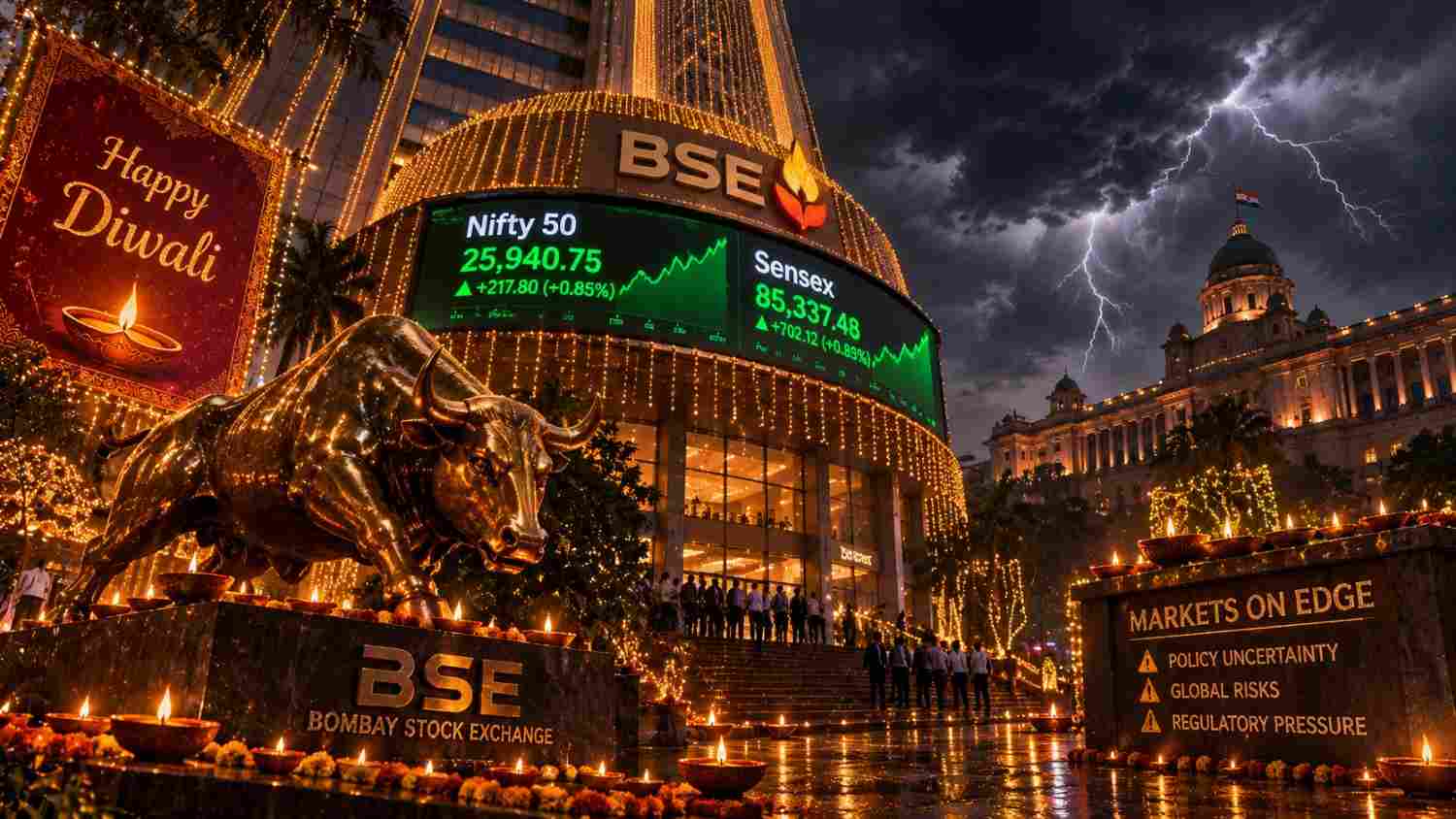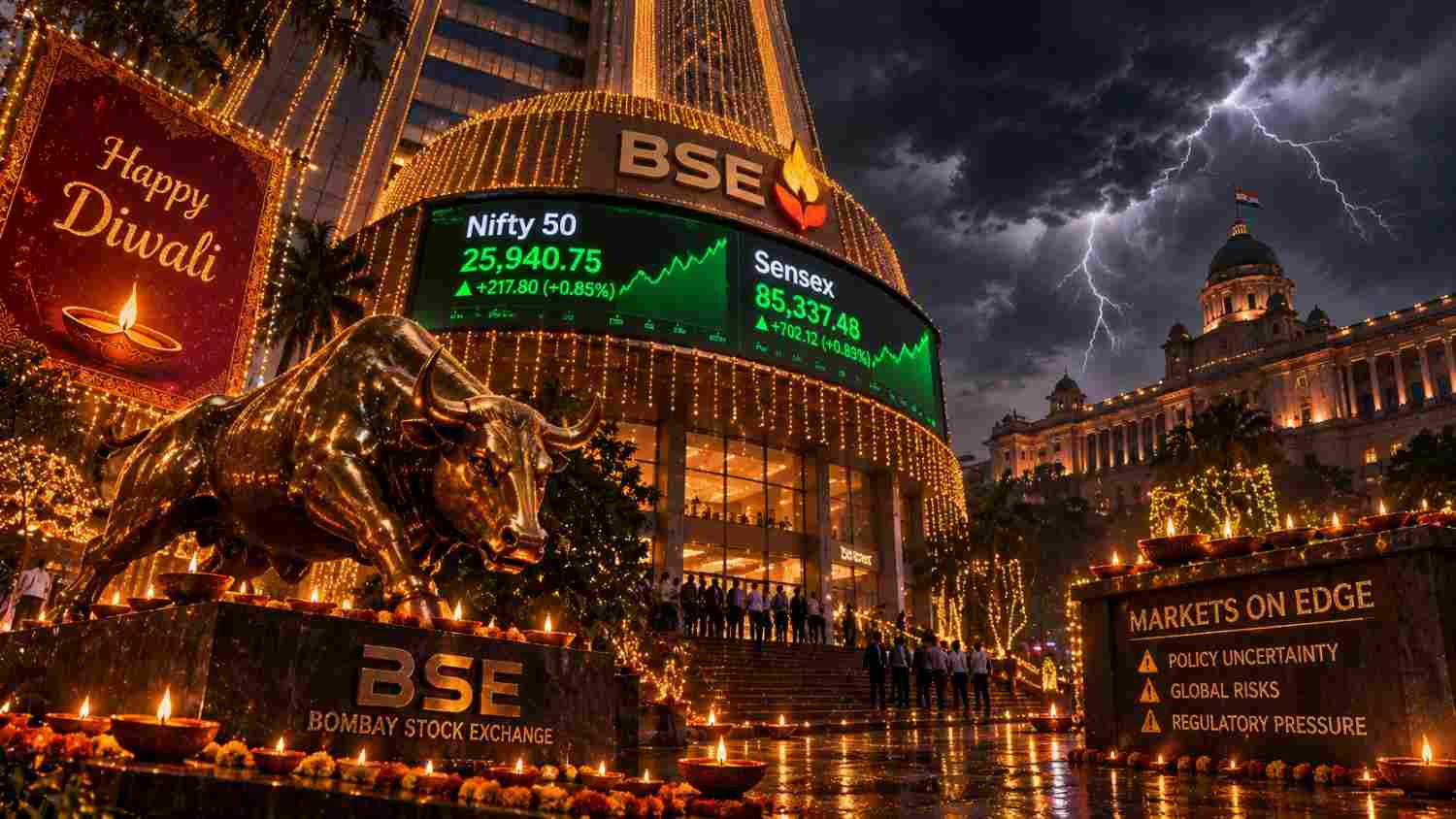
Indian stock markets are preparing for the traditional Muhurat Trading session on Sunday, 8 November 2026, as Dalal Street attempts to extend one of its strongest weekly performances in recent years. The Nifty 50 closed Friday’s session at 25,030.35 after climbing roughly 8.6 percent for the week, while the Sensex finished at 81,028, up about 8.8 percent. The psychological barrier of 25,000 on the Nifty has been reclaimed after several months of struggle, yet the mood on the street remains a mixture of celebration and quiet unease.
The special session, which marks the beginning of Samvat 2083, has long been treated as a symbolic fresh start. Historically, the Nifty has closed higher in a clear majority of Muhurat sessions over the past two decades. Traders and investors traditionally place small, auspicious trades in the hope that the new Hindu year will bring prosperity. This year the technical setup looks constructive on the surface. Foreign institutional investors returned as net buyers, crude oil prices corrected sharply, and corporate earnings for the July-September quarter offered some relief. These factors helped power a seven-session winning streak that added nearly ₹28.7 lakh crore to market capitalisation.
Yet the celebration feels incomplete. Markets are rising in an environment of policy inconsistency, selective regulatory pressure, and incomplete structural reforms. The same system that cheers record market capitalisation continues to leave ordinary investors exposed to sudden policy shifts, delayed decision-making, and an uneven playing field between domestic and foreign capital. The festive narrative of “India’s growth story” is repeated every Diwali, but the underlying institutional framework remains fragile and often unpredictable.
Analysts largely expect a cautious to consolidative session rather than another runaway rally. After six to seven consecutive days of gains, profit booking is a realistic possibility. Liquidity during the shortened Muhurat window is typically thin, which can amplify price moves in either direction. Key technical levels being watched include immediate support for the Nifty near 24,750–24,850 and resistance in the 25,130–25,200 zone. A decisive hold above the 25,000 mark would keep the short-term positive bias intact. Failure to sustain that level could invite fresh selling and a period of range-bound trading.
Banking stocks, particularly names such as HDFC Bank and ICICI Bank, are expected to remain in focus because of their weight in the indices and recent institutional interest. Reliance Industries continues to attract attention due to its diversified business segments and recent corporate developments. Select automobile stocks, including Mahindra & Mahindra, may see activity on the back of festive demand expectations. Market infrastructure companies and a few large private sector names are also likely to feature in trading conversations. These are observation points based on liquidity and sectoral momentum, not recommendations.
Several external and domestic factors will influence sentiment during the short session. Foreign and domestic institutional flows remain critical. The sharp decline in crude oil prices has provided temporary relief to the current account and inflation outlook, but oil markets remain sensitive to geopolitical developments. The Indian rupee’s movement against the US dollar will be monitored closely. Global risk appetite, especially after recent volatility in technology stocks and shifts in US political expectations, can still transmit shocks to Indian markets within hours.
The official timing for the session has been confirmed by the exchanges. Pre-open order entry is scheduled around 2:05 pm to 2:20 pm IST. Continuous trading in the equity segment runs from 2:20 pm to 3:30 pm. Derivatives trading generally continues until 3:40 pm. Investors are advised to verify the exact schedule for their specific segments with brokers and the latest exchange circulars, as special arrangements apply to certain securities, including those under the closing auction mechanism.
Beyond the technical and flow-related analysis lies a deeper question that rarely receives honest discussion during festive market commentary. Indian equity markets have delivered strong returns over multi-year periods, yet the path has been marked by repeated episodes of policy-induced volatility. Retail participation has expanded significantly, but so has the complexity of the product landscape and the speed at which sentiment can reverse. The government and regulators often highlight market capitalisation milestones and the number of demat accounts as proof of success. They speak less openly about the quality of corporate governance, the consistency of capital market regulations, and the long-term incentives for genuine capital formation versus short-term liquidity chasing.
Muhurat Trading has become a carefully staged ritual. Screens glow green, brokers send festive messages, and commentators speak of auspicious beginnings. For many small investors, the session offers a brief window of participation and optimism. For institutions and larger players, it is simply another trading opportunity within a longer cycle. The risk is that the ceremonial positivity masks structural weaknesses that surface once the festive lights dim.
A positive close on 8 November would fit the historical pattern and the current technical momentum. It would not resolve the larger issues of policy clarity, regulatory predictability, or the uneven distribution of market gains. Investors entering the new Samvat year would do well to treat the session as a short-term event rather than a signal of sustained, policy-supported prosperity. Markets can rise for many reasons. Sustainable wealth creation requires more than festive sentiment and temporary liquidity.
The coming weeks will test whether the recent rally has stronger foundations or whether it was largely a relief bounce after earlier pressure. Earnings delivery, global liquidity conditions, and domestic policy signals will matter far more than the outcome of a seventy-minute ceremonial session. Until those fundamentals improve in a consistent manner, every Diwali rally will carry the same underlying caution.
Disclaimer
This article is for informational and educational purposes only. It does not constitute investment advice. Stock market investments involve risk, including the possible loss of capital. Investors should conduct their own research or consult a qualified financial adviser before making any investment decisions.
Sources
NSE and BSE circulars on Muhurat Trading 2026; market closing data as of 6 November 2026; weekly performance figures from exchange data and financial media reports; analyst commentary from various brokerages.