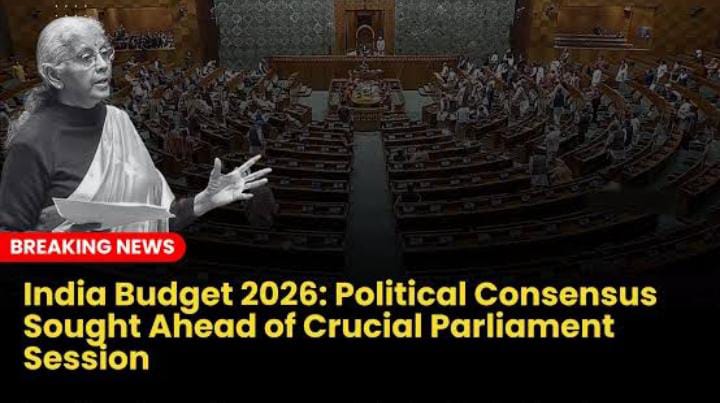
New Delhi, 5 February 2026 – The seventh day of the Indian Parliament’s Budget Session saw continued political turmoil with repeated disruptions in both the Lok Sabha and the Rajya Sabha, reflecting deepening differences between the ruling alliance and the Opposition over parliamentary conduct and substantive policy issues.
Stalled Proceedings and Postponed Prime Ministerial Address
The Budget Session began with the customary debate on the Motion of Thanks to the President’s address — a prolonged discussion that tests the strength of arguments from all sides. Prime Minister Narendra Modi was scheduled to respond to this Motion in the Lok Sabha on 4 February, but persistent disruptions by Opposition members prevented him from delivering his reply. As a consequence, the Lok Sabha was repeatedly adjourned, frustrating efforts to conduct meaningful business.
With the stalemate continuing into Day 7, there were indications the Prime Minister might shift to address the Rajya Sabha instead, although the overall agenda remained subject to the evolving situation on the floor.
Opposition Disruptions and Government Response
Opposition MPs have focused much of their agitation on governance issues, including alleged concerns over a US-India trade agreement and national security matters. These matters have been raised repeatedly during the Motion of Thanks debate, leading to vociferous exchanges with the ruling party benches.
In the Lok Sabha, members of the Opposition have continued to raise slogans and protest, leading to frequent interruptions. The Speaker, Om Birla, expressed displeasure at the inability of MPs to maintain decorum, describing the ongoing disruptions as a significant obstacle to parliamentary functioning.
Rijiju’s Criticism of Opposition Conduct
Amid this tense atmosphere, Union Parliamentary Affairs Minister Kiren Rijiju publicly criticised the Opposition for what he described as “unnecessary disturbances” that hindered the Rajya Sabha’s proceedings. Though his remarks on Day 7 were part of live coverage rather than a formal statement recorded in text, the thrust of the criticism was that the Opposition’s strategy was impeding Parliament’s ability to debate and decide on key legislative business.
Rijiju’s comments highlight the government’s perception that the Opposition’s tactical disruptions have crossed the line from legitimate dissent to counterproductive obstruction.
Opposition Pushback and Wider Political Context
Opposition leaders have rejected accusations that their protests are irresponsible. They argue that the actions taken — including disruption of proceedings — are a response to the suspension of eight Opposition MPs, a decision passed earlier in the week by the Lok Sabha for unruly behaviour during debates. These suspended MPs included prominent members from the Congress Party.
Congress and allied parties have also framed the suspension and the broader scene of tension in Parliament as a democratic deficit, asserting that crucial issues are being sidelined and dissenting voices stifled.
State of Play on Day 7
By mid-morning on 5 February 2026, budget session proceedings continued to be impacted by disagreements over procedure and content. The Lok Sabha remained unable to complete key business, and debates extended across both houses in a climate that observers described as highly charged.
With the session’s agenda still under negotiation and both sides determined to make their respective points, Day 8 of the Budget Session is likely to see further spirited exchanges.
"The decisions we make today will shape the world for generations to come."