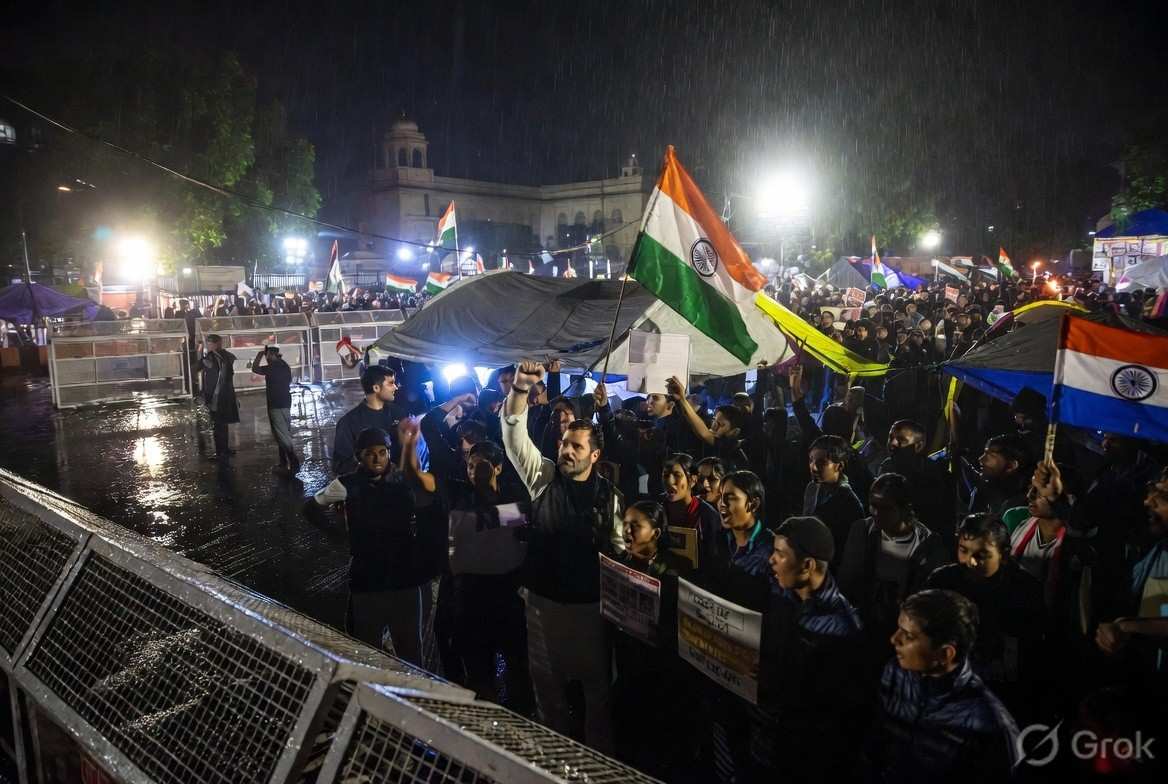
The tents at Jantar Mantar are still standing. The students are still there. And the message from the Leader of Opposition on Saturday was as clear as the anger in their eyes: moving Dharmendra Pradhan to another ministry is not justice.
Rahul Gandhi stood with the protesting youth and stated what the government has been desperately trying to avoid saying out loud. There is talk inside the ruling establishment of simply shifting the Education Minister sideways. That will not be accepted. The students are clear. Pradhan must leave the government entirely.
This is not political theatre. This is the direct consequence of years of institutional failure that the Modi government has refused to own. The 2026 NEET-UG paper leak, the cancellations, the retests, the shattered futures, and the trail of young lives lost to despair have finally forced the system to confront its own reflection. The Cockroach Janta Party, born from a judicial insult and transformed into a genuine youth uprising, has turned Jantar Mantar into the conscience of a nation that has watched its children treated as expendable.
Pradhan has become the living symbol of that failure. Repeated examination scandals under his watch, weak oversight of the National Testing Agency, and a pattern of reactive damage control instead of systemic reform have left millions of aspirants feeling that the entire competitive examination machinery is rigged against them. When students began dying after the chaos of the cancelled exam, the minister’s public expressions of anguish rang hollow to those living the consequences. The government responded with the classic playbook: partial concessions on process reforms, promises of better security, and absolute refusal to sacrifice the man at the top.
That refusal is the real story. Government sources have already made it plain that resignation is “not on the cards.” The easiest decision, they claim, is the one they will not take. Instead, the preferred option appears to be the quiet transfer—move the problem, keep the face, declare victory. Gandhi correctly identified this manoeuvre for what it is: an attempt to launder responsibility without accepting it. Students who have spent weeks on the pavement, some on hunger strike, who faced lathi charges and alleged pellet injuries while holding the national flag, are not interested in musical chairs.
The police response to the earlier march toward Parliament only deepened the wound. Images of injured students, claims of excessive force, and the subsequent siege-like restrictions around the protest site have reinforced the perception that the state views organised youth anger as a law-and-order problem rather than a governance crisis. When universities begin issuing advisories telling students to stay away from the protest, the message is unmistakable: the system would rather silence the symptom than treat the disease.
This is the face of a government that has grown comfortable managing optics while the foundations of public trust in education collapse. Competitive exams were supposed to be the great equaliser. Under successive scandals they have become a source of trauma. Families that invested years and savings watch their children’s futures cancelled by leaks. Young people who did everything asked of them discover that the rules are optional for those who can buy the paper. The minister remains. The machinery remains. The only thing that moves is the political calculation of how to survive the current storm.
Gandhi’s intervention is significant not because the opposition has suddenly discovered the issue, but because it removes the last pretence of ambiguity. The students’ three core demands—full removal of Pradhan, accountability for those who assaulted protesters, and a genuine apology from the Prime Minister—are now on the public record as non-negotiable. Two of the process-related demands may have been accepted in principle during talks. The central political demand has not. That gap is the difference between reform and theatre.
The government still has time to choose. It can continue treating the protest as an inconvenience to be managed with transfers, restrictions, and late-night video messages. Or it can recognise that a generation has stopped believing the system works for them. The longer Pradhan remains in any capacity inside the cabinet, the clearer the message becomes: in this system, failure at the highest levels is rewarded with protection, while the young pay the price in lost years and, in too many cases, lost lives.
Jantar Mantar is no longer just a protest site. It is a mirror. The reflection is not flattering. The students have already decided they will not look away. The only remaining question is how long the government can keep pretending the mirror is not there.
"The decisions we make today will shape the world for generations to come."