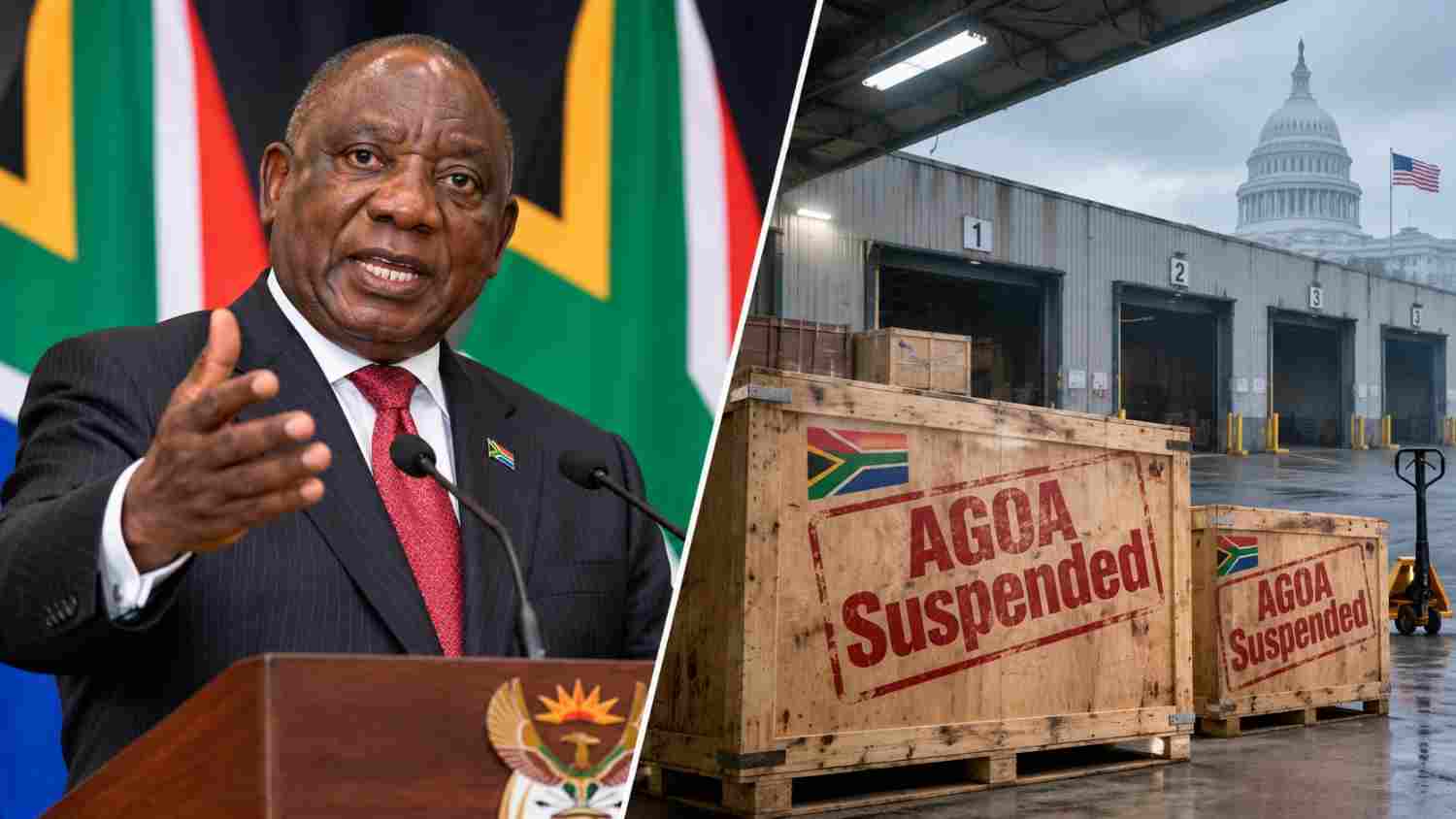
South African President Cyril Ramaphosa wasted little time celebrating the Democratic takeover of both the US Senate and House after the 2026 midterms. Speaking on 4 November after casting his ballot in municipal elections, he declared that American voters had spoken and that the result would “introduce a new era in world relations.” He expressed hope for a “coming together of minds” on geopolitics, trade and investment.
The timing is revealing. Only days earlier the Trump administration formally notified Congress that South Africa would lose eligibility under the African Growth and Opportunity Act from 1 January 2027. The programme has long given South African goods preferential, duty-free access to the American market. South Africa is the largest beneficiary. The bilateral trading relationship is valued at more than $24 billion. The exclusion lands as a direct economic hit at a moment when Pretoria is already under pressure.
Ramaphosa acknowledged the decision as “indeed a negative,” then quickly pivoted to the claim that ordinary trade would continue and that the focus must now shift to negotiating a bilateral deal while diversifying export markets. That is the official line. The practical reality is more severe: preferential access does not vanish without cost to exporters, jobs and investor confidence. The rand briefly strengthened on the midterm news, a market reaction that says more about short-term sentiment than about structural repair.
Relations between Pretoria and Washington have deteriorated sharply under the current US administration. Aid has been cut, the previous ambassador expelled, and public clashes have ranged from trade barriers to contested claims about internal South African politics. The midterm outcome creates a divided government in Washington from January 2027, with Democrats controlling Congress while Trump remains in the White House. That balance may slow certain executive actions, yet it does not automatically restore lost trade preferences or erase the accumulated distrust.
Ramaphosa’s optimism projects a clean diplomatic reset. The record shows something closer to managed damage control. Preferential trade schemes create dependency; when they are withdrawn for political or strategic reasons, the country on the receiving end absorbs the shock. Diversification is sensible, yet it is also an admission that reliance on a single preferential window was always a vulnerability. Governments on both sides have treated the relationship as a political football while the material consequences fall on exporters, workers and the broader economy.
The “new era” language is convenient. It allows leaders to claim momentum from an election result they did not control while the concrete trade setback remains in place. Whether the shift in Congress produces meaningful relief on AGOA or any broader bilateral understanding is still unknown. What is already clear is that South Africa’s exposure to abrupt changes in US policy has once again been laid bare, and the system that allowed that exposure continues without serious challenge.
Official sources of data
Reuters, Bloomberg, Business Insider Africa, and contemporaneous reporting of Ramaphosa’s 4 November 2026 remarks and the AGOA exclusion announcement.