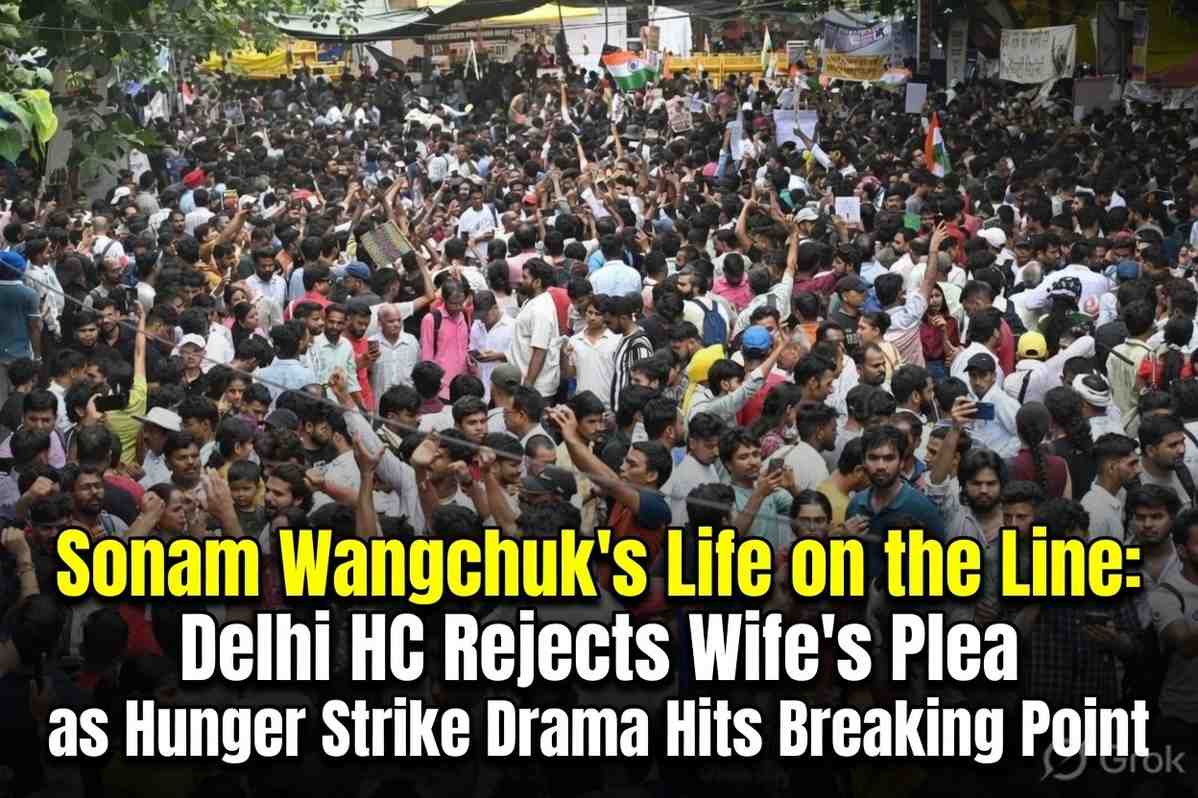
In the heart of Delhi, a quiet ward at Safdarjung Hospital has become the latest battleground for one of India’s most vocal advocates for the environment and education. Climate activist and educator Sonam Wangchuk, on the 21st day of an indefinite hunger strike, now finds himself at the center of a tense legal and medical standoff after the Delhi High Court declined interim relief sought by his wife, Gitanjali J. Angmo. Her plea aimed to transfer him from the government facility to a private hospital of their choice.
Wangchuk joined the Cockroach Janata Party (CJP) protest at Jantar Mantar on June 28, committing to a fast that demands accountability over alleged irregularities in exams like NEET, the resignation of Union Education Minister Dharmendra Pradhan, and compensation for affected student families. His involvement also ties back to longstanding calls for Ladakh’s inclusion under the Sixth Schedule, statehood, and stronger environmental protections—issues he has championed for years through peaceful, innovative activism.
By mid-July, reports indicated significant weight loss exceeding 8 kilograms, dropping blood sugar levels, weakness, and muscle deterioration. On July 18, Delhi Police forcibly shifted him to Safdarjung Hospital citing medical advice and court observations prioritizing his life. Hospital bulletins note stable vitals but altered blood parameters due to prolonged fasting, with Wangchuk reportedly refusing intravenous fluids and medications despite counseling. His wife has insisted on respecting his autonomy, arguing against forced interventions.
The Court’s Deliberation and Broader Stakes
The Delhi High Court’s decision against immediate transfer reflects a delicate balance: safeguarding life while navigating constitutional rights to protest and bodily autonomy. Earlier, the court had issued notices on related pleas for medical intervention, emphasizing that every citizen’s life is precious. This ruling comes as opposition voices decry the hospitalization as “undemocratic,” while supporters highlight the risks of unsupervised fasting.
Wangchuk’s journey is rooted in Ladakh’s rugged terrain, where he pioneered alternative education models like the Students’ Educational and Cultural Movement of Ladakh (SECMOL), focusing on sustainability amid climate vulnerability. His past hunger strikes drew national attention to glacial melting, border sensitivities, and demands for greater local governance in a strategically vital region near India-China borders. The current fast amplifies student distress over exam leaks and suicides, framing systemic failures in education that erode public trust.
Why this persistence? For Wangchuk, dialogue breakdowns with the Centre on Ladakh’s promises—made after earlier protests and his previous detention under the National Security Act in 2025—left few options. He has spoken candidly about the sadness of returning to fasting, yet his resolve echoes Gandhian traditions of non-violent resistance. The “lives at stake” narrative from CJP underscores not just his condition but the desperation of youth facing uncertain futures in a competitive system.
Impacts, Challenges, and Paths Forward
Health experts warn that extended fasting beyond two to three weeks risks organ damage, electrolyte imbalances, and refeeding syndrome upon resumption. Wangchuk’s refusal of certain treatments raises ethical questions around consent versus state duty to preserve life, a debate courts have navigated before with guidelines against forced feeding in most cases unless imminent danger exists.
The protest’s ripple effects extend to planned marches toward Parliament on July 20, coinciding with the Monsoon Session, potentially drawing wider civil society and opposition support. It spotlights deeper governance challenges: restoring faith in examinations, addressing regional aspirations in Ladakh to secure borders and ecology, and fostering meaningful engagement over confrontation.
As Wangchuk’s body weakens, his stand tests India’s democratic fabric—valuing dissent while preventing tragedy. It calls for empathy across divides: authorities engaging substantively, protesters prioritizing safety, and citizens reflecting on collective responsibility. Whether this leads to policy shifts or further polarization remains to be seen, but the episode underscores the power of individual conviction in pushing systemic change.
"The decisions we make today will shape the world for generations to come."