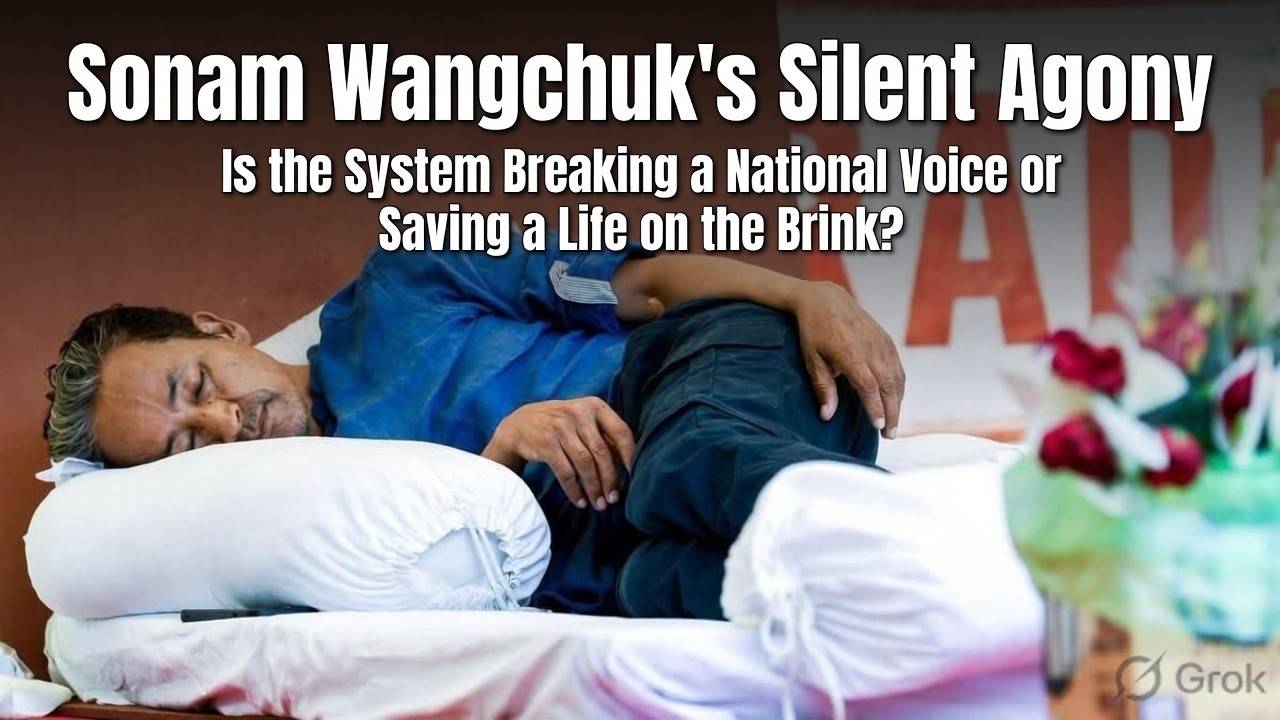
In the heart of Delhi's Jantar Mantar, a place long synonymous with citizen dissent, Sonam Wangchuk's three-week ordeal has captured national attention—not just as another protest, but as a stark reminder of the human price paid for systemic accountability. By July 18, 2026, the renowned Ladakh climate activist and educator, known for his innovative work in sustainable living and education, found himself shifted to Safdarjung Hospital after 21 days of indefinite fasting. Hospital officials described him as weak from prolonged fasting and dehydration yet stable, requiring ongoing monitoring.
Wangchuk joined the Cockroach Janta Party (CJP) protest that began on June 20, demanding the resignation of Union Education Minister Dharmendra Pradhan and compensation for families affected by alleged NEET examination irregularities, including student suicides. His fast started on June 28, amplifying calls for transparency in one of India's most high-stakes entrance exams. Over the weeks, his health visibly declined: reports documented progressive weight loss nearing 9.5 kg, fluctuating blood pressure, dropping blood sugar, and electrolyte imbalances. Doctors warned of risks like muscle breakdown and potential organ impact in later stages of prolonged fasting.
What makes this episode particularly charged is the early morning police action on July 18. Authorities cited medical advice and Delhi High Court directives emphasizing health monitoring, moving Wangchuk to the hospital around 7:40 AM. While this intervention likely prevented a worse outcome, it has sparked allegations of heavy-handedness. His wife, Gitanjali J. Angmo—a social entrepreneur and co-founder of the Himalayan Institute of Alternatives, Ladakh—rushed to the facility and publicly asserted that Wangchuk remains "absolutely fine" and alert. She raised serious concerns about the hospital's reluctance to share medical reports promptly, questioning discrepancies in figures like potassium levels and insisting on independent verification.
Gitanjali's firm stance—no oral or intravenous treatment without consent from family and his long-monitoring doctors—highlights deeper tensions around bodily autonomy, even in life-saving scenarios. "It feels like Safdarjung prison," she reportedly remarked amid heavy police presence, while vowing the planned July 20 Parliament march would proceed. This friction underscores a classic dilemma in democratic protests: balancing individual health with collective resolve.
Wangchuk's activism carries profound context. A pioneer in ice stupas for water conservation and alternative schooling tailored to Ladakh's harsh environment, he embodies grassroots innovation. His participation lent moral weight to the NEET protests, drawing support from opposition leaders and students frustrated by repeated exam controversies that have eroded trust in merit-based systems. The CJP's agitation, now over three weeks old by the hospital shift, reflects broader youth disillusionment—where one flawed process can derail futures and, tragically, lives.
Analytically, this case reveals fault lines in how India handles sustained civil disobedience. Hunger strikes, a potent Gandhian tool, force visibility but risk turning personal sacrifice into political theater. The government's response—hospitalization framed as care—avoids immediate tragedy yet invites skepticism about timing and motives, especially with the march looming. Delhi Police's sealing of Jantar Mantar post-removal further fueled narratives of suppression.
From a value-driven lens, Wangchuk's story invites reflection on accountability. Education scandals like NEET demand swift, transparent probes—not just for affected students but to safeguard institutional integrity. Activists like him channel public anger into action, yet the physical toll exposes vulnerabilities: even committed voices have limits. His wife's advocacy for consent and transparency reinforces patient rights, a principle that must hold regardless of the cause.
As updates emerge, Wangchuk's condition appears managed, with calls for dialogue growing louder. The July 20 march could mark a pivotal escalation or a turning point toward resolution. Ultimately, this episode isn't merely about one man's fast; it's about whether institutions prioritize lives through genuine reform or containment. In an era of deepening distrust, bridging that gap—through empathy, evidence, and engagement—remains the real test for all stakeholders.
"The decisions we make today will shape the world for generations to come."