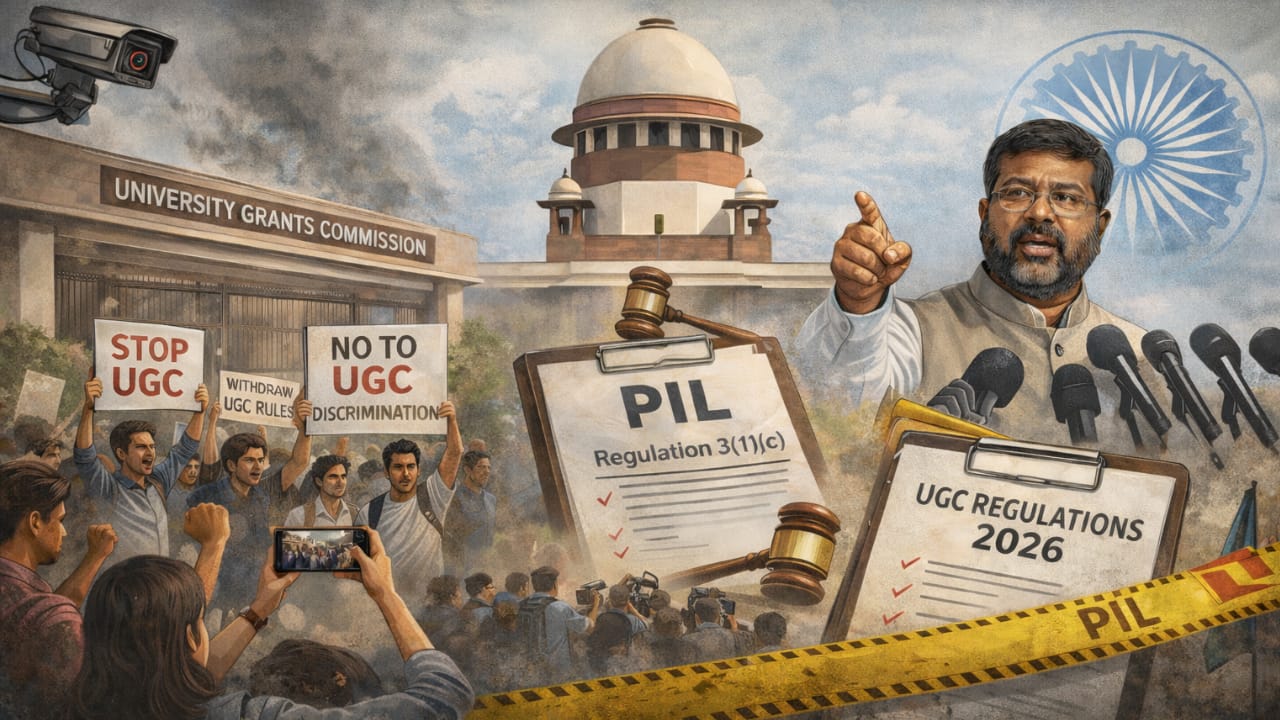
The Supreme Court of India has temporarily stayed the recently implemented University Grants Commission (UGC) Equity Regulations 2026, following multiple petitions challenging the new rules. These regulations, aimed at promoting inclusivity and preventing caste-based discrimination in higher education institutions, have sparked debates about their scope and impact on general category students.
Background
The UGC introduced the Equity Regulations 2026 with the goal of ensuring equal opportunities and a discrimination-free environment across universities and colleges. The rules mandate the establishment of Equity Committees and Equal Opportunity Centres to handle complaints related to caste-based discrimination.
However, critics argue that the regulations focus exclusively on Scheduled Castes (SC), Scheduled Tribes (ST), and Other Backward Classes (OBC), effectively excluding general category students from raising grievances. Concerns have also been raised about potential misuse due to vague definitions and broad enforcement powers.
Legal Challenge
Several petitions were filed in the Supreme Court, questioning the constitutional validity of the new rules. Petitioners claim that the regulations violate equality provisions under Article 14 of the Constitution, by denying protection to students outside reserved categories.
During the hearing, the Supreme Court highlighted that the reguations language could lead to misuse emphasizing the need for clarity and safeguards. Consequently, the Court stayed the enforcement of the 2026 regulations, allowing the older framework from 2012 to remain in effect until further review.
Reactions and Implications
Students and Activists: General category student groups have protested, claiming the regulations create reverse discrimination.
Education Experts: Some experts argue that the stay is necessary to balance inclusivity with fairness, suggesting a revised and more inclusive framework.
Political Leaders: Responses are mixed, with certain leaders supporting the regulations as a tool for protecting marginalized students while others call for equitable solutions for all students.
The decision has significant implications for Indian higher education policy, as it raises questions about how equity measures can be implemented without inadvertently creating new inequalities.
"The decisions we make today will shape the world for generations to come."