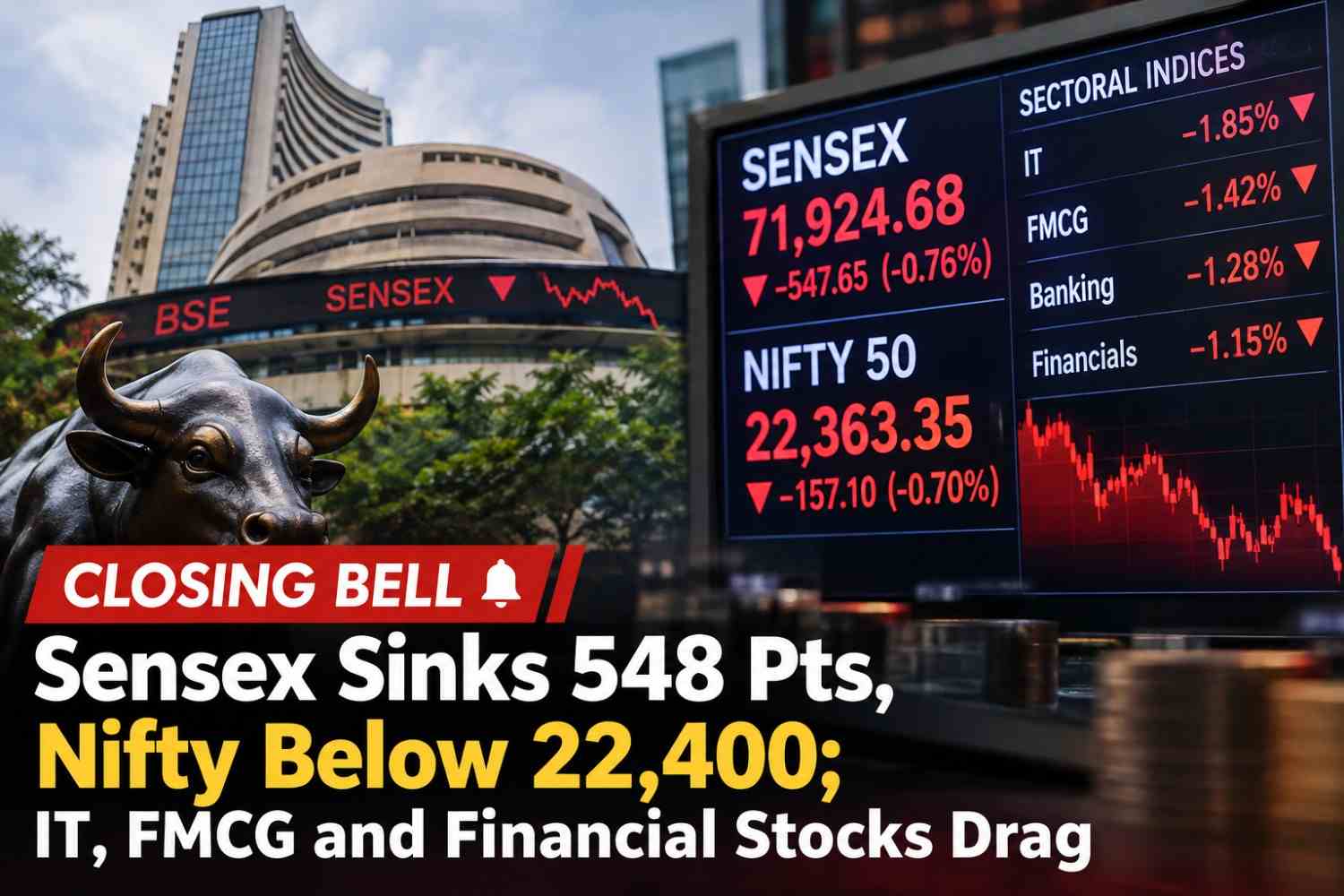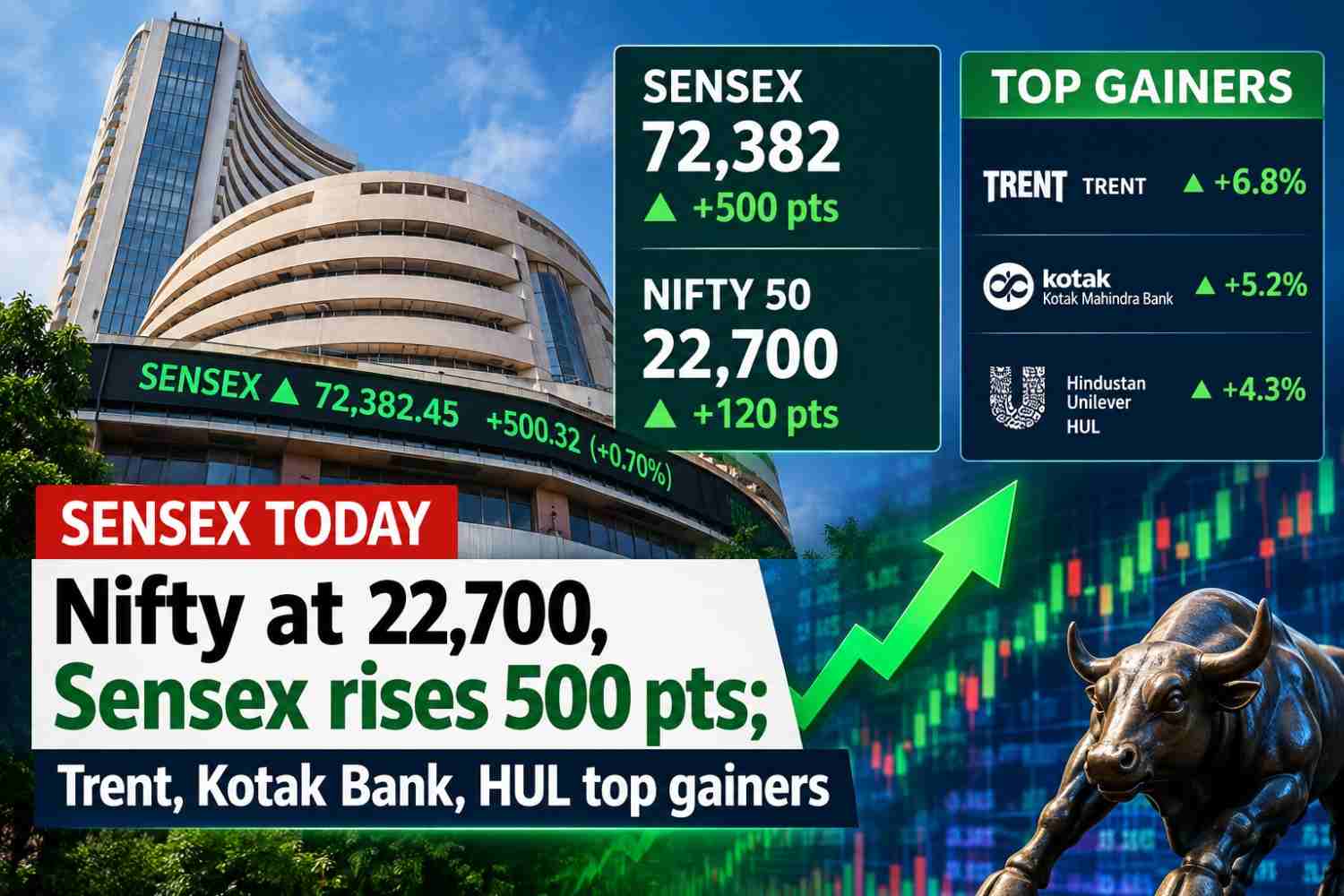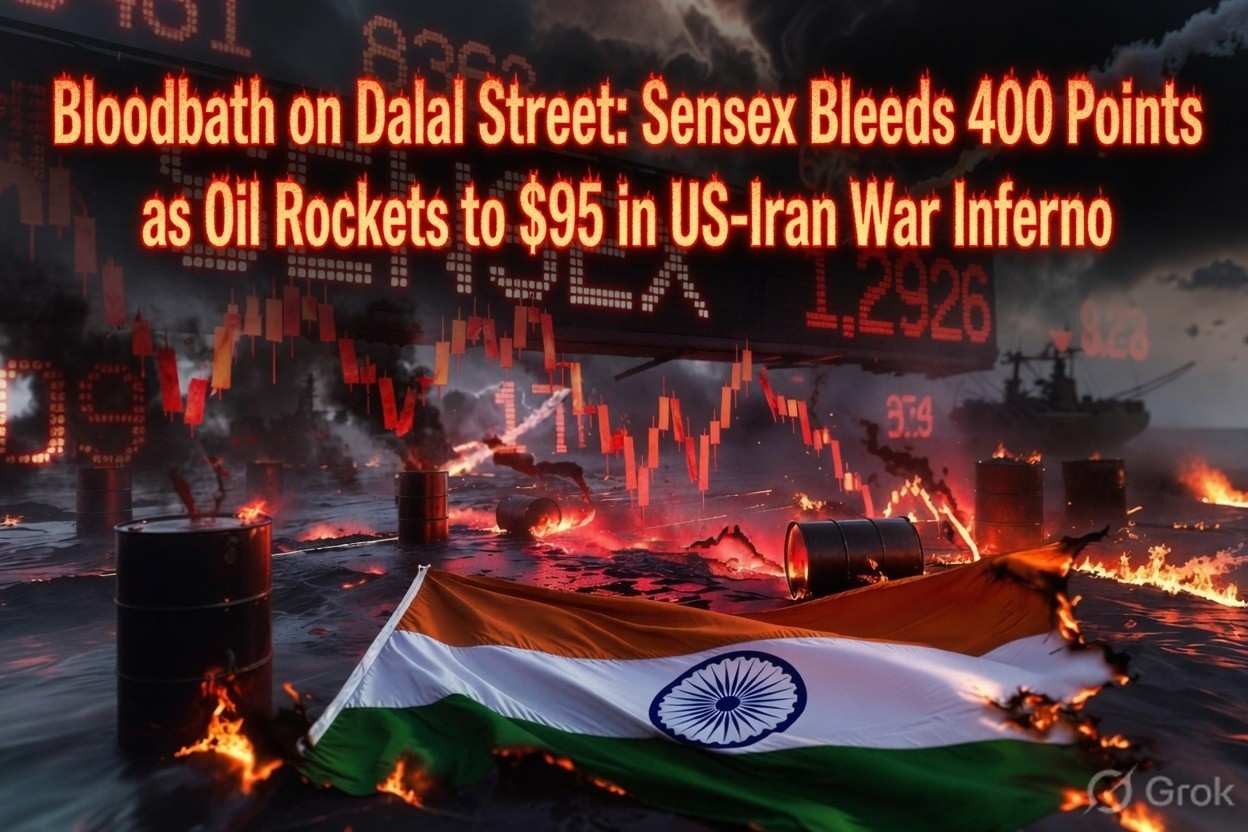
Dalal Street woke up to another round of punishment on Thursday. The Sensex slid roughly 400 points in early trade and stayed under pressure through the session, hovering near 76,550 levels after Wednesday’s sharp 715-point collapse that pushed the index below key psychological marks. Nifty slipped under 24,000 and refused to recover meaningfully. Heavyweights in banking, IT and energy led the decline as foreign investors continued to sell and global risk aversion intensified.
The trigger sits thousands of kilometres away. Brent crude has surged past $95 a barrel, touching six-week highs and trading near $96–97 at points on Thursday after four straight sessions of gains. The move comes as the United States and Iran trade strikes for the second consecutive week, with both sides hitting military and infrastructure targets around the Strait of Hormuz. Yemen’s Houthis have escalated the chaos by attacking Saudi-linked tankers in the Red Sea, raising the spectre of wider shipping disruptions.
India imports nearly 80–85 percent of its crude. Every sustained ten-dollar jump in oil expands the import bill by billions of dollars, widens the current account deficit, weakens the rupee and feeds directly into diesel, petrol and LPG prices that ordinary citizens pay. The IMF has already flagged rising oil prices from the West Asia conflict as one of the biggest downside risks to India’s FY27 growth. Yet the official response remains the familiar combination of statements, temporary subsidies and quiet hope that the storm will pass.
This is not a sudden shock. The conflict has simmered and reignited for months. Markets had already priced in some risk premium. What is new is the speed of the latest escalation and the complete absence of any meaningful energy-security buffer built during calmer periods. Successive governments have spoken of strategic petroleum reserves, renewable acceleration and reduced import dependence. The numbers still show an economy structurally chained to Middle Eastern barrels. When those barrels become contested, the first victims are not the political class or the large corporates with hedging capacity. They are the truck drivers, the small manufacturers, the middle-class families watching their monthly fuel and grocery bills climb.
The market’s reaction is rational. FIIs have been net sellers for consecutive sessions. Domestic institutions can only absorb so much. Banking stocks are under pressure because higher oil and a weaker currency raise the risk of asset-quality stress later. Aviation and logistics names feel the jet-fuel and diesel hit immediately. Even defensive pockets are not immune once inflation expectations begin to firm. The India VIX has already moved higher, reflecting the nervousness.
What makes the situation particularly bitter is the contrast between the government’s public narrative of resilience and the lived experience on the ground. Officials point to strong domestic consumption and a robust earnings season. They rarely mention that a large part of that consumption is already being eroded by energy and food inflation. They celebrate digital public infrastructure and manufacturing push while the country’s external accounts remain hostage to a single commodity whose price is decided in distant war rooms. The system that claims to protect the aam aadmi has instead left him exposed to every geopolitical spasm.
There is no serious plan visible for accelerating domestic exploration, building meaningful strategic stocks that can actually smooth short-term spikes, or forging energy partnerships that reduce single-region dependence. Diplomatic statements of concern are issued. Concrete leverage is nowhere to be seen. Meanwhile the same political ecosystem that benefits from high-octane growth stories is content to let the market absorb the volatility and the public absorb the cost.
The Sensex drop is not just a number on a screen. It is the visible face of a deeper vulnerability. Oil at $95 is already painful. If the conflict intensifies further and prices test $100 or beyond, the damage will move from equity markets into growth numbers, fiscal arithmetic and household budgets. The government has had years to prepare for exactly this scenario. The preparation remains largely rhetorical. That is the true face of a system that repeatedly claims to be breaking new ground while the same old structural fractures keep reopening under pressure.
Investors will watch the next few sessions for any sign of de-escalation or fresh supply disruption. Ordinary citizens will simply pay more at the pump and at the kirana store. The gap between the two experiences is the real story of this market day.
"The decisions we make today will shape the world for generations to come."