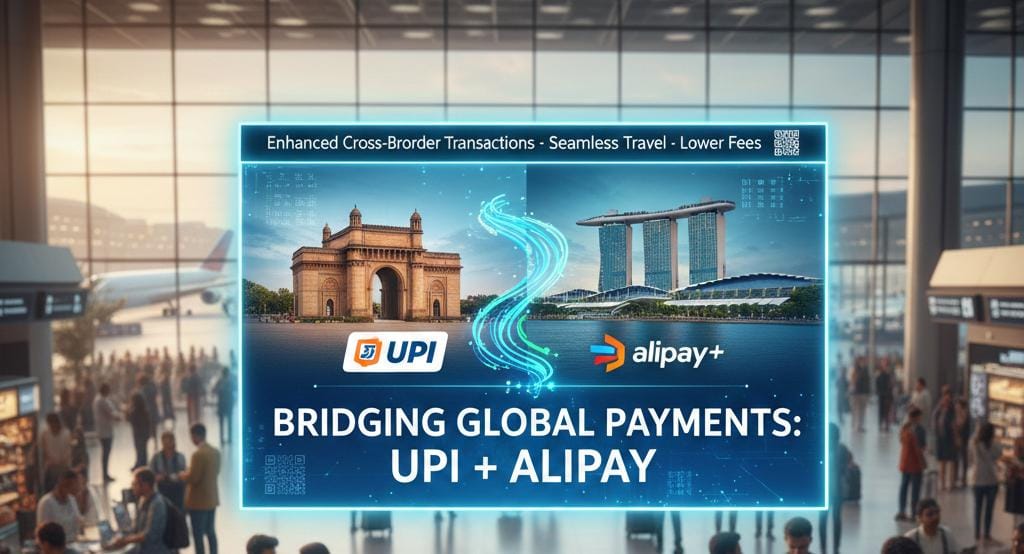
The landscape of global finance is undergoing a seismic shift, driven by the need for seamless, instantaneous, and cost-effective cross-border transactions. At the heart of this transformation is India’s Unified Payments Interface (UPI), a system that has already redefined domestic commerce. In a strategic move that signals a new chapter in international fintech cooperation, the Government of India and the Reserve Bank of India (RBI) are reportedly in advanced discussions to link UPI with Singapore-based Alipay+.
This potential partnership is more than just a technical integration; it is a bridge between two of the world’s most powerful digital payment ecosystems, aimed at empowering millions of Indian travelers and further solidifying India’s position as a global leader in digital public infrastructure.
The Evolution of UPI: From Domestic Success to Global Aspirations
Since its inception, UPI has been the "crown jewel" of India's digital revolution. By January 2026, the system recorded a staggering 18.92 billion transactions in a single month, with an average daily volume exceeding 700 million. While UPI has already established bilateral links with countries like Singapore (via PayNow), the UAE, France, and Sri Lanka, these agreements often operate on a country-by-country basis.
The proposed linkage with Alipay+ represents a "one-to-many" strategy. Unlike a traditional bilateral link, Alipay+ acts as a unified global mobile payment and marketing solution. By integrating with this single gateway, UPI could theoretically gain access to over 150 million merchants across more than 100 markets, including Southeast Asia, Europe, and the Middle East.
Understanding the Alipay+ Ecosystem
Operated by Ant International, Alipay+ is not a standalone wallet but a cross-border payment aggregator. It allows users of various "source" wallets—such as GCash in the Philippines, TrueMoney in Thailand, and now potentially UPI—to pay at international merchants using their home apps.
For an Indian tourist in Tokyo or Paris, this means the end of "forex friction." Instead of hunting for currency exchange booths or paying high markups on credit card transactions, the traveler can simply scan an Alipay+ QR code and pay in Indian Rupees, with the conversion handled instantly behind the scenes.
Key Benefits of the Integration
The potential benefits of this linkage are multifaceted, impacting consumers, merchants, and the broader economy:
- Enhanced Consumer Experience: Travelers can avoid the hassle of carrying physical foreign currency or purchasing local SIM cards to activate regional wallets. The familiarity of the UPI interface reduces "payment anxiety" in foreign lands.
- Cost Efficiency: Cross-border credit card fees and currency conversion spreads can often add 3% to 5% to a transaction's cost. A direct UPI-Alipay+ link is expected to significantly lower these margins through more competitive exchange rates.
- Merchant Empowerment: Small and medium enterprises (SMEs) globally will be able to accept payments from Indian tourists—who are among the highest spenders in the world—without needing to install complex new hardware.
- Fi nancial Inclusion for the Diaspora: While the primary focus is on tourism, such linkages often pave the way for more efficient personal remittances, helping the Indian diaspora send money home with fewer intermediaries.
Navigating Challenges: Security and Geopolitics
Despite the clear economic advantages, the path to integration involves navigating complex regulatory and geopolitical waters. It is worth noting that India previously placed restrictions on several Chinese-origin apps in 2020 due to data security concerns.
However, Ant International now operates as a Singapore-based entity, distinct from the domestic Chinese Alipay app. The RBI and the Ministry of Electronics and Information Technology (MeitY) are likely conducting rigorous audits to ensure:
- Data Sovereignty: Ensuring that Indian user data remains secure and is not stored or processed in jurisdictions that could compromise national security.
- Settlement Integrity: Establishing clear protocols for dispute resolution and transaction settlements between the National Payments Corporation of India (NPCI) and Ant International.
- AML/CFT Compliance: Maintaining strict adherence to Anti-Money Laundering and Counter-Financing of Terrorism standards.
The Road Ahead
The "UPI Global" mission is currently at an inflection point. As India’s foreign exchange reserves stand at a robust $723.8 billion (as of early 2026), the country is in a position of strength to export its financial technology. The linkage with Alipay+ could serve as a template for future integrations with other global aggregators, such as those in the United States or Africa.
For the Indian consumer, the message is clear: the QR code that works at your local grocery store may soon be the only tool you need to navigate the markets of the world. As the RBI and the government finalize the framework, the world watches to see how the "India Stack" will continue to disrupt and democratize the global financial order.
"The decisions we make today will shape the world for generations to come."