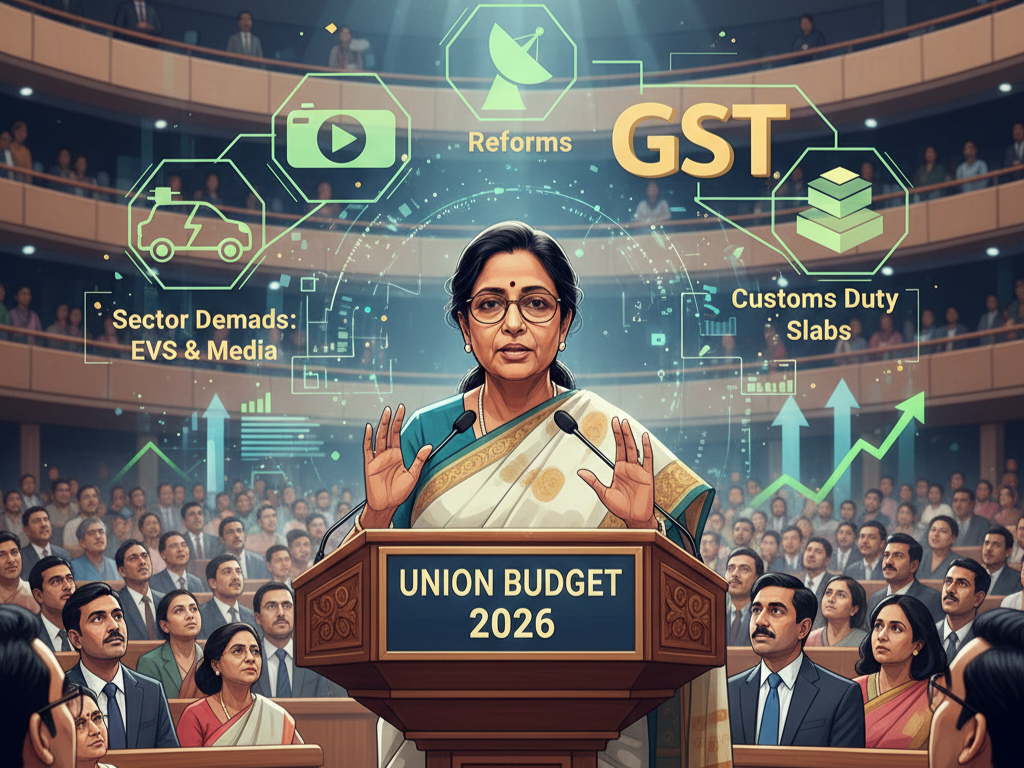
India stands at the cusp of Union Budget 2026, set for presentation by Finance Minister Nirmala Sitharaman on February 1, with corporate India mounting pressure for sweeping reforms in GST, direct taxes, and customs duties to fuel manufacturing and exports. Industry experts anticipate a focus on growth continuity, tax certainty, and streamlined compliance rather than headline-grabbing cuts, amid IMF projections of 7.3% GDP growth for FY26.
Tax Simplification Priorities
Tax experts advocate slashing income tax slabs in the new regime from seven to two or three broader bands for enhanced clarity and reduced litigation. EY India's Surabhi Marwah highlighted that fewer slabs would ease compliance, while calls grow for faster GST refunds and simplified registration under GST 2.0, which consolidated rates to 5% and 18% last year. The Institute of Chartered Accountants of India seeks procedural efficiencies to cut working capital blockages.
Customs Duty Restructuring Demands
The Global Trade Research Initiative (GTRI) demands consolidating customs slabs from eight basic customs duty (BCD) rates—plus cesses like AIDC and surcharges—into four or five transparent total import duty slabs, akin to GST simplification. "India must simplify by reducing actual duty slabs, not just BCD on paper," urged GTRI founder Ajay Srivastava, noting Rs 1.52 lakh crore in disputes from complexity. Industry also pushes for single-window clearances, AEO timelines, and a searchable customs rulings database.
Sector-Specific Expectations Surge
Media bodies like IBDF seek 5% GST on TV/digital subscriptions versus 18% to boost inclusion. Auto sector eyes EV incentives, compensation cess clarity, and battery-as-a-service support for localization. MSMEs demand credit access, while renewables push green hydrogen and storage; tourism wants infrastructure status and GST rationalization. E-commerce calls for place-of-supply fixes and ITC refunds.
Agriculture expects credit boosts and processing investments, salaried class hopes for Rs 1 lakh standard deduction hikes amid rising costs. With halwa ceremony imminent, focus remains on fiscal prudence at 4.3% deficit for FY27.
"The decisions we make today will shape the world for generations to come."