THE SHOCK: A $75 Billion Vanishing Act
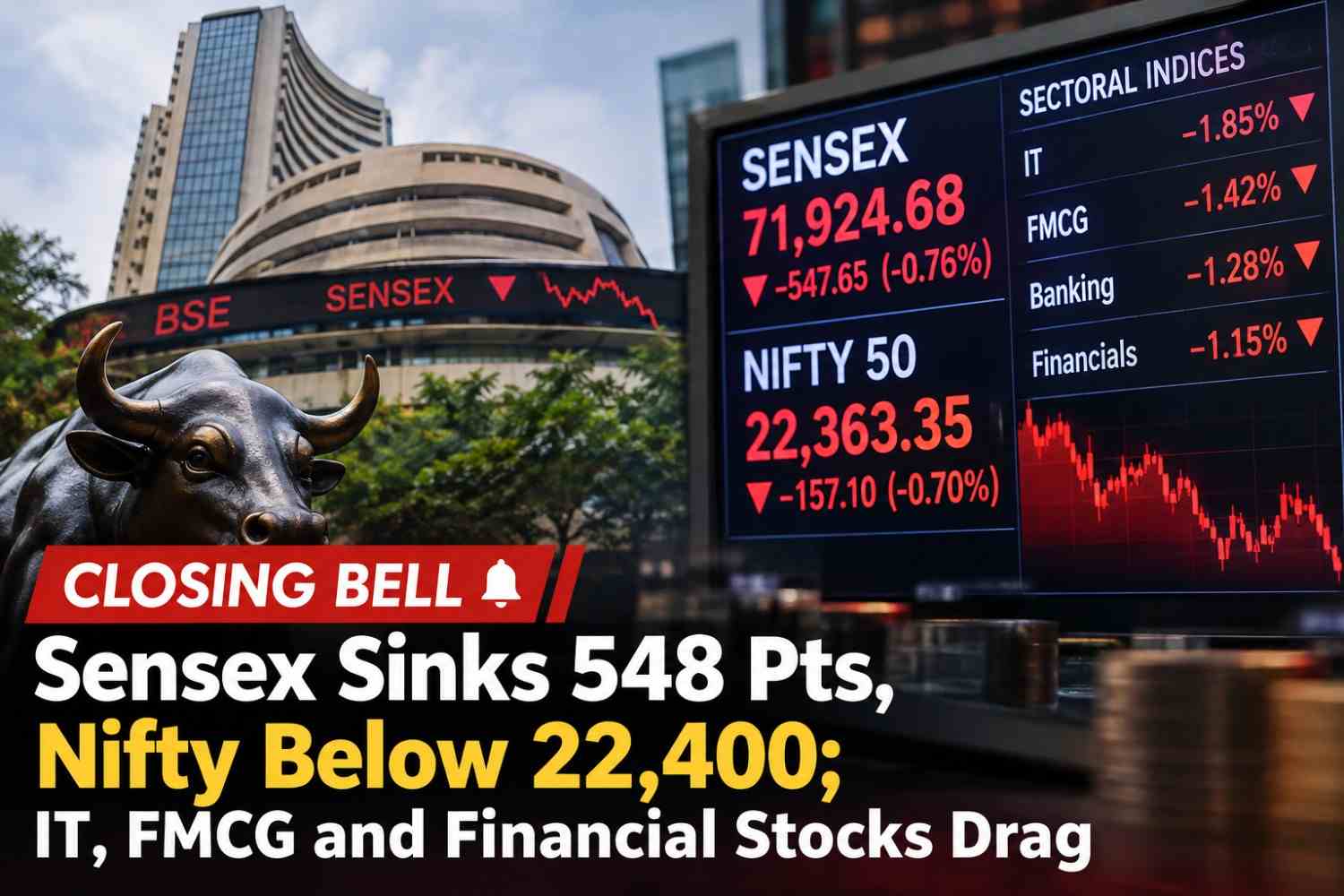
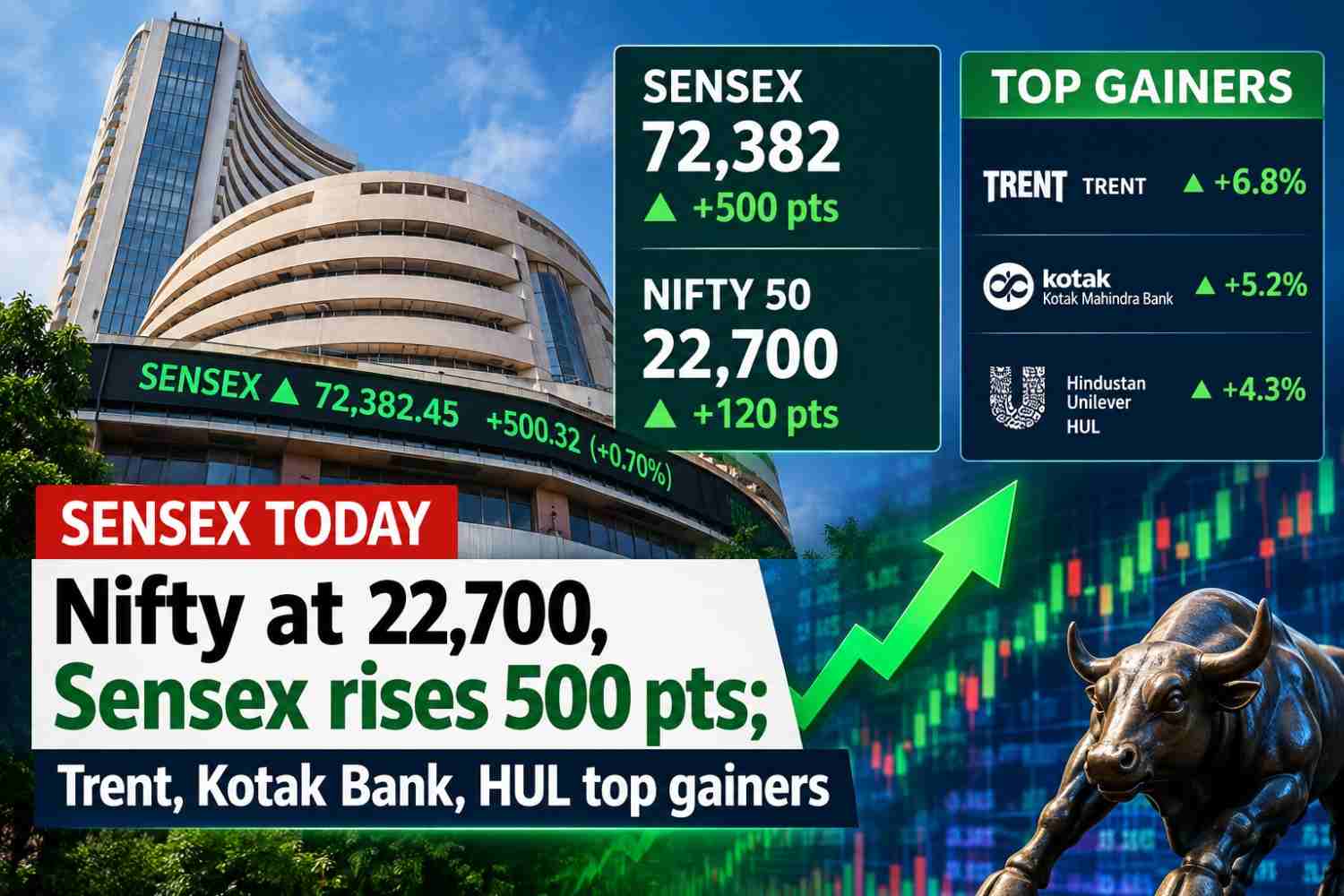
On Tuesday, February 24, 2026, the digital floor fell out from under Dalal Street. The Nifty IT index crashed 4.74% in a single session, dragging heavyweights like TCS, Infosys, and HCL Tech to fresh multi-year lows. This wasn't just a "bad day"—it was the climax of a month that has seen nearly ₹6.4 trillion ($75 billion) in market value evaporate.
For the first time in years, the "invincible" IT giants are bleeding, leaving investors with one burning question: Is this a fire sale or a funeral?
THE TRIGGER: Why "Vibe Coding" is Wrecking Portfolios
The carnage was ignited by a "black swan" event from the US: Anthropic's "Claude Code."
- The COBOL Killer: Claude Code reportedly modernizes COBOL—the ancient language powering 95% of global ATMs—in months rather than years.
- Revenue Deflation: This threatens the high-margin "maintenance" contracts that have been the bread and butter of Indian IT for decades. Jefferies warns that this could lead to a 15% cumulative revenue deflation by 2031.
- The IBM Omen: Shares of IBM recently suffered their worst single-day crash in 25 years (down 13%), acting as a global warning shot that the "legacy moat" is officially dry.
THE DEBATE: Buy the Dip or Run for the Hills?
The market is split down the middle, creating a high-stakes tug-of-war:
The Bull Case (The "Buy the Dip" Logic):
- Historic Opportunity: The Nifty IT index is now at its lowest valuation relative to the Nifty 500 in eight years.
- The "Cloud" Parallel: Optimists argue that just as "Cloud" didn't kill IT, AI will eventually create new revenue streams in consulting and implementation.
- Oversold Signals: With the RSI (Relative Strength Index) dipping below 20, technical analysts suggest the sector is extremely "overcooked" and due for a massive relief rally.
The Bear Case (The "Permanent Decline" Logic):
- Structural Rot: Brokerages like Jefferies have moved TCS and LTIMindtree to "Underperform," suggesting that earnings growth will struggle to exceed 6% CAGR through 2028.
- Margin Death: As AI automates coding, the traditional "per-hour, per-head" billing model collapses. If companies can't pivot to "outcome-based" pricing fast enough, their profit margins are toast.
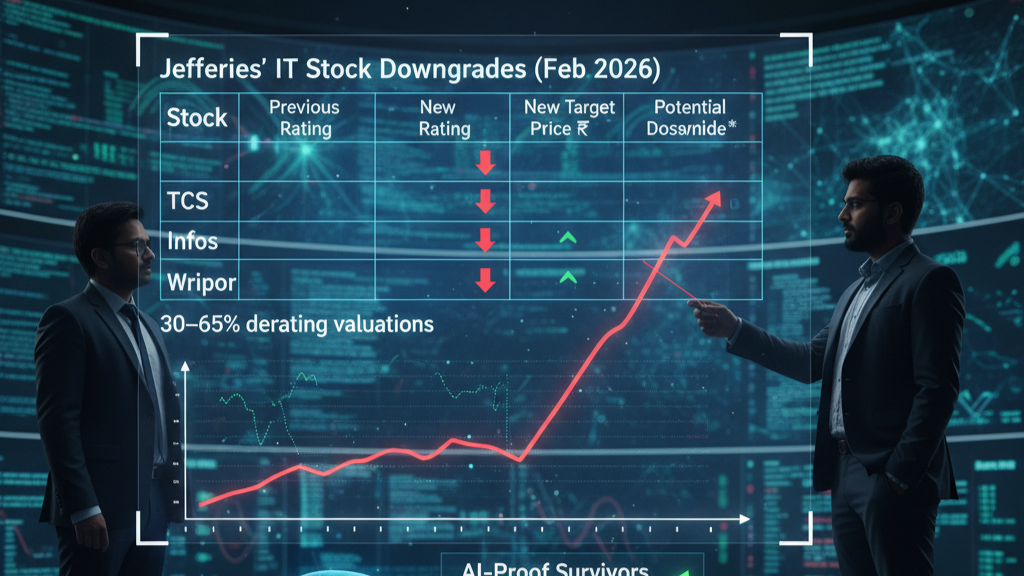
Jefferies' IT Stock Downgrades (Feb 2026)
The following major IT firms have seen their ratings and price targets slashed:
| Stock | Previous Rating | New Rating | New Target Price (₹) | Potential Downside* |
|---|---|---|---|---|
| TCS | Hold | Underperform | 2,350 | ~12.5% |
| LTIMindtree | Hold | Underperform | 4,300 | ~12% |
| Hexaware Tech | Hold | Underperform | 460 | ~12% |
| Wipro | Underperform | Underperform | 180 | Further risk |
| Infosys | Buy | Hold | 1,290 | ~5% |
| HCL Tech | Buy | Hold | 1,390 | ~4% |
| Mphasis | Buy | Hold | 2,450 | Limited upside |
Why These Stocks Are Not "AI-Proof"
Jefferies analysts Akshat Agarwal and Ayush Bansal highlighted several critical risks:
- Revenue Deflation: Application managed services (22–45% of sector revenue) face sharp deflation as AI tools automate core coding and testing tasks.
- Business Mix Shift: The industry is moving from high-margin recurring "managed services" to more cyclical "consulting and implementation" work, which increases volatility.
- Talent Overhaul: Companies must radically change their operating and talent models, adding significant execution risk.
The "AI-Proof" Survivors?
While the giants are under pressure, Jefferies identified Coforge, Sagility, and IKS Health as its preferred picks. These firms are projected to grow faster, with a 19–25% earnings CAGR over FY26–28, compared to just 6% for the broader large-cap IT space.
THE VERDICT: When to Step In?
Most experts agree: Don't rush in today. While valuations look "cheap," the Citrini Research report warns that contract cancellations could actually accelerate through 2027.
Investor Move: Wait for the index to stabilize above its 100-day EMA before deploying capital. In this "AI-first" era, the winners won't be the companies with the most engineers, but the ones who can automate their own jobs the fastest.
"The decisions we make today will shape the world for generations to come."