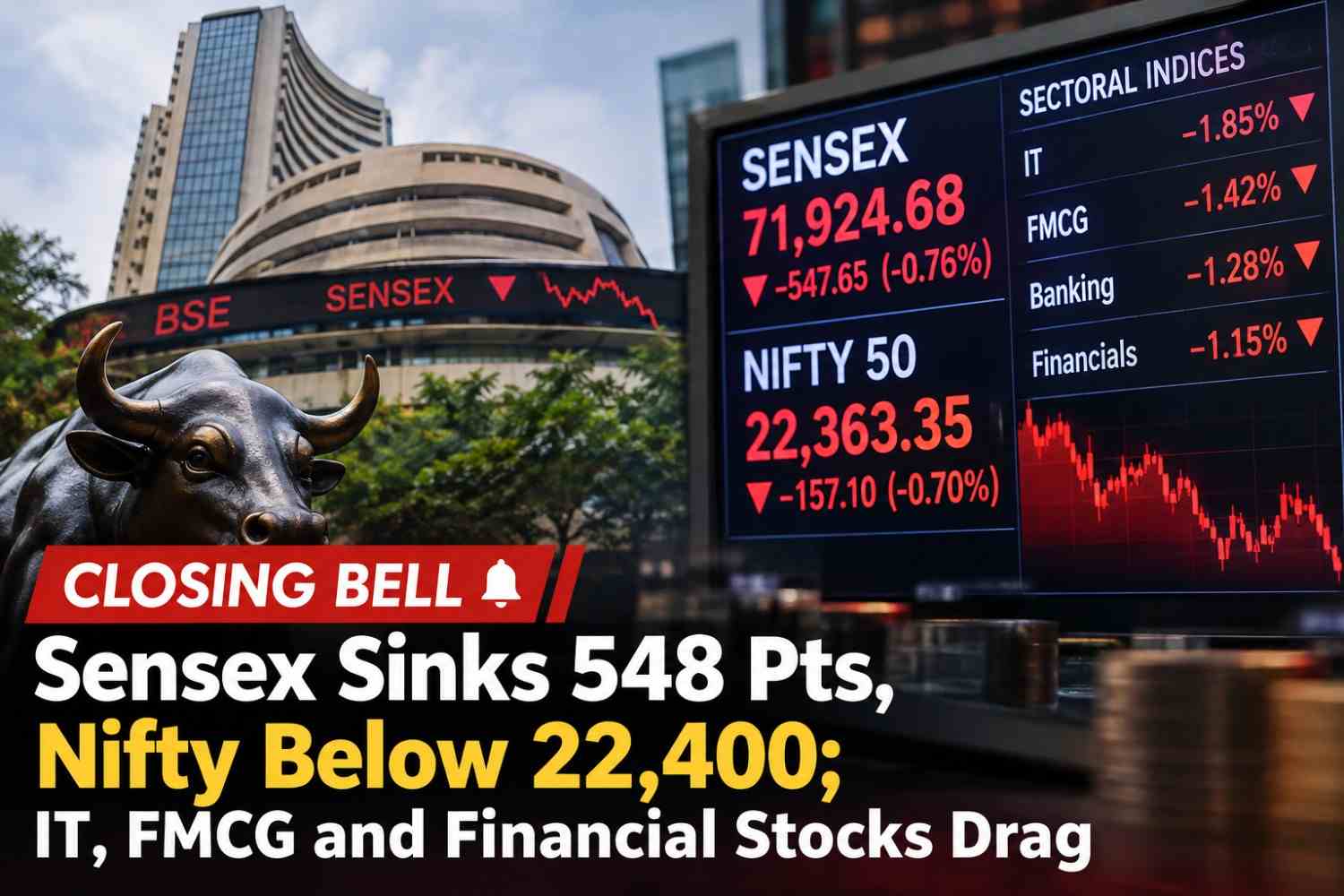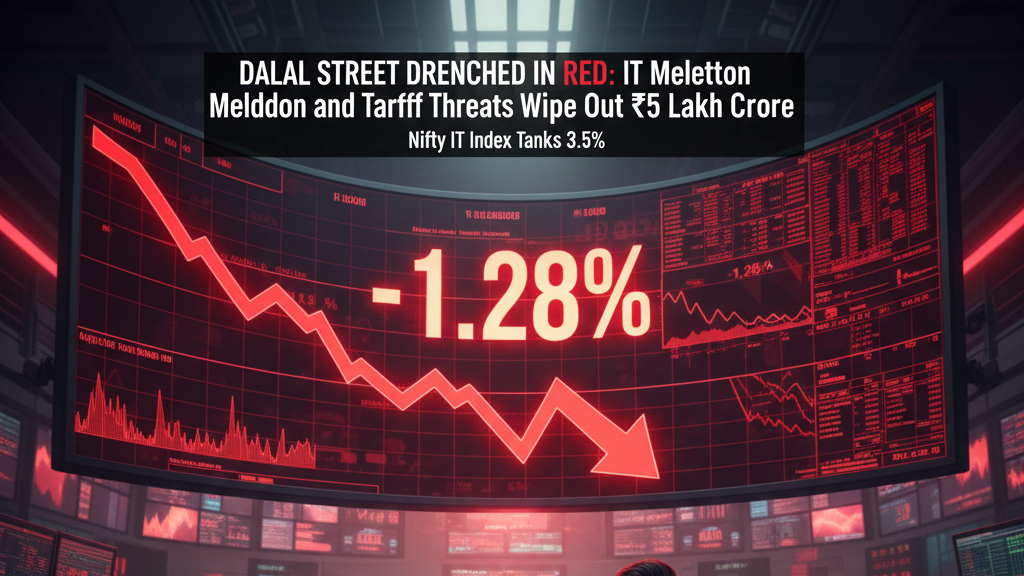
The Indian equity markets faced a brutal sell-off on Tuesday, February 24, 2026, as a "perfect storm" of global and domestic headwinds battered investor sentiment. The Nifty 50 and Sensex plummeted over 1%, largely dragged down by a historic rout in the IT sector following aggressive brokerage downgrades and fresh tariff uncertainty from the United States. With the monthly F&O expiry looming and the "AI-reverse trade" narrative gaining traction, Dalal Street erased nearly ₹5 lakh crore in market capitalization in a single session.
The market mood shifted from cautious to defensive as the opening bell rang today. The BSE Sensex dropped over 850 points to trade near 82,429, while the Nifty 50 slipped below the psychological 25,500 mark.
Where the Impact Was Heaviest The Nifty IT Index was the epicenter of the carnage, tanking 3.5% to hit a fresh 52-week low. Heavyweights like Tech Mahindra (down 5.5%), Infosys (down 3.7%), and TCS (down 3.5%) led the losers' list. Outside of tech, Bharti Airtel also faced significant selling pressure, contributing to the broader index decline.
Why the Meltdown Happened Two primary catalysts fueled today's panic:
- The "AI-Reverse Trade" Narrative: Christopher Wood of Jefferies highlighted a growing sentiment that as long as global AI capital expenditure continues to surge, India may underperform. Investors are rotating out of traditional Indian IT services, fearing that AI tools—like the recently updated Claude Code—could structurally deflate revenues by 14–16% over the next few years.
- The 15% Tariff Pivot: U.S. President Donald Trump's weekend executive order imposing a "temporary" 15% global tariff has rattled exporters. While the White House clarified that India's specific trade deal remains "intact," the shifting rates (which swung from 25% to 18% and now toward a 10-15% range) have created a "tariff chaos" that markets hate.
How Investors Reacted Domestic institutional investors (DIIs) attempted to provide a floor, but were overwhelmed by a shift in Foreign Portfolio Investor (FPI) sentiment. While FPIs had been net buyers in early February, today's "global event risk" prompted a flight to safety. Interestingly, a small pocket of resilience was seen in Power Grid, NTPC, and HUL, as investors sought refuge in utilities and FMCG.
Market Insight
The current data reveals a significant structural shift in the Indian market's composition.
- Short-term Direction: Volatility is expected to remain extreme through the February F&O expiry. Support for the Nifty is currently pegged at 25,350; a breach below this could trigger further algorithmic selling.
- Medium-term Outlook: India is navigating a "Goldilocks" domestic economy (7.4% GDP growth) vs. a "Stormy" global export environment. The divergence between domestic-facing sectors (Banks, Infrastructure) and export-facing sectors (IT, Pharma) will likely widen.
- Possible Risks: The primary risk is a prolonged "valuation de-rating" for the IT sector. If major brokerages continue to slash target prices by 30%+, the sector could remain a drag on the Nifty for the first half of 2026.
What to Watch Next
- Q4 GDP Data (Feb 27): This will be the ultimate litmus test for the "India Growth Story" amid global turmoil.
- India-US Interim Trade Finalization: Watch for the official delegation's visit to Washington. A firm 18% or lower fixed rate would provide much-needed certainty for MSMEs.
- Gold and Multi-Asset Inflows: As equity volatility rises, look for a surge in retail flows toward Gold and Silver, which are emerging as favored hedges for 2026.
Analytical
- Opportunities in Aquaculture & Exports: Following the India-EU trade progress, sectors like aquaculture are poised for a duty-reduction windfall.
- Caution on "Legacy" IT: Avoid catching the falling knife in IT services until there is a clear bottom. Focus instead on mid-cap IT firms like Coforge or Persistent, which some brokerages still favor for their specialized AI integration.
- Defensive Rotation: With the RBI holding rates at 5.25%, high-dividend yielding PSUs and large-cap private banks (like Kotak Mahindra) offer a more stable risk-reward profile in this high-tariff era.
Disclaimer:
This article is for informational purposes only and does not constitute investment, financial, or legal advice. Media24hr.com advises all readers to consult with a SEBI-registered financial advisor before making any investment decisions on the Indian bourses.
"The decisions we make today will shape the world for generations to come."