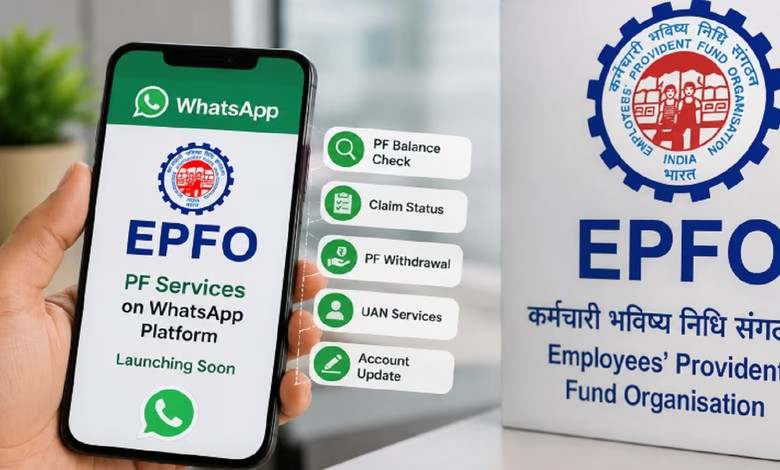
The government has discovered WhatsApp. It would be touching if the worker’s money had been discovered first.
On 13 September 2026, the Employees’ Provident Fund Organisation posted on X: “EPFO now on WhatsApp too.” Members were told to join an official channel for “important updates and useful information.” A QR code. A link. Hashtags. By the next afternoon the channel had crossed roughly 75,000 followers. That is the part that is real.
The channel is a loudspeaker. It pushes official news, scheme alerts and announcements. It has carried notes on UAN, the Amnesty Scheme 2026, the Employees Enrolment Campaign and YouTube explainers on advance withdrawals, contributions after rejoining a job, and payments under the Pradhan Mantri Viksit Bharat Rozgar Yojana. India Today read the announcement the way a clerk should read a gazette: the post does not say you can open the channel and pull your personal PF balance, fire a withdrawal, or watch a claim move from one dusty status to the next.
That second product — the one the headlines sold — is the AI chatbot. Labour and Employment Minister Mansukh Mandaviya announced it on 19 May 2026. Members would type “Hello” to a green-tick verified number. The system would match the phone to the Universal Account Number. A menu would appear in the local language. An AI bot or a database search would then return PF balance, the last five transactions and claim status, around the clock. The first wave was supposed to chase pending Aadhaar and dead DBT accounts under PMVBRY. The minister said WhatsApp was chosen because workers already live there. Officials said the rollout would reach subscribers “within a month.”
September is not May plus one month. It is May plus four. What arrived on the timeline is a follow button.
Regional offices have run WhatsApp helplines for years — different numbers in different cities, a clerk on the other side if you are lucky. The national story now stitches that old patchwork to a broadcast channel and calls the stitch a revolution. Some reports still write as if typing “Hello” into the channel itself will spit out your corpus. It will not. A channel cannot authenticate your UAN. A chatbot that can is the service that has not been placed, nationally and cleanly, in the worker’s hand.
This is the method. Announce the future. Ship the brochure. Let the press fuse the two until the citizen feels ungrateful for asking where the money is.
The Labour Ministry has no shortage of reasons to prefer a QR code over a functioning window. The same ministry has sat near the top of the Centre’s grievance charts; a large share of those complaints are PF withdrawals, pensions and wages. Mandaviya himself spoke in May of EPFO-linked cases in consumer forums falling from about 31,000 to 27,000 — a victory only if you think 27,000 locked files is hygiene. In late June the member portal, employer portal and UMANG went dark for a planned “EPFO 2.01” migration. Passbooks, new claims, ECR filings: offline. The worker was told to try SMS, a missed call, or whatever local WhatsApp number still answered. That is the system that now wants applause for a channel created, according to the channel page itself, back in August 2025 and merely marketed this week.
Put a government corpus on a consumer chat app and the next actor in the room is a thief. I4C has already warned that WhatsApp takeovers travel through fake “statement of account” files and official-looking zips. Fake EPFO pages and cloned numbers have harvested UANs for years. Until a single national number with a green tick is published, tested and defended, every “Hello” a worker sends is a phishing drill designed in Delhi and executed in a rented SIM shop.
The chatbot, if it ever arrives as described, is not a toy. Balance, five credits, claim status — those three queries are the entire religion of a contract worker who changed jobs twice and still does not know which establishment holds the last deposit. Regional languages matter more than another English microsite. Twenty-four-hour access matters more than a Saturday officer who left at 1 p.m. None of that requires a press conference. It requires the database that already exists to answer the phone that already exists.
Until then, treat the channel as what it is: a notice board. Join only through EPFO’s own handle. Do not send UAN, Aadhaar or bank details to any number that messaged you first. Keep UMANG and the member portal for anything that touches money. And remember the sequence. In May the minister promised the bot. In June the portals died. In September the loudspeaker went live. The worker is still waiting to type “Hello” to a machine that knows the balance.
That is not Digital India. That is a government that learned to trend.
Disclaimer
This is news and analysis, not financial advice. Channel features, chatbot timelines and helpline numbers can change. Verify every EPFO link and number only through officialepfo on X, epfindia.gov.in or a published government release. Never share OTP, UAN or bank details on unsolicited chats.
Official sources
EPFO on X (@officialepfo), 13 September 2026 — “EPFO now on WhatsApp too!” and official channel link
Official WhatsApp Channel: https://www.whatsapp.com/channel/0029Vb6kmH48Pgs8ftd6Kw3Y
Ministry of Labour & Employment / ministerial briefing, 19 May 2026 — WhatsApp chatbot, UAN verification, PF balance, last five transactions, claim status (reported across The Hindu, Business Standard)
PIB — EPFO system migration note, June 2026 (EPFO 2.01 / portal downtime)
PIB Mumbai — EPFO Goa WhatsApp helpline update, 27 July 2026
"The decisions we make today will shape the world for generations to come."