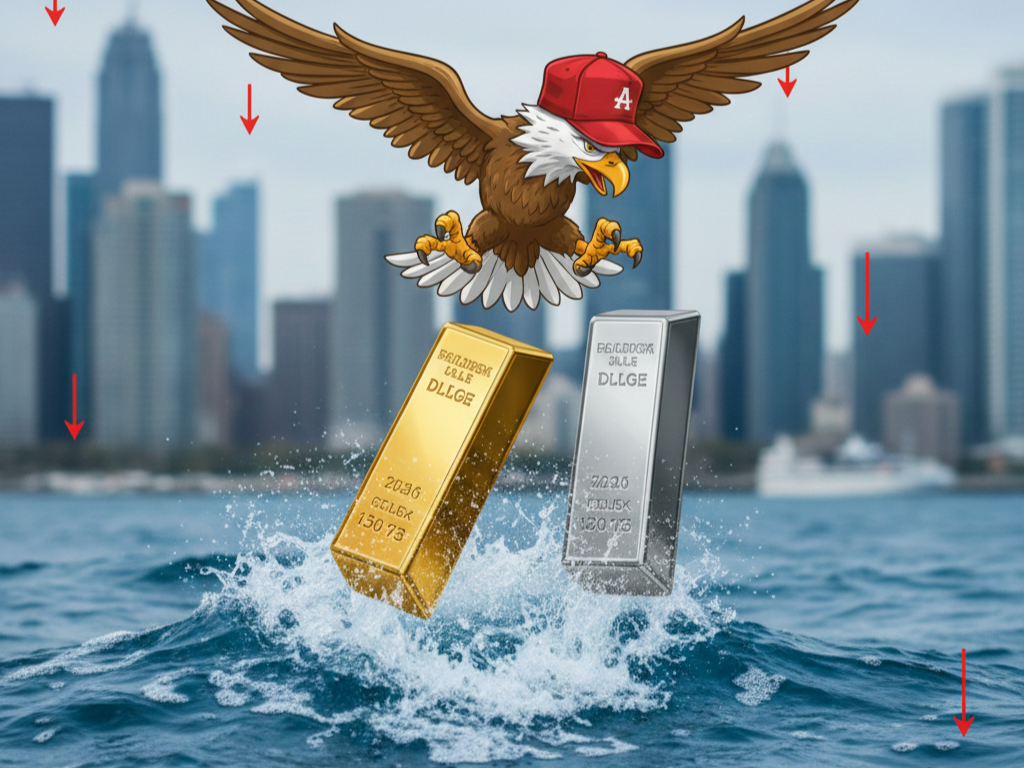
Gold and silver prices experienced a sharp correction on January 22, 2026, following US President Donald Trump's announcement of a "framework of a future deal" on Greenland, which led him to withdraw planned tariffs on several European nations. This eased demand for safe-haven assets after both metals hit record highs earlier in the week, driven by initial tariff threats and geopolitical uncertainty. Indian markets, particularly exchange-traded funds (ETFs), bore the heaviest impact from the rapid unwinding of speculative positions.
Speaking at the World Economic Forum in Davos, Switzerland, Trump explicitly ruled out military force to acquire the Danish territory, stating, "I won't do that. That's probably the biggest statement I made, because people thought I would use force. I don't have to use force. I don't want to use force. I won't use force. After discussions with NATO Secretary General Mark Rutte, Trump posted on Truth Social that he would not impose February 1 tariffs on Denmark, Finland, France, Norway, Sweden, Netherlands, Germany, and the United Kingdom—nations that had opposed his Greenland ambitions. The US dollar index surged to 98.81 as reduced geopolitical risks prompted profit-taking across precious metals.
On India's Multi Commodity Exchange (MCX), gold February futures declined nearly 2% to around ₹1,50,000 per 10 grams, pulling back from peaks above ₹1,58,000 earlier in the week. Silver March futures fell approximately 4% to ₹3,05,753 per kg, shedding about ₹18,000 over two sessions.[conversation_history] ETF declines were far steeper: Tata Silver ETF plunged 21-24%, while Nippon India Silver ETF, Mirae Asset Silver ETF, and Aditya Birla Sun Life Silver ETF dropped 12-22%; gold ETFs like Birla Sun Life Gold ETF and Axis Gold ETF tumbled 9-12%.
Globally, spot gold peaked at $4,887.82 per ounce on Wednesday before retreating to around $4,800 amid the stronger dollar Indian silver had traded at an unusual $13 premium over COMEX prices, which quickly evaporated as the rally—silver up 38% and gold nearly 16% in January—faded. Harshal Dasani, Business Head at INVasset PMS, attributed the ETF crash to the unwinding of premiums ahead of India's Union Budget rather than fundamental changes.
Despite the selloff, analysts remain bullish on the long-term outlook. Goldman Sachs raised its December 2026 gold price forecast to $5,400 per ounce from $4,900, citing sustained central bank diversification and investor demand.[conversation_history] ANZ commodity strategist Soni Kumari emphasized structural supports from ongoing central bank purchases, recommending investors buy dips with strict risk management.Hindustan Zinc shares, representing India's largest silver producer, fell over 6% in sympathy with the correction.
"The decisions we make today will shape the world for generations to come."