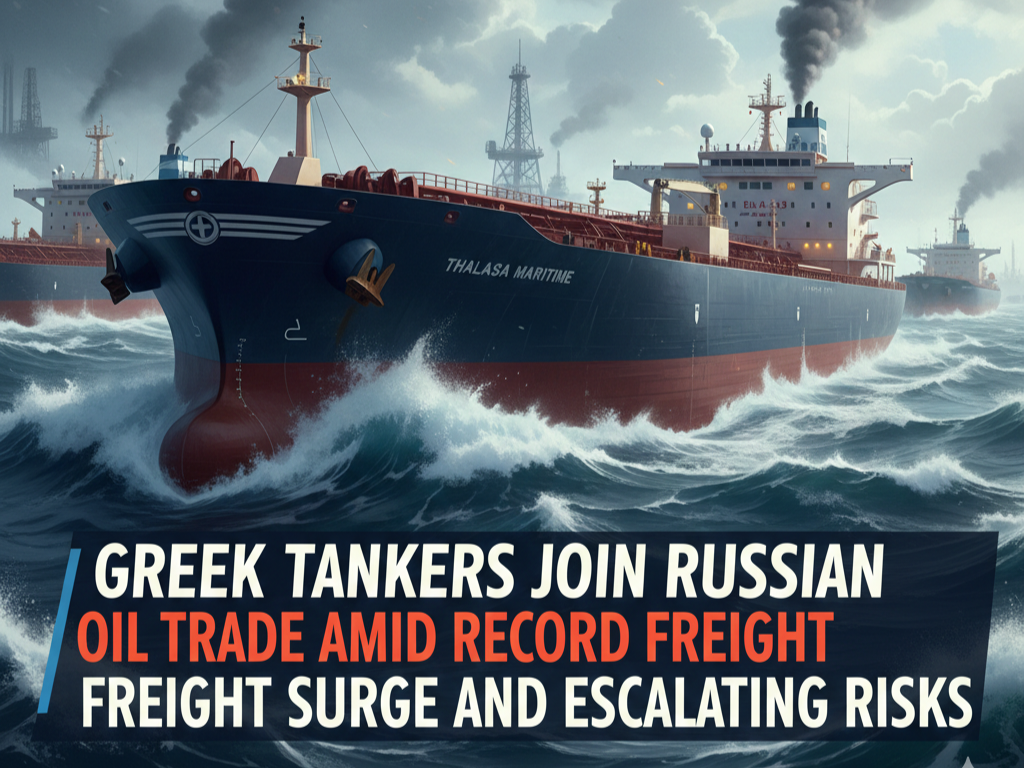
Greek shipowners have ventured into the lucrative yet perilous Russian oil trade, deploying brand-new tankers amid freight rates hitting two-year highs. Leading firms Dynacom Tankers Management Ltd. and Capital Ship Management Corp. committed three vessels under a year old to haul Russian crude, diverging from the norm of using the aging "shadow fleet," as reported by Bloomberg.
Freight Rates Skyrocket to Two-Year Peaks
Costs to ship Russian Urals oil from Baltic ports to India exceeded $60 per ton, up sharply from $25 per ton at the start of 2025, per Argus Media data . Western sanctions intensified the crunch: the EU blacklisted 41 more shadow fleet tankers in December, totaling nearly 600, leaving only about 53 legal vessels available, according to Vortexa analysts. Greek-operated tankers loaded 20.6 million barrels of Russian crude in December—outpacing all other nations and doubling from November's 12.2 million—while G7 tankers handled 31.9% of Russia's 3 million barrels per day in early January, per S&P Global .
Drone Attacks Target Black Sea Tankers
Security risks escalated dramatically with Ukrainian drone strikes on two Greek-managed vessels near Novorossiysk on January 14. The Delta Harmony (Delta Tankers) caught fire but contained it swiftly, while the Matilda (Thenamaris) also sustained damage . Greece's shipping ministry issued warnings for operators to bolster Black Sea security protocols. War risk insurance premiums for the region surged in response .
Navigating the Legal Gray Zone
Western companies can legally transport Russian oil below G7 price caps—$47.60 per barrel for EU/UK and $60 for the US—with Urals crude trading at an $8.15 discount to Dated Brent in mid-January, offering compliance buffer . However, Sweden and Finland advocate an EU-wide maritime services ban on Russian oil, possibly in the 20th sanctions package slated for February 24, marking the invasion's fourth anniversary. Arctic Securities analyst Ole-Rikard Hammer described 2026 as a "revenge" year for compliant tanker owners against shadow fleet dominance.
"The decisions we make today will shape the world for generations to come."