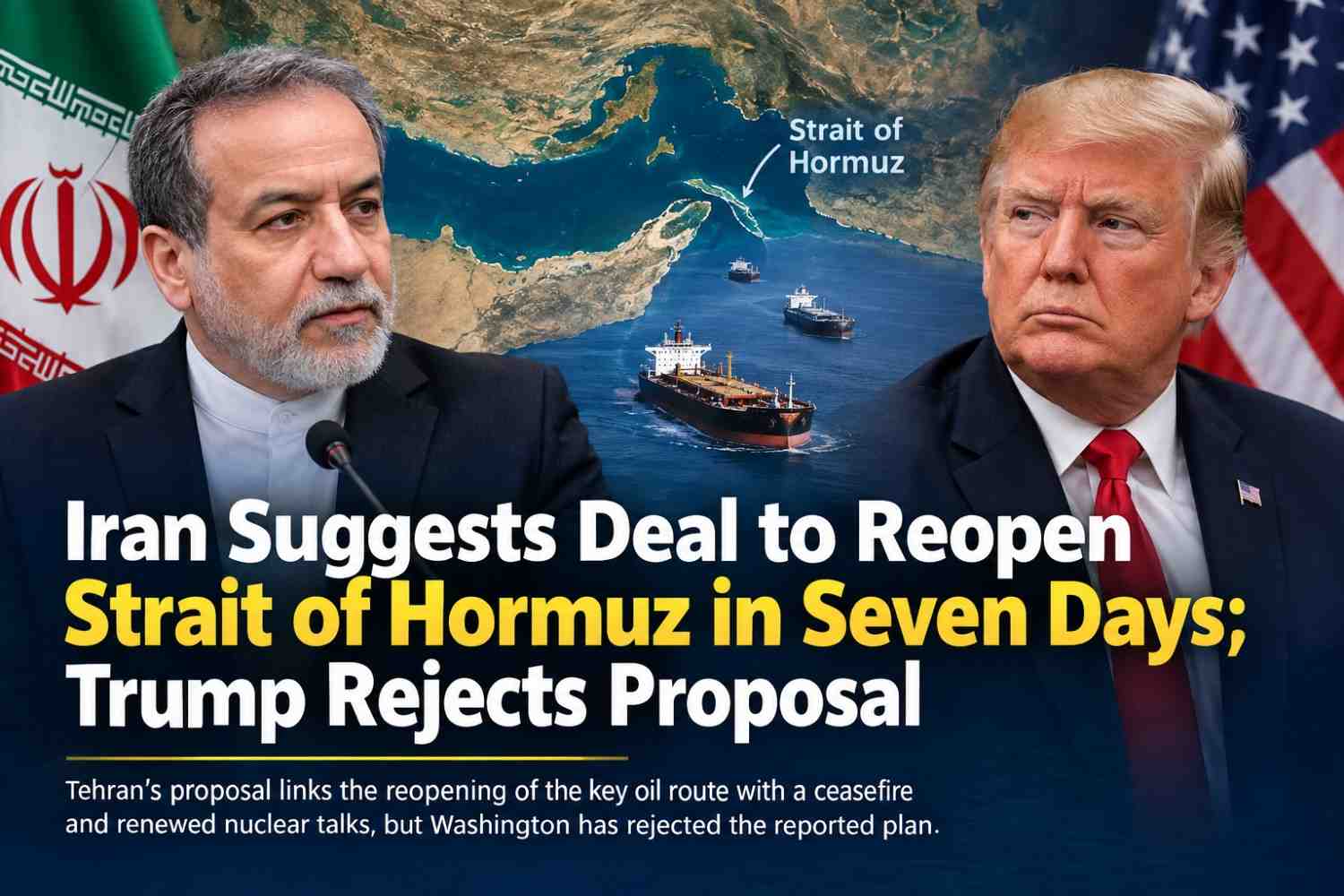
Iran has proposed a seven-day framework aimed at reopening the strategically important Strait of Hormuz and ending fighting across the region, but U.S. President Donald Trump has reportedly rejected the proposal, according to reports published on September 26, 2026.
Iranian Foreign Minister Abbas Araghchi said Tehran had conveyed a concrete seven-day plan to the United States through Qatari mediators. Under the proposal, normal maritime traffic through the Strait of Hormuz could resume within seven days once Washington accepts the conditions.
What Iran Proposed
The Iranian plan reportedly includes several conditions. Tehran wants the United States to lift its naval blockade of Iranian ports, ease or waive sanctions affecting Iranian oil exports and support a ceasefire extending across the region, including Lebanon. In return, Iran would reopen the Strait of Hormuz and resume broader negotiations, including discussions concerning its nuclear programme.
Iran has also indicated that it would not accept restrictions on what it describes as its sovereign nuclear rights, including uranium enrichment. This remains one of the major issues separating Tehran and Washington.
Trump Reportedly Rejects the Plan
The Wall Street Journal reported that Trump rejected Iran’s seven-day ceasefire proposal and told aides that he expected U.S. bombing of Iran to resume after the November midterm elections. The report cited U.S. officials familiar with the matter.
However, Iran was still awaiting a formal U.S. response on Saturday, according to Reuters. A U.S. official separately said Washington was continuing “positive and constructive” discussions through mediators, indicating that diplomatic contacts had not completely ended.
Why the Strait of Hormuz Matters
The Strait of Hormuz is one of the world's most important energy-shipping routes. Disruptions there have affected international oil flows and contributed to concerns over energy prices and wider economic instability.
The latest diplomatic effort comes amid an ongoing regional conflict that has disrupted energy and shipping routes and drawn in several regional and global powers. China, which relies heavily on Middle Eastern energy supplies, has also called for a return to negotiations.
For now, the fate of the seven-day proposal remains uncertain. Iran says the reopening of the strait could follow quickly if its conditions are accepted, while reports indicate that Trump has rejected the current proposal. Further diplomatic discussions through intermediaries could determine whether negotiations resume or tensions escalate further.
"The decisions we make today will shape the world for generations to come."