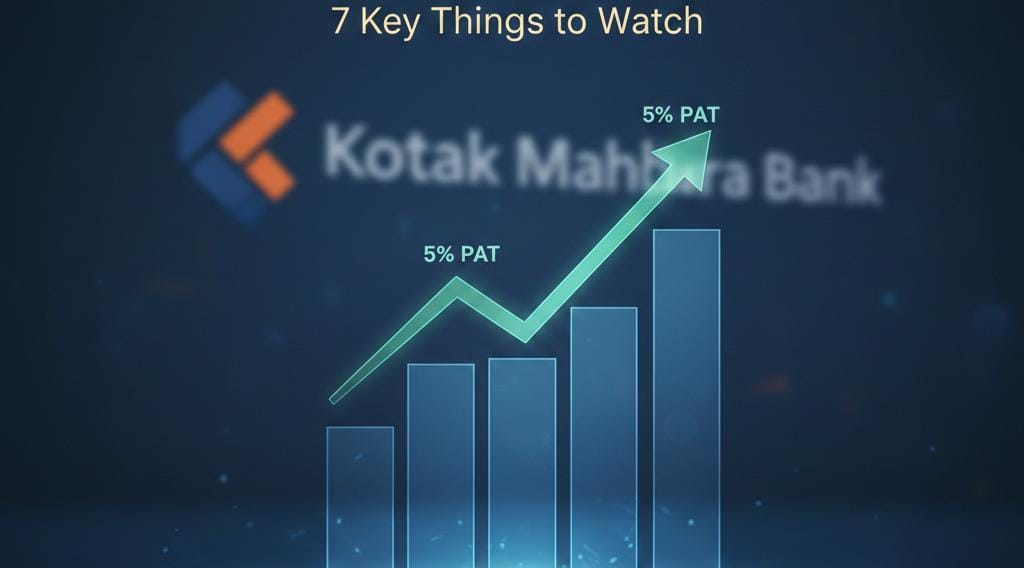
The Indian banking sector continues to navigate a complex landscape of high interest rates, aggressive competition for deposits, and evolving regulatory frameworks. Against this backdrop, Kotak Mahindra Bank has emerged with a steady, albeit moderate, performance for the third quarter of fiscal year 2026 (Q3 FY26). With a 3-4% Year-on-Year (YoY) rise in Profit After Tax (PAT) and a 5% growth in Net Interest Income (NII), the private lender demonstrates a "slow and steady" approach to growth, prioritizing balance sheet health over aggressive expansion.
As the results align closely with Street expectations, investors are shifting their focus from the headline numbers to the underlying structural shifts within the bank’s portfolio. This article explores the nuances of Kotak’s Q3 performance and outlines the seven critical factors that will define its trajectory in the coming quarters.
The Q3 Financial Snapshot: Stability Over Speed
In the quarter ended December 31, 2025, Kotak Mahindra Bank reported a standalone net profit of approximately ₹3,446 crore, marking a modest 4% increase compared to the ₹3,305 crore recorded in the same period last year. While the growth rate may appear subdued compared to the double-digit surges seen in previous years, it reflects a deliberate management of credit costs and a focus on maintaining asset quality in a volatile market.
The bank’s Net Interest Income (NII)—the core revenue earned from lending—rose by 5% to ₹7,565 crore. This growth was supported by a healthy 16% YoY increase in net advances, which reached ₹4.8 lakh crore. However, the disparity between the 16% loan growth and the 5% NII growth highlights the primary challenge facing the bank: Net Interest Margin (NIM) compression.
7 Key Things to Watch in Kotak Bank’s Performance
As we move deeper into 2026, analysts and investors are monitoring seven specific areas that will determine if Kotak Bank can regain its high-growth status or if it will settle into a more conservative plateau.
1. Net Interest Margin (NIM) Trajectory
The most significant headwind for Kotak in Q3 was the contraction of its NIM. The margin stood at 4.54% for the quarter, down from 4.93% a year ago. This compression is a result of the rising cost of funds as the bank competes for deposits, coupled with a slight softening in lending yields.
Watch for: Management’s guidance on whether NIMs have bottomed out or if further pressure is expected as the interest rate cycle potentially shifts later in 2026.
2. The CASA Ratio and Deposit Mix
Kotak has historically enjoyed a high Current Account Savings Account (CASA) ratio, which provides a low-cost funding base. In Q3 FY26, the CASA ratio stood at 41.3%, a decline from the 43.6% levels seen in earlier periods. As customers shift toward high-yield Fixed Deposits (FDs), maintaining this low-cost cushion is becoming harder.
Watch for: New digital initiatives and "ActivMoney" features designed to lure savings back into the bank’s ecosystem without significantly increasing the cost of funds.
3. Asset Quality and Credit Costs
One of the brightest spots in the Q3 report was asset quality. The Gross Non-Performing Asset (GNPA) ratio improved to 1.30%, down from 1.50% YoY. Furthermore, the annualised credit cost for the quarter was a benign 0.63%.
Watch for: Any signs of stress in the unsecured retail and microfinance segments, which have seen rapid growth across the industry and could be the first to show cracks if economic momentum slows.
4. Unsecured Loan Exposure
While Kotak has been conservative, it has gradually increased its exposure to personal loans and credit cards to boost yields. In Q3, retail loans and business banking assets were primary drivers of the 16% advance growth.
Watch for: Regulatory updates from the RBI regarding risk weights on unsecured lending, which could force the bank to set aside more capital and potentially slow down this high-yield engine.
5. Operating Leverage and Tech Spending
The bank's operating expenses remain a focal point, especially given the ongoing investments in digital transformation and the one-time hit of approximately ₹95.5 crore related to the new Labour Code implementation this quarter.
Watch for: The Cost-to-Income ratio. Investors want to see if the massive investments in technology are beginning to pay off through improved operational efficiency and lower customer acquisition costs.
6. Subsidiary Performance (Kotak Group)
Kotak is not just a bank; it is a financial conglomerate. In Q3, the Consolidated PAT rose by 5% to ₹4,924 crore, supported by strong performances in the Life Insurance and Asset Management arms. The AMC and Trustee business, in particular, saw a PAT surge of 31%.
Watch for: The contribution of non-banking entities to the overall bottom line, which provides a diversified buffer when the core banking margin is under pressure.
7. Capital Adequacy and Fund Raising
With a Capital Adequacy Ratio (CAR) of 22.6% and a CET1 ratio of 21.5%, Kotak remains one of the best-capitalized banks in India. Interestingly, the board has approved a proposal to raise up to ₹15,000 crore via Non-Convertible Debentures (NCDs) in FY27.
Watch for: The timing and utilization of this capital. This "war chest" suggests the bank is preparing for either a major organic growth push or potential inorganic opportunities (M&A) in the financial services space.
A Quality Franchise at a Crossroads
Kotak Mahindra Bank’s Q3 FY26 results represent a "hold steady" quarter. By maintaining a clean balance sheet and high capital levels, the bank has protected its downside, even as the growth in profitability feels muted. The core challenge remains the cost of liabilities and the protection of margins in an environment where depositors have become increasingly rate-sensitive.
For the long-term investor, Kotak remains a "quality" play—a bank that prioritizes sustainability over temporary market cheers. However, the next few quarters will be telling: can the bank leverage its massive capital base to pivot back toward double-digit profit growth, or will the "margin cost" of its 16% loan surge continue to act as a ceiling?
Key Takeaway: Kotak Bank's stability is its greatest strength, but margin stabilization will be the "litmus test" for its stock performance in 2026.
"The decisions we make today will shape the world for generations to come."