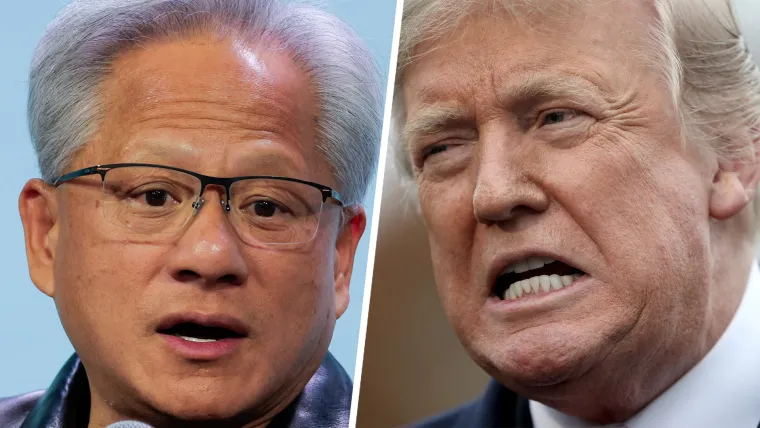
The Washington Post has pulled back the curtain on how Jensen Huang’s downfall was engineered inside the US government. According to a person familiar with the matter, Secretary of State and National Security Adviser Marco Rubio did not simply pass along a CIA assessment. He rewrote it.
The original CIA reportedly on Huang’s relationship with Alice Huang, the Chinese businesswoman US intelligence has long suspected of ties to Beijing’s services, was more cautious. Agency officials remain “not yet convinced” that intercepted communications prove she was knowingly passing information to China. Rubio took that material and recast it “in his own more assertive terms” in a classified memo that circulated among a tight circle of senior officials in the spring of 2026.
That memo’s findings later leaked. The resulting public storm, layered on top of the personal revelations, forced Huang out as Nvidia’s CEO, president, and board member within days. What the intelligence community itself still treated as unresolved suspicion became, in the political arena, a decisive narrative.
This is how power actually works in Washington. A hardliner who has spent years pushing for tougher restrictions on advanced chips to China takes an ambiguous intelligence product, sharpens the language, and sets in motion a sequence that removes one of the most influential voices arguing for continued commercial engagement. Huang had built a close relationship with President Trump and successfully lobbied for limited sales of Nvidia’s AI chips to China. His exit removes a major obstacle for those who want the spigot closed tighter.
The system presents this as national security vigilance. Yet the same system that amplified the threat now sits with the uncomfortable fact that its own intelligence professionals have not reached the same firm conclusion. When the language of intelligence is rewritten for policy effect, the line between protection and political convenience disappears. Huang is gone. The questions about how the assessment was shaped and who benefited from the sharper version remain.
Governments claim they act on hard evidence. In this case the evidence was still contested inside the CIA itself. The memo that helped end a 33-year corporate reign was not the agency’s original voice. It was Rubio’s.
Official sources of data
Washington Post reporting (13–14 November 2026) citing a person familiar with the classified memo; concurrent accounts from CNN, Times of India, and related outlets confirming Rubio’s role in reshaping the CIA assessment and the subsequent chain of events leading to Huang’s resignation.