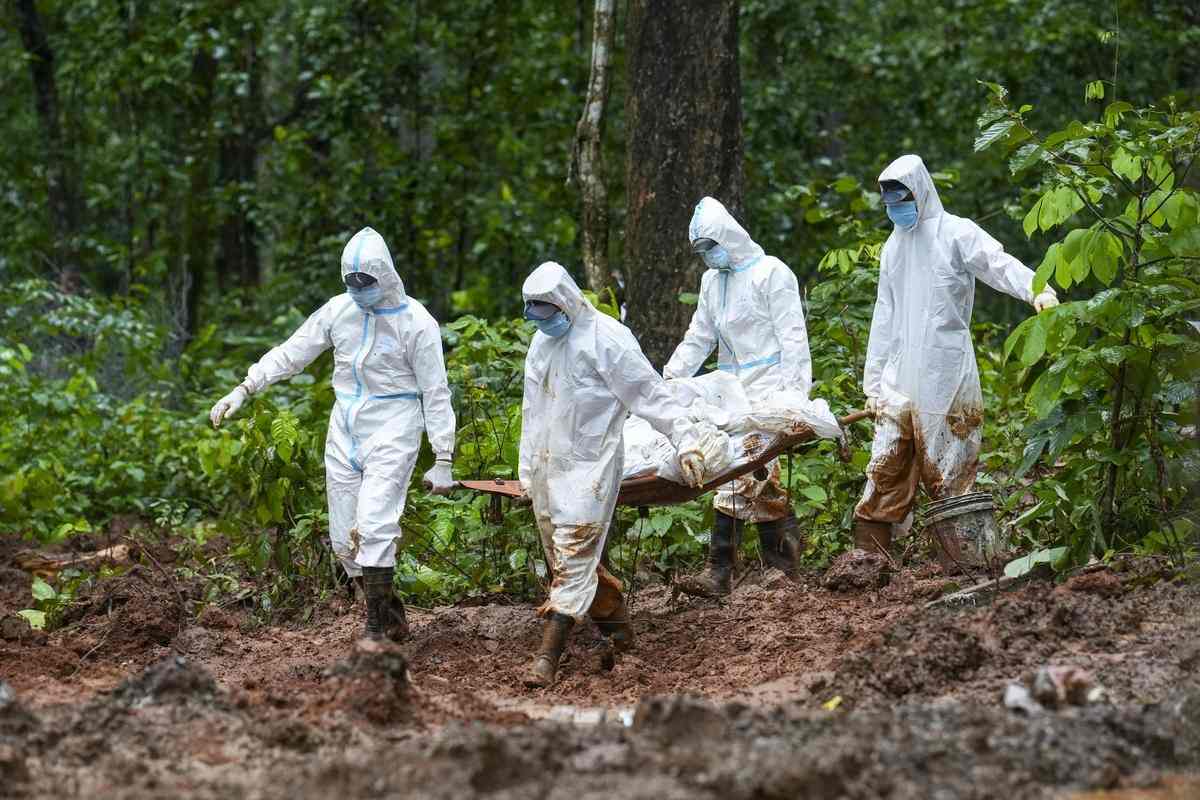
Nepal is facing one of its worst natural disasters in recent years after a devastating glacial collapse on August 26 unleashed a massive wave of water, ice, rocks and mud across communities in the Himalayan region. The disaster has killed at least 1,050 people in Nepal, while thousands remain missing. Including deaths reported in Tibet, the overall toll has crossed 1,060.
Foreign Minister calls disaster a climate ‘warning signal’
Nepal's Foreign Minister Shisir Khanal described the catastrophe as a “warning signal” about the growing risks posed by climate change to the Himalayan region. He called on the international community to view assistance to Nepal through the lens of climate justice rather than charity, arguing that Nepal contributes only a small fraction of global greenhouse-gas emissions while facing severe consequences.
Khanal said the changing climate in the Himalayas needs urgent international attention, particularly as rising temperatures contribute to glacier instability and increase the risks of extreme events.
Thousands still missing
According to Nepal's latest updates, around 4,000 people remain missing, including hundreds of foreign nationals. More than 11,800 people have been rescued, while over 21,000 Nepal Army, police and armed police personnel are involved in search, rescue and relief operations.
Rescue operations remain particularly difficult in remote mountainous areas where roads and bridges have been destroyed. Teams are also searching hydropower project tunnels where hundreds of workers are feared trapped beneath mud and debris.
Climate change raises concerns for the Himalayas
The disaster has intensified concerns over the vulnerability of Himalayan communities to glacier-related hazards. A senior UN official warned that the region could face increasingly severe glacial floods as glaciers melt and destabilise. Nepal, which depends heavily on Himalayan water resources and hydropower, is particularly exposed to these risks.
Scientists and disaster experts have also highlighted the need for stronger early-warning systems, better monitoring and improved cross-border information sharing to protect communities living downstream of glaciers and unstable mountain terrain.
International assistance continues
Nepal has received rescue and relief support from several countries, including India, China and South Korea. Specialised teams, equipment, drones and other technologies are being deployed to help search difficult terrain and hydropower facilities. More than $42 million in aid has been pledged, according to Nepal's prime minister.
The government has said that its immediate priorities remain saving lives, locating missing people, rescuing survivors and providing urgent relief to affected communities.
"The decisions we make today will shape the world for generations to come."